Small modular reactor (SMR): What it is and how it works
September 17, 2026
8-min read
You might also be interested in
Wind and solar power are growing quickly, but many power grids still need electricity that can be supplied around the clock, regardless of the weather. This is one reason why small modular reactors (SMRs), also called small modular nuclear reactors, are getting more attention in global energy discussions.
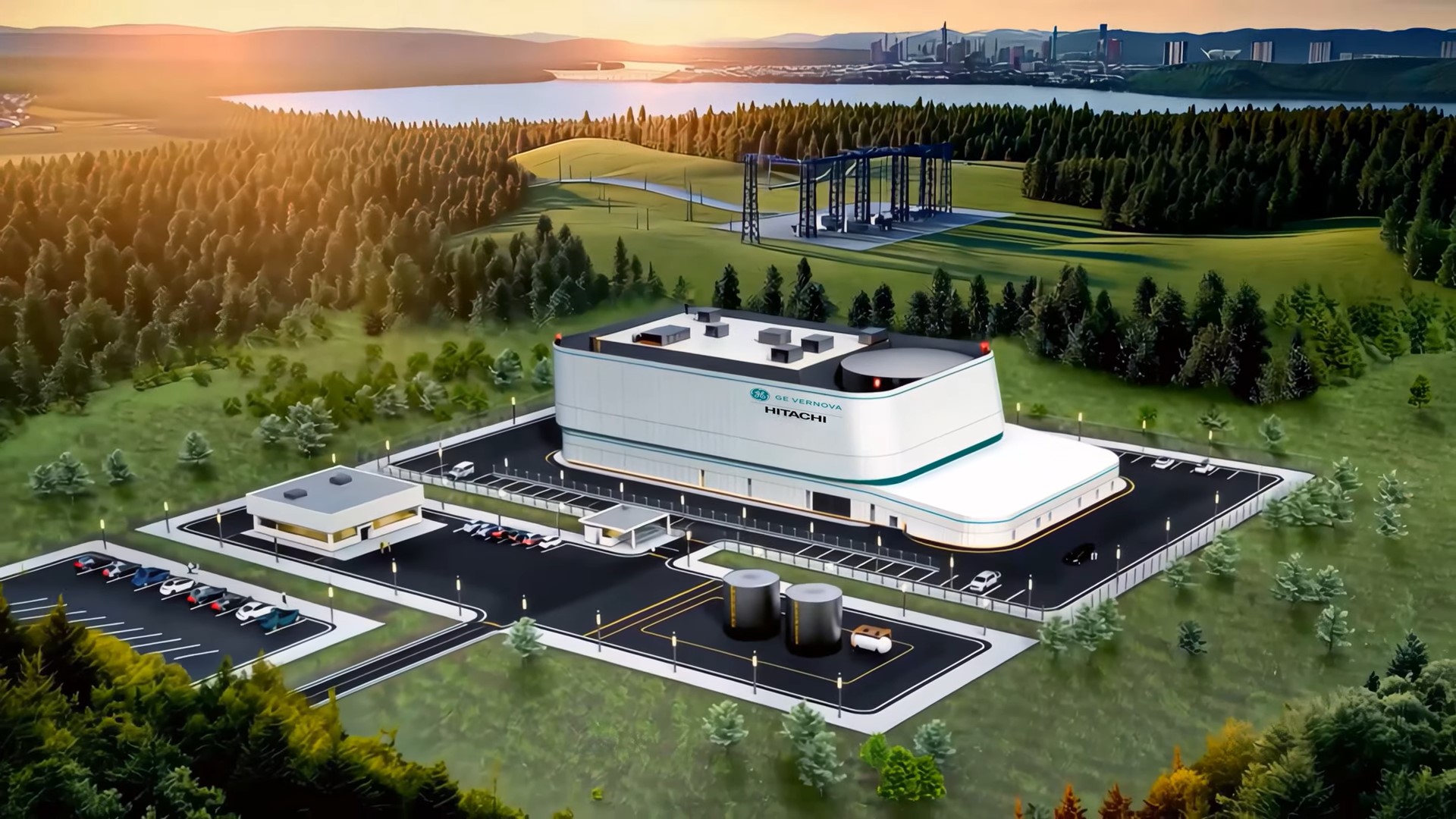
A small modular reactor is an advanced nuclear reactor that typically generates up to 300 megawatts of electricity per unit and is about one-third the size of many traditional nuclear reactors. For example, GE Vernova Hitachi’s BWRX-300 is an advanced small modular reactor. This technology is engineered to help deliver reliable, carbon-free* electricity and offers more flexibility in how nuclear plants are built and deployed.
Unlike conventional large nuclear plants that are often built as massive, one-of-a-kind infrastructure projects, SMRs aim to use standardized configurations and modular construction techniques to improve efficiency, scalability, and affordability.
SMRs work very similarly to traditional nuclear reactors. Nuclear fuel pellets undergo nuclear fission in the reactor core, which creates heat. This heat boils water into steam, which spins a turbine connected to a generator that produces electricity.
What makes SMRs different is not the underlying science, but the philosophy behind them. Many SMRs are engineered with simplified systems, smaller reactor cores, and passive safety features that rely more heavily on natural forces such as gravity and convection. Many configurations are also intended to be built unit by unit on the same site, allowing utilities to add generating capacity incrementally.
There are several types of nuclear reactors available, supporting different methods of controlling nuclear fission and coolants to manage heat flow. Each reactor has its own advantages regarding safety, used fuel management, fuel use, and scalability, and are at various development or deployment stages globally.
One challenge facing modern electric grids is balancing reliability with decarbonization**. Renewable energy sources such as wind and solar are essential to reducing emissions, but as we know, their output can fluctuate with weather and time of day.
SMRs are developed to provide steady carbon-free electricity that can complement renewable energy sources and help stabilize the grid during periods of high demand or low renewable output.
The U.S. Department of Energy also notes that advanced SMRs may support industrial heat applications, hydrogen production, desalination, and remote energy systems.1 2 This expands their potential role beyond traditional electricity generation.
Another advantage often associated with SMRs is flexibility. Because the reactors are smaller than those in traditional nuclear plants, they may be suitable for locations where large-scale facilities are impractical. Beyond these benefits, the modular nature of SMRs offers a distinct strategic advantage in how they are deployed on the grid.
As electricity demand grows, a multi-unit SMR configuration provides a different pathway to meet that demand while managing capital investment, construction risk, and system integration.
SMRs can be engineered with passive safety systems that require no operator action or electrical power to maintain reactor safety. These systems are intended to automatically respond to certain conditions using natural circulation, gravity, or pressure-driven processes.
For example, the BWRX‑300 SMR has built-in passive safety systems that can keep the plant in a safe state for seven days without electrical power or operator action in the event of a station loss of power. The BWRX-300 SMR has no active pumps maintaining water levels in the reactor vessel, so there is no need for operators to manually adjust valves or for control systems to actively modulate water flow for injection systems.
The BWRX-300 SMR relies on natural circulation, gravity‑driven flows, and fail-safe repositioning of key valves. The valves are engineered to trip in their safe position, typically open, and stay there for as long as needed. The systems will passively shut down the reactor, remove heat, and keep the plant isolated without depending on powered equipment or human intervention.
Additionally, as nuclear reactors, SMRs are subject to rigorous oversight and licensing requirements. In the United States, the US Nuclear Regulatory Commission continues to improve regulatory pathways for advanced reactors and SMRs as the technologies evolve.
The BWRX-300 SMR, from GE Vernova Hitachi, is a boiling water reactor (BWR) SMR capable of producing up to 300 megawatts of electricity, enough to power approximately 300,000 homes.
The BWRX-300 builds on existing boiling water reactor technology while incorporating simpler systems, passive safety features, and modular construction principles. Another notable aspect is its use of commercially available GNF2 fuel, which has a proven supply chain that has delivered more than 27,000 fuel assemblies worldwide. Comparatively, many other advanced reactor concepts rely on fuel that is not yet commercially available.
The BWRX-300 SMR has also advanced beyond the paper reactor stage. Construction is underway at Ontario Power Generation’s Darlington site in Canada and is the first SMR planned to reach commercial operation in the Western world.
Rather than positioning SMRs as entirely new or experimental technology, projects like the BWRX-300 are helping demonstrate how existing nuclear experience can be adapted into smaller, more flexible energy solutions.
The future of SMRs will likely depend on several factors, including regulatory progress, financing, supply chain readiness, and overall electricity demand growth.
Interest continues to grow as countries such as Canada, the US, Poland, the UK, Estonia and many others, search for reliable low-carbon energy solutions that can support both grid reliability and long-term decarbonization goals. Potential applications of SMRs are also broadening, from industrial energy use to hydrogen production and data center power supply.
Small modular reactors can support several major energy priorities: reliability, decarbonization, energy security, and grid flexibility. They won't solve every energy challenge. But for countries that need reliable, carbon-free power, SMRs are becoming a real answer.
Discover more
Contact us