Search Consulting Services
Recommended resources
Webinar
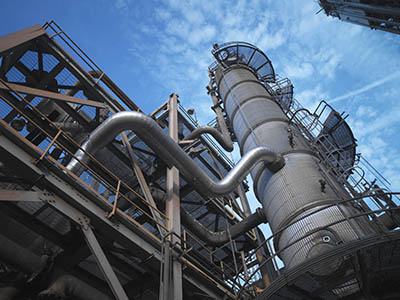
Power your plant for the future
Power plants built 20 years ago weren't optimized to achieve the operational goals of today and physics and financial challenges of the near-future. So, how can we prepare?
Podcast
Cutting Carbon - Season 2
Learn more about hydrogen-based fuels, capturing and sequestering carbon, and tangible pathways to a more decarbonized future.

Decarbonization
Explore the future of energy
See how GE Gas Power is helping to build a world that works.

Webinar
Exploring carbon capture
While the energy industry continues to prepare for the future of decarbonization, in addition to preparing for a hydrogen society, could CCS be a viable option?
Prefer to listen?
Stream our audio version
Power plant modernization is often considered a no-brainer investment. A significant portion of the combined cycle gas turbines installed across the U.S. were installed during the gas bubble of the late 1990s and early 2000s, which means they are now reaching the end of their design life.
Modernization investments extend the operational lifecycle, take advantage of improved efficiencies, heat rates, lower operating costs and, ultimately, more generation and revenue.
Data and analysis from the U.S. Energy Information Administration (EIA) confirm that newer, modernized turbines operate at significantly higher capacity factors than aging units. Turbines that have been operating for several decades are prime candidates for a range of modernization upgrades, including hot gas path replacements, updated controls, combustion retrofits, and output uprates.
“When we hear modernization, we immediately think hardware, controls, or software upgrades,” said Logan McCloud, Senior Engagement Manager at GE Vernova’s Consulting Services. “We think about new capabilities and tangible improvements to physical assets that can increase output and extend plant value.”
While those upgrades often deliver measurable operational benefits, their impact can be even greater than many plant owners realize. An independent analysis published in the journal Energy Economics found that modernized GE turbines could increase total generation by 5% to 18% while also reducing service and maintenance costs.
The compliance implications of modernization
Taking full advantage of modernization investments requires being clear-eyed about the grid code compliance implications. Indeed, McCloud says a growing number of plants are realizing too late that they had not anticipated grid code compliance complications.
“The number of well-intentioned modernization programs that run into unexpected friction is increasing,” McCloud explains. “Not because the technology didn’t work, not because they’re bad products, but because the regulatory environment those upgrades landed in was different from what the team assumed going in.”
The consequences of not proactively addressing grid code compliance are substantial. Plants can face significant fines, delayed commercial operation, and curtailment penalties if compliance requirements are not submitted and accepted on time.
Avoiding expensive and disruptive delays requires a robust knowledge of what can trigger compliance violations and reviews. The North American Electric Reliability Corporation (NERC) establishes and enforces grid code compliance requirements for power plants through a set of standards that apply to any synchronous machine over 25MVA that connects to the bulk power system.
When a plant undergoes modernization, specific changes can trigger the requirement to revalidate compliance with NERC standards and submit updated documentation to the relevant regional reliability entity, like PJM or WECC. Missing or misunderstanding those triggers can result in meaningfully negative consequences that can last for years. Plants that discover they are out of compliance are obligated to self-report.
There are three specific changes that trigger a revalidation requirement. Understanding each one is the first step in avoiding operational disruptions and fines.
Trigger one: A greater than 10% change in output
NERC’s MOD-025-02 standard requires generators that connect to the bulk power system to verify and document their actual real and reactive power output capabilities. This is different from nameplate capacity and is important to grid operators so they can model how a generator can support reliability.
If a generator’s output changes by 10% or more, the plant must provide its regional reliability entity with updated verification documentation. There is an important detail to this standard that, if overlooked, can lead plant operators to think they’re compliant when they are not. The 10% change in output is measured against the last submitted verification, not the last interconnection agreement.
It’s also important for plant owners and operators to be clear that the 10% threshold can be passed just as easily with a series of small upgrades and improvements over time as it can with a single, large project. A modest output uprate one year followed by a combustion retrofit a few years later may be enough to surpass the 10% output change without planners recognizing it. “Plants generally know if they’re uprating by a huge amount that they need to address compliance,” McCloud states. “It’s when they’ve done a series of small changes over five to ten years that it gets missed.”
Trigger two: Any change that affects dynamic behavior
Dynamic behavior is how a unit responds to real-time grid conditions, including frequency fluctuations, voltage changes, and system disturbances. NERC requires units behave in predictable and documented ways under various grid conditions. When a modification changes dynamic behavior, a plant’s compliance documentation must be updated to reflect how the generator will perform.
What makes this trigger hard to recognize is that some modifications may seem unrelated to grid performance. Often, plant operators will perform what seems like routine maintenance or standard upgrades without realizing that it necessitates a revalidation. For example, replacing copper field windings is often viewed as maintenance, as are controls upgrades and software migrations.
“Generator rewinds are a big one,” says McCloud. “It’s treated as a maintenance process, but when you replace the copper, it changes the resistances and reactances of the generator field. That has to be accounted for.”
Trigger three: Replacement in kind (that isn’t)
Replacement in kind is when a component or control system is swapped out for a new one that is the functional equivalent of the original. Because the new component doesn’t change the performance or behavior of the generator, it doesn’t trigger a revalidation.
Here’s the challenge: NERC and original equipment manufacturers (OEMs) don’t always define “identical” in the same way. Differing definitions introduce compliance risk. For example, a replacement part for a turbine manufactured decades ago may perform the same basic function as the part it replaced. However, it may differ significantly enough in its specifications that NERC does not consider it identical and requires a revalidation.
Not an afterthought
These compliance triggers share common features: none of them are immediately obvious, and knowing and responding to them requires someone who is specifically looking for them. But most power plants do not have dedicated compliance staff. Instead, compliance awareness becomes the responsibility of project managers and engineers who are more focused on their physical assets, timelines, and budgets. Grid code compliance will inevitably remain unprioritized unless it is explicitly built into the planning process from the start.
“Demand a compliance checkpoint early in the planning phase, and require them throughout the plant lifecycle,” McCloud concludes.
Compliance risk is real and impactful, but also manageable. The three triggers account for the majority of compliance surprises that catch plant operators off guard. Because they follow predictable patterns, it’s possible to track and flag things like dynamic behavior modifications and stay ahead of revalidation requirements.
GE Vernova’s grid compliance team works with plant owners and operators across all makes, models, and vintages to identify risks early, manage revalidation requirements before they become problems, and ultimately ensure that modernization investments deliver their full value.
Contact us