



FERC Order 1920 explained: A guide to long-term transmission planning
July 07, 2026
8-min read
Search Consulting Services
Webinar
Power your plant for the future
Power plants built 20 years ago weren't optimized to achieve the operational goals of today and physics and financial challenges of the near-future. So, how can we prepare?
Podcast
Cutting Carbon - Season 2
Learn more about hydrogen-based fuels, capturing and sequestering carbon, and tangible pathways to a more decarbonized future.
Decarbonization
Explore the future of energy
See how GE Gas Power is helping to build a world that works.
Webinar
Exploring carbon capture
While the energy industry continues to prepare for the future of decarbonization, in addition to preparing for a hydrogen society, could CCS be a viable option?
You might also be interested in
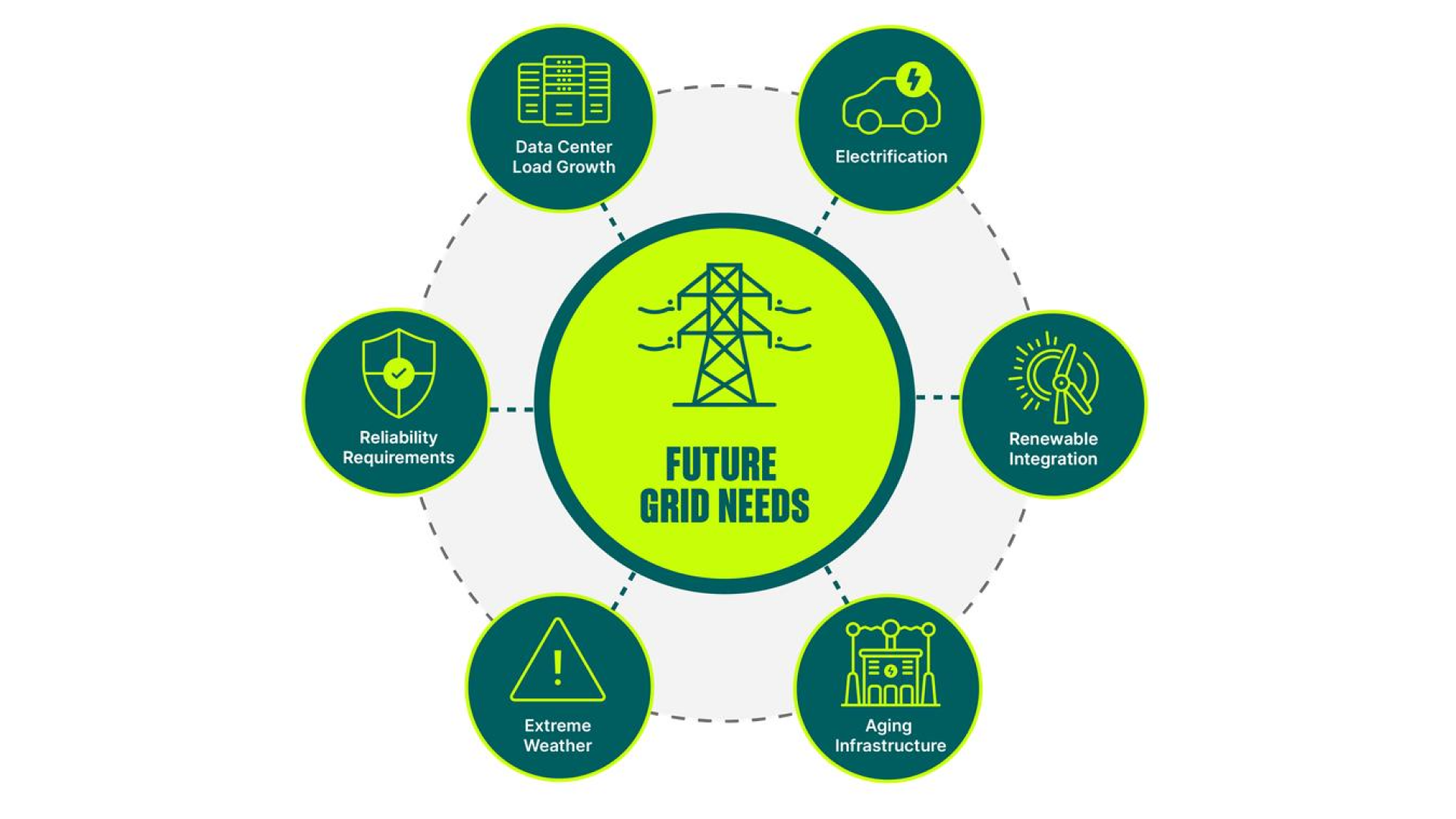
These challenges are being driven by rising electricity demand from data centers, electrification, and industrial development. At the same time, utilities and system operators must account for the changing generation mix, aging infrastructure, reliability concerns, and more frequent extreme weather events. Together, these trends have made transmission planning assumptions less certain and increased the complexity of identifying and building cost-effective transmission solutions.
The Federal Energy Regulatory Commission’s (FERC) Order 1920 was created in response to these challenges. It establishes new requirements for long-term regional transmission planning and a more structured framework for evaluating transmission investments. The order also addresses limitations of historical planning approaches, which often focused on shorter-term needs and made it difficult to identify investments with significant long-term value.
As John Meyer, who worked at the New York Independent System Operator before joining GE Vernova's Consulting Services as a technical director, explains, "Effective transmission planning and stakeholder consensus on transmission development projects have become more complex in recent years."
FERC Order 1920 is a rule issued by the Federal Energy Regulatory Commission (FERC) that establishes new requirements for long-term regional transmission planning across the United States.
The goal is to help transmission providers identify long-term reliability and economic needs earlier through coordinated transmission investments and planning studies that look decades into the future rather than focusing primarily on near-term needs. The order applies to FERC-jurisdictional transmission providers operating under an Open Access Transmission Tariff (OATT). It covers most of the contiguous United States, with Electric Reliability Council of Texas (ERCOT) being the primary exception.
The order introduces several significant requirements for long-term regional transmission planning.
Some key requirements include:
Rather than relying on a single forecast, planners are expected to evaluate how different futures could affect transmission investment decisions.
According to Meyer, "The most difficult thing to deal with in long-term planning is uncertainty, because from one scenario to the next, say high-to-low load growth or levels of renewable generation build, the outcome after 20 years can vary widely."
Looking 20 years into the future means evaluating futures that may differ significantly in load growth, resource mix, technology adoption, and policy priorities. For example, one scenario may assume rapid load growth driven by data center development and electrification, while another assumes slower economic growth and more moderate electricity demand. Both outcomes may be possible over a 20-year planning horizon.
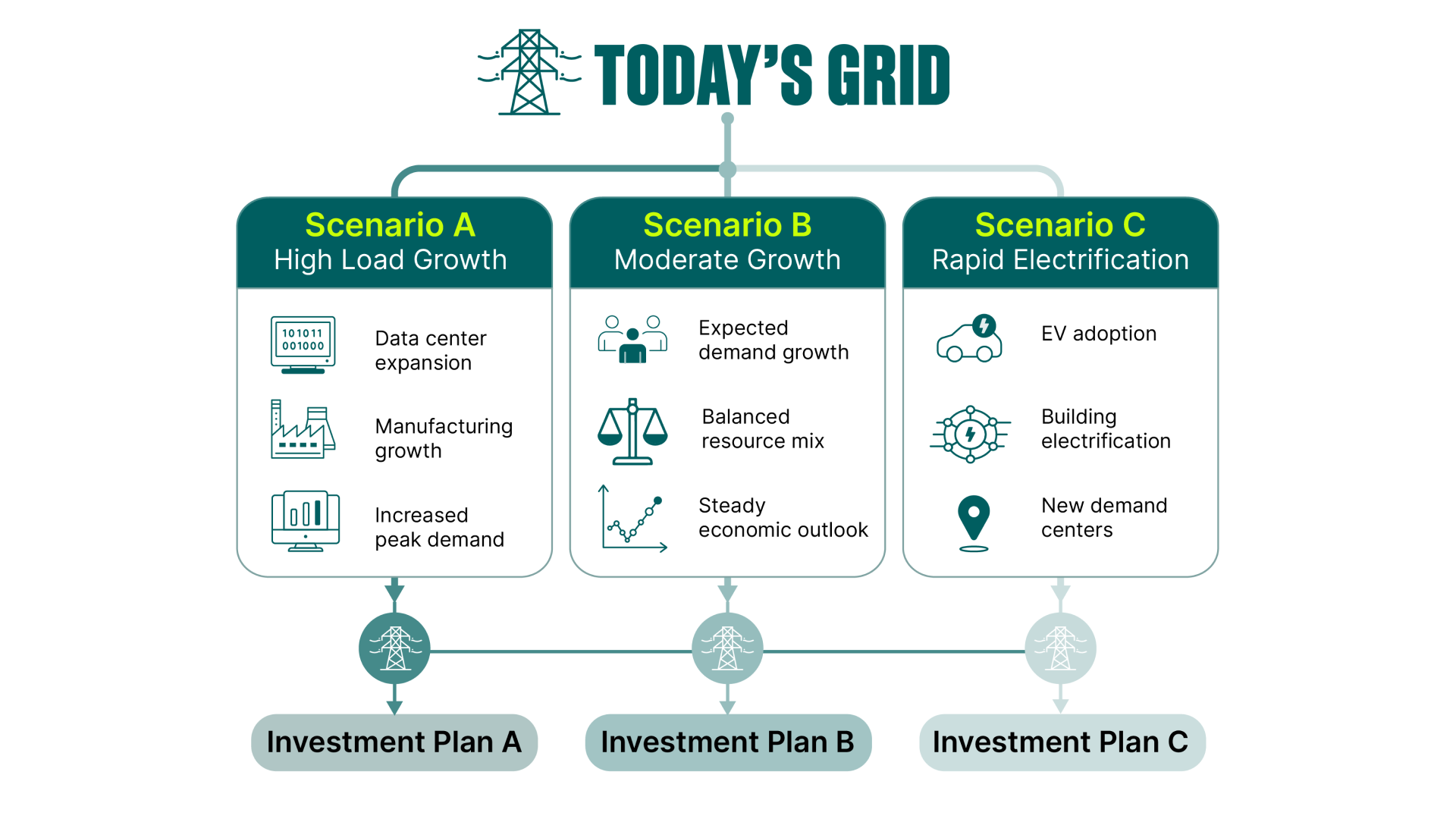
This makes planning more difficult. A transmission investment that appears to be the best choice under one scenario may be less attractive under another.
The goal is not to predict the future perfectly. Instead, planners need to find solutions that can provide value across a range of different futures while balancing reliability, economics, and policy objectives.
FERC Order 1920 increases both the amount of planning required and the accountability for planning decisions.
In the past, planning studies were often developed for technical audiences. Under the new framework, planners must also be prepared to explain their assumptions, methodologies, and recommendations to:
As transmission projects move from engineering studies into regulatory and policy discussions, planning teams must be able to clearly explain why a project was selected and how conclusions were reached.
Meyer emphasizes the importance of defensible planning decisions: "It is critical to come out communicating a non-ambiguous solution or options that are understandable and can be explained pragmatically."
In practice, this means producing planning results that are transparent, repeatable, and understandable to both technical and non-technical stakeholders. Read Defensibility by design: What FERC Order 1920 requires to learn more about what FERC Order 1920 requires from long-term transmission planners and how defensible, transparent planning methods can help utilities meet regulatory expectations.
Many organizations still rely on separate tools, datasets, and workflows for different planning activities.
Power flow studies, resource adequacy analysis, production cost modeling, reliability assessments, and transmission expansion studies have traditionally been performed using different software platforms and often by different teams. Meyer explains that these silos developed naturally over time as different planning disciplines evolved independently.
But this way of planning can lead to inconsistent assumptions, duplicate work, and planning results that are difficult to match up. For example, a single change in a load forecast or resource assumption may require multiple planning teams to manually update separate models, increasing the chance of delays and inconsistent results.
Today, however, long-term planning increasingly requires those disciplines to work together. FERC Order 1920 means planners now must look at more scenarios, handle greater uncertainty, and work closely across planning functions. Under FERC Order 1920, planners must connect economic and reliability considerations into a single planning framework. That makes collaboration and consistency more important than ever.
As the grid transforms, decisions made in isolation create financial and reliability challenges. Drawing on real-world utility challenges, this playbook examines how shared data, aligned assumptions, and integrated planning workflows help utilities move faster and invest with confidence.
As planning requirements become more complex, many organizations are moving towards Integrated Systems Planning.
Integrated Systems Planning helps teams:
Most importantly, Integrated Systems Planning creates a clearer connection between planning data, analysis, and final recommendations.
Compliance is about more than completing required studies. Organizations must establish repeatable planning processes that support long-term scenario analysis and provide sufficient documentation for stakeholder and regulatory review. Transmission providers must file compliance plans with FERC. Following FERC approval of those filings, providers will follow new planning requirements in accordance with region-specific timelines.
While formal deadlines will continue to phase in over the coming years, many organizations are already developing the frameworks, processes, and analytical tools they need to meet the order's requirements.
GE Vernova’s PlanOS is an Integrated Systems Planning platform that connects power flow, resource adequacy, production cost, and capacity expansion workflows through a common data environment. By improving consistency across studies and reducing manual reconciliation between planning activities, PlanOS helps organizations evaluate scenarios more efficiently and support the transparency and defensibility requirements introduced by FERC Order 1920.
FERC Order 1920 represents a significant shift toward long-term, scenario-based transmission planning. To meet its requirements, organizations will need to evaluate uncertainty more carefully, connect planning disciplines more effectively, and clearly support the decisions behind transmission investments. While implementation timelines continue to evolve, many organizations are already building the processes and analytical capabilities needed to comply and plan for a fast-changing grid. Find out how GE Vernova’s Consulting Services can help your organization build transparent, defensible transmission planning using PlanOS to support FERC Order 1920 and long-term grid planning objectives.
Discover more
Contact us