Subscription
No

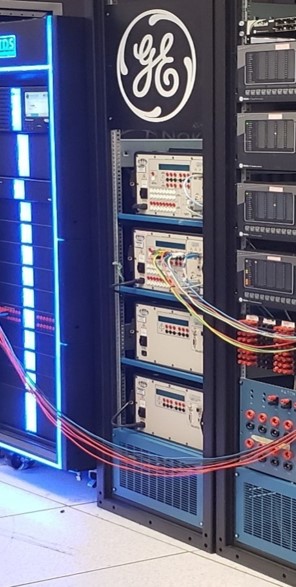
Real-Time Digital Simulation (RTDS) has emerged as a crucial technology in the face of the evolving challenges that the electrical grid faces, such as the integration of distributed energy resources (DERs), better grid resilience, smart grid technologies, and the demand for electric vehicles (EVs). We support customers with our four dedicated RTDS laboratories to ensure reliable and robust grid operations during and after disruptive events through the following services:
Real-Time Digital Simulation (RTDS) has emerged as a crucial technology in the face of the evolving challenges that the electrical grid faces, such as the integration of distributed energy resources (DERs), better grid resilience, smart grid technologies, and the demand for electric vehicles (EVs). We support customers with our four dedicated RTDS laboratories to ensure reliable and robust grid operations during and after disruptive events through the following services:
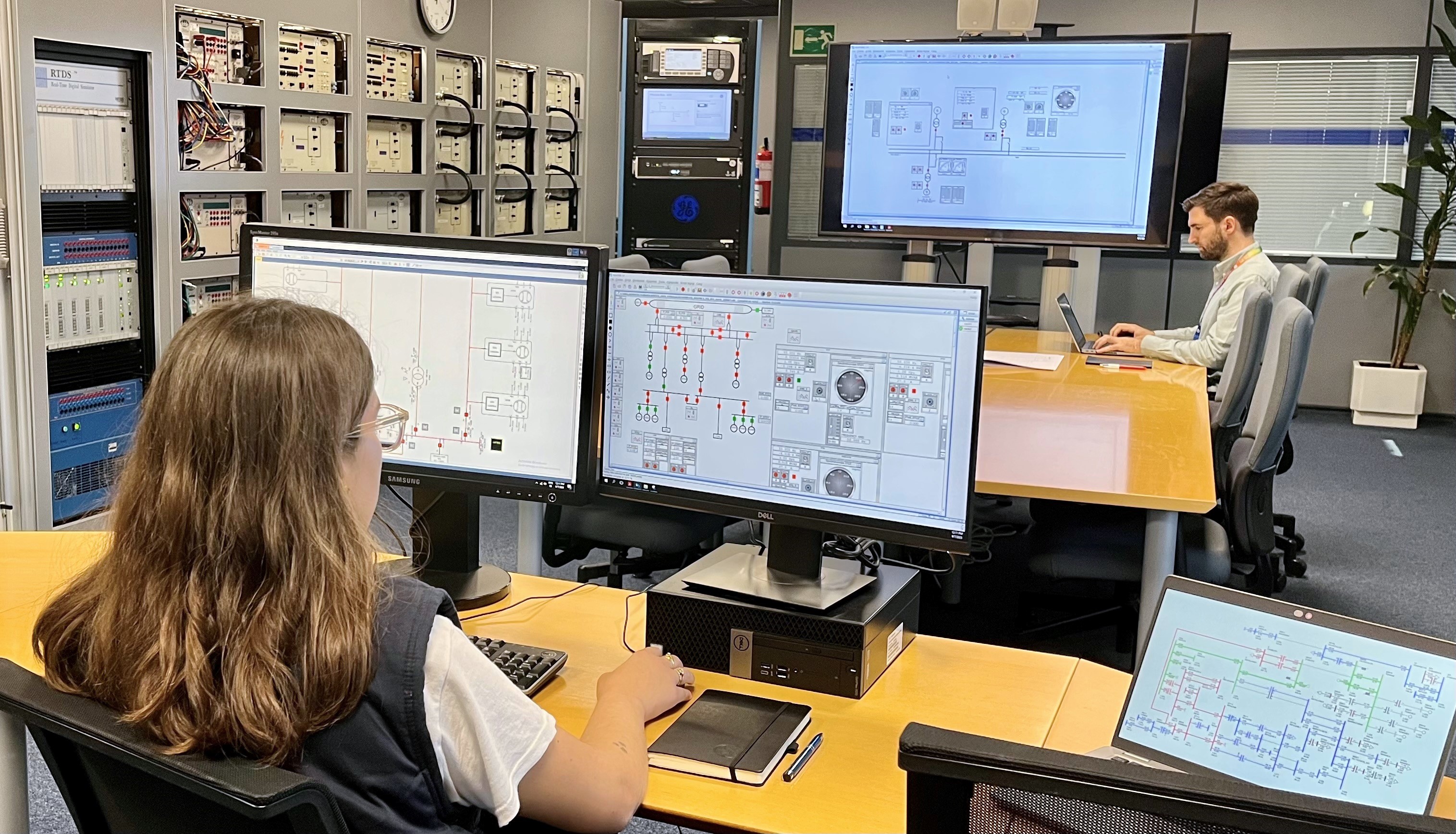
The RTDS can simulate the electrical power system in real-time. Powerful processors work in parallel to simulate the output of an electrical system or network in terms of currents and voltages.
The RTDS is connected to voltage and current amplifiers which convert the RTDS command signals into voltages and currents. The relay’s outputs can be connected to the RTDS which can interpret these signals and take certain actions (open a breaker, calculate tripping time, etc.), thereby closing the loop. This can only be achieved with a real-time simulator.
The closed-loop interaction of the protection system with the network model provides insight on both the performance of the relay scheme as well as its effect on the power system. A simple schematic of HIL is shown below.
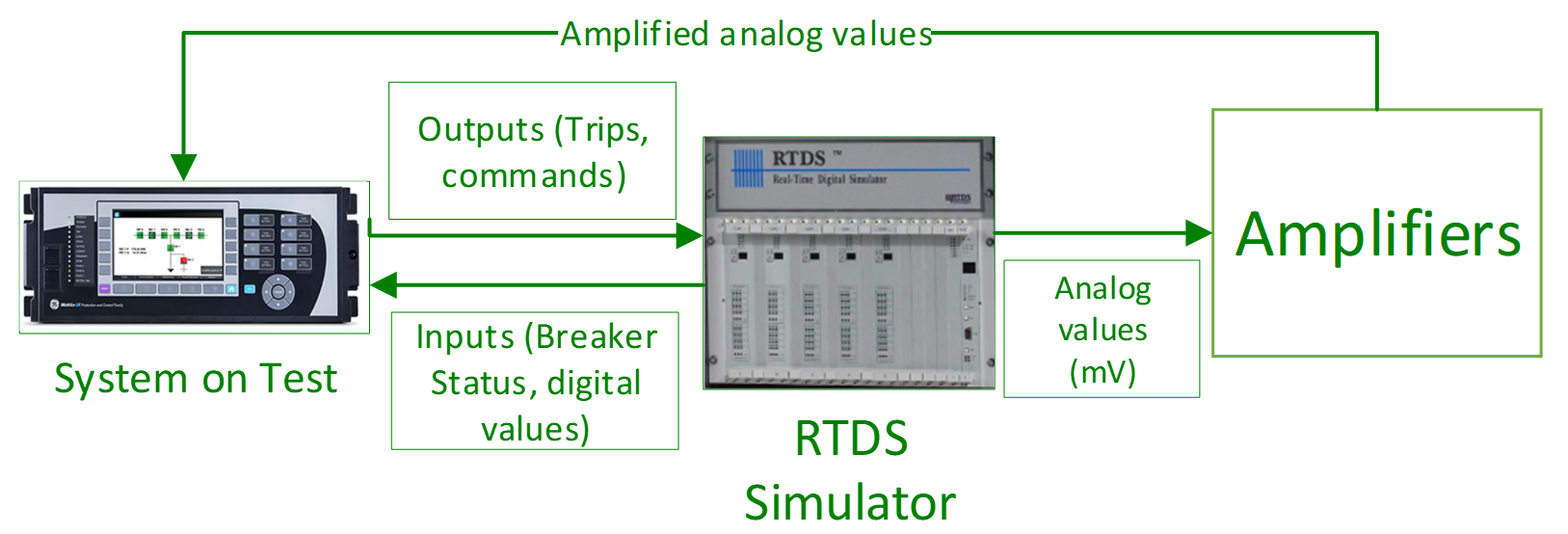
A model of the power system is implemented on the RTDS that includes the high-voltage components (e.g., lines, breakers, instrument transformers, power transformers, generators, etc.) plus the required protection and control functions not included in the equipment under testing.
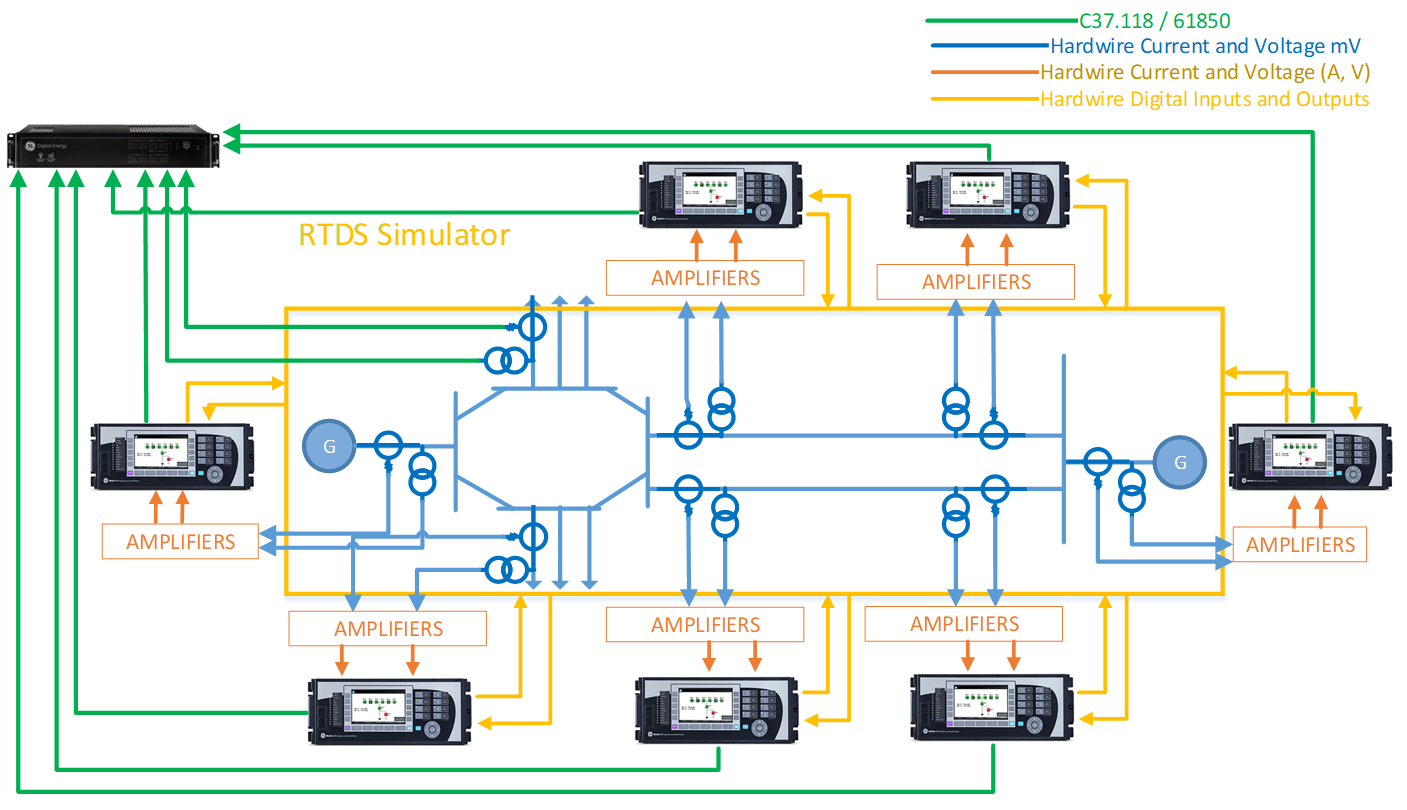
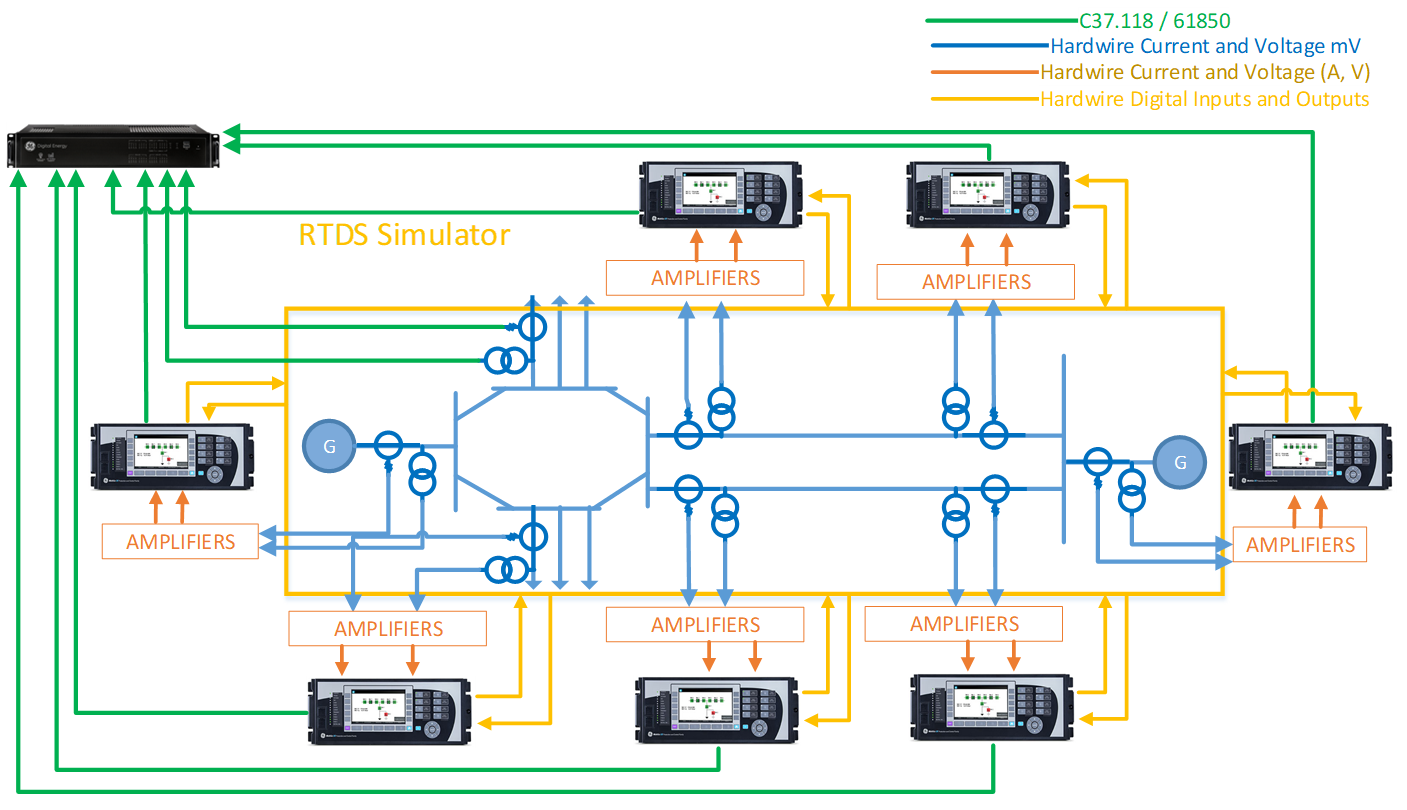
Illustrated below is a typical topology for WAMPAC testing through RTDS, where detailed models of the instrument transformers (CT, PT, and CVTs) provide signals to amplifiers that convert the values to real secondary values as if we were on a real power system. PMU and IEC 61850 sampled values can also be included as part the outputs of our system in tests for HIL. Digital inputs and outputs are also exchanged between relays.
Challenge: A customer needs to detect an islanding condition and identify events in the grid that could affect the point of interconnection (POI).
Value Added Proposition: Determine the parameters and methodology to trigger islanded identification. RTDS tests for validation purposes for loss of generation detection through sudden or cascade loss, loss of load detection through sudden or cascade loss, and trip to island from the external grid.
Benefits: Allow plant operation during islanding conditions through balance of load and generation.
Challenge: A customer is facing unexpected protection tripping, impacting plant production. Undesired blackouts are costing $1M of lost profit per plant maloperation.
Value-Added Proposition: Existing settings are audited in an HIL environment with the same relays involved in plant operation. Multiple scenarios and faults are analyzed, and new setting proposals are tested on several cases when any finding is uncovered. A final report with findings and recommendations to improve setting coordination is delivered.
Benefits: Plant operation time is increased due to proper coordination, and time-to-repair is reduced through fast identification of the fault location. RTDS tests improved coordination between HV and MV sides. Some of the findings included miscoordination between bus coupler and feeder protection elements, phase undervoltage elements, and interlock inhibitions.
Challenge: System Integrity Protection Schemes are complex systems where multiple devices must be tested at the same time in the most realistic conditions due to their criticality in power system stability.
Value Added Proposition: RTDS tests become a mandatory requirement for factory acceptance test (FAT) to validate all dynamic test scenarios. Analog values from the electrical system are simulated, amplified, and hardwire to IEDs included in the SIPS, and additional information can also be sent directly from the test system to the SIPS central unit through PMU or IEC 61850 exchange, depending on the project design.
Benefits: These tests can highlight unforeseen scenarios and reduce commissioning time and minimize disruption to the operational network.
Real-Time Digital Simulation (RTDS) has emerged as a crucial technology in the face of...
View More

Our field service engineers are available to provide technical expertise on-site. With...
View More
Our engineering services team provides a wide range of capabilities to assist you with...
View More
Our field service engineers are available to provide technical expertise on-site. With over 1,000 years of cumulative experience in protection and control, substation automation, monitoring and diagnostics, and industrial communications, we work with our customers to understand their needs and requirements, and work relentlessly until business objectives are met.
Our field service engineers are available to provide technical expertise on-site. With over 1,000 years of cumulative experience in protection and control, substation automation, monitoring and diagnostics, and industrial communications, we work with our customers to understand their needs and requirements, and work relentlessly until business objectives are met.
Real-Time Digital Simulation (RTDS) has emerged as a crucial technology in the face of...
View More
Our field service engineers are available to provide technical expertise on-site. With...
View More
Our engineering services team provides a wide range of capabilities to assist you with...
View More
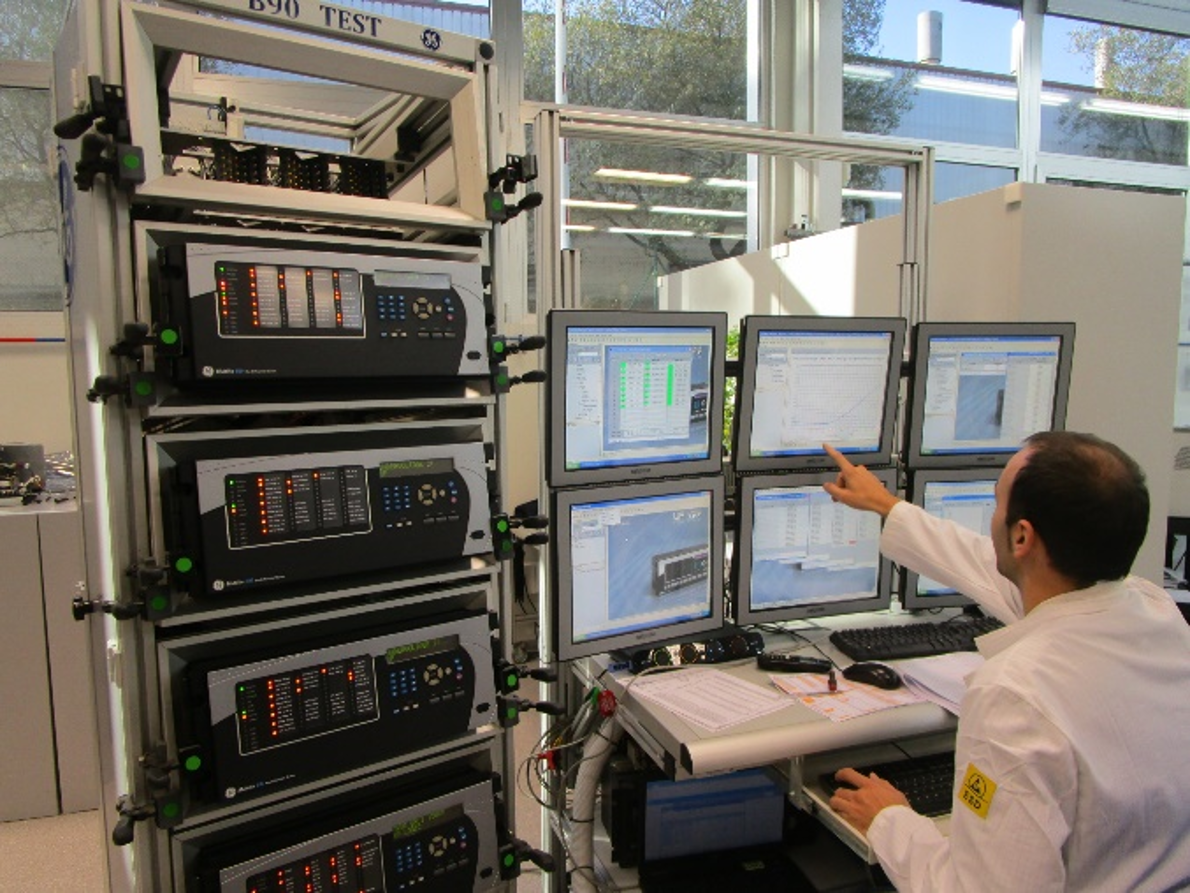
Our engineering services team provides a wide range of capabilities to assist you with your power protection, substation automation, and monitoring and diagnostics challenges.
We provide end-to-end solutions to support your project needs. From new installations to understanding the best way to upgrade an existing system, our engineering team has been trusted to analyze, design, and implement modern power systems with a broad range of engineering services that includes:
Our engineering services team provides a wide range of capabilities to assist you with your power protection, substation automation, and monitoring and diagnostics challenges.
We provide end-to-end solutions to support your project needs. From new installations to understanding the best way to upgrade an existing system, our engineering team has been trusted to analyze, design, and implement modern power systems with a broad range of engineering services that includes:
These services entail configuration of Grid Automation and third-party P&C devices as per agreed settings and functionality.
Settings can be determined by our calculation of settings and studies or can be supplied by the customer.
Under request, the files can also be uploaded into the customer devices and tested before shipping or installation. Additionally, functional testing for final settings can be tested and reported.
Communication capabilities of current relays are extensive and complex architecture networks are needed in existing substations.
Grid Automation experts can help to unleash communication capabilities within already installed devices, support customers in new deployments, or improve communications architecture and ensure efficient use of network traffic.
Our support can be as simple as helping to configure customer signal mappings, or complex IEC 61850 device integrations. Any protocol supported by our products can be managed.
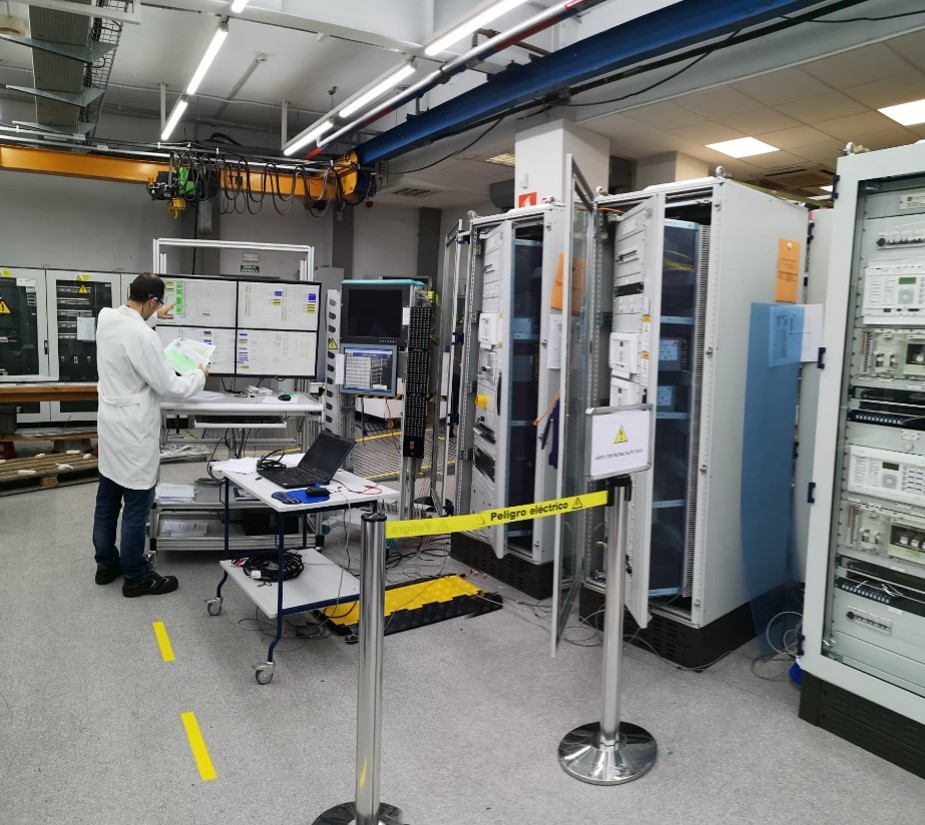
The Grid Automation business offers the technical expertise to provide a reliable factory acceptance test, no matter if it is be carried out on our premises, or at third-party installations.
Before material delivery, our FAT support ensures functionality, quality, and integrity with our comprehensive checking process, guaranteeing that the equipment performs as expected under the testable range of foreseeable conditions.
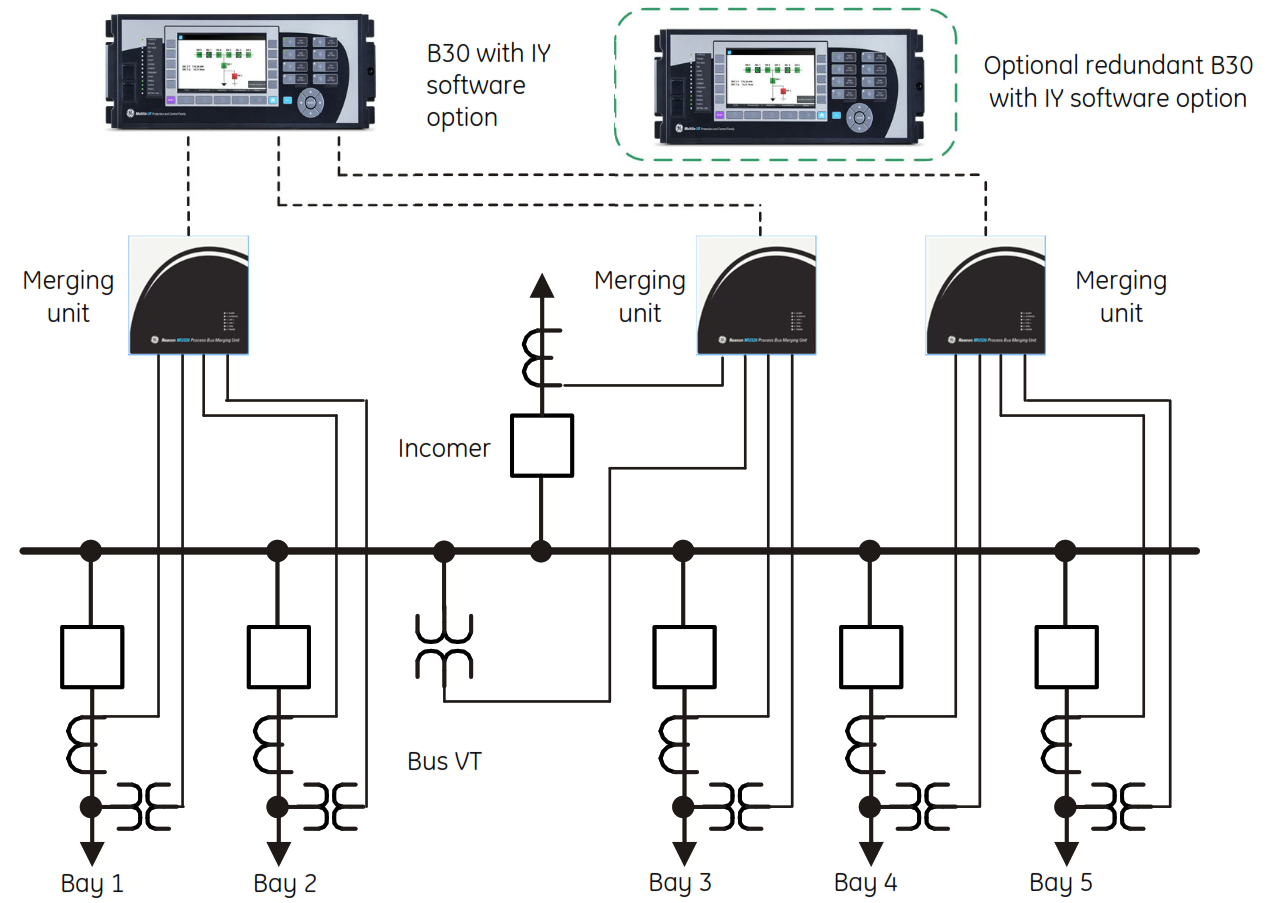
GE Vernova's Busbar Differential System provides fast and secure low impedance bus protection for reconfigurable LV, HV, and EHV busbars. This integrated solution is comprised of engineering, design, assembly, wiring, testing, and commissioning support for protection, control, and automation applications.
Depending on the nature of the protection, we differentiate between three different types of busbar differential projects:
The B30, a member of the UR family, provides busbar protection for up to 16 feeders with six differential zones. Communication between the bay and central units is done using process bus (IEC 61850-9-2LE) or standard (IEC 61869) protocols, and offers a large, full color LCD display. It can also be used for centralized protection of MV substations requiring busbar, breaker fail, feeder phase/neutral/ground overcurrent, and under/overvoltage protection.
Comprehensive and scalable bus and breaker fail protection for LV, HV, and EHV busbars. The B90, a member of the UR family, supports multi-section busbars schemes of up to 24 feeders and six zones, and offers a large, full color LCD display.
Electrical processes are becoming more critical every day. Whether these processes are industrial or commercial, uninterrupted power supply is vital. In order to provide more reliable power supply, the power system can alternate sources to different bus bars. An Automatic Transfer Scheme (ATS) is the process of transferring the load of a busbar to another to ensure process continuity.
The ATS helps ensure the continuity of critical processes whose shutdown would result in unwanted economic and safety consequences. Transferring motor buses are specifically challenging due to the inertia forces and transients that exist in motors.
The Automatic Transfer and Restoration Scheme combines distributed protection, control, and ATS capabilities in a cost-effective package. Depending on your project-specific requirements for inputs/outputs, it can be performed on our SR850, F650, or P40x relays.
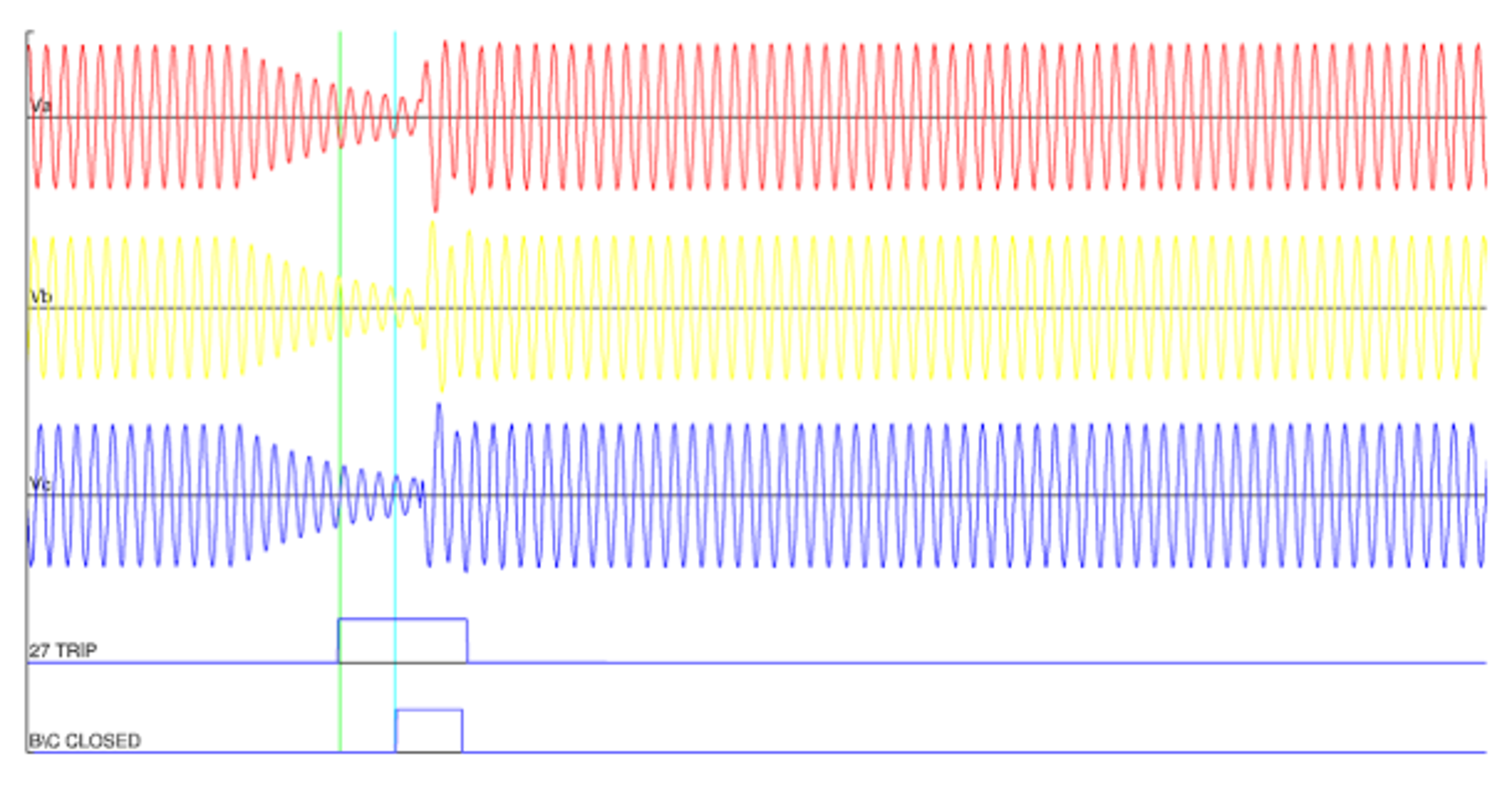
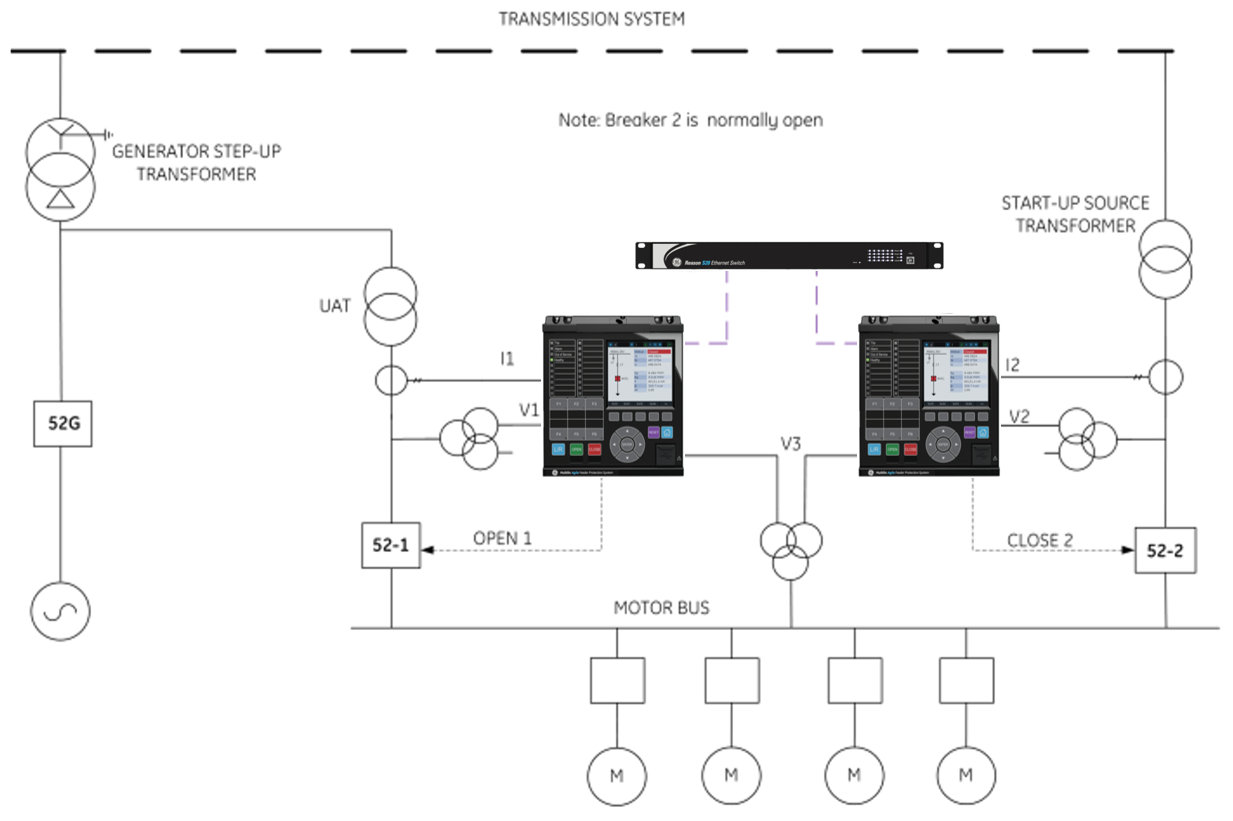
This configuration can be found in thermal power generating stations. The example shows a hard-wired solution.
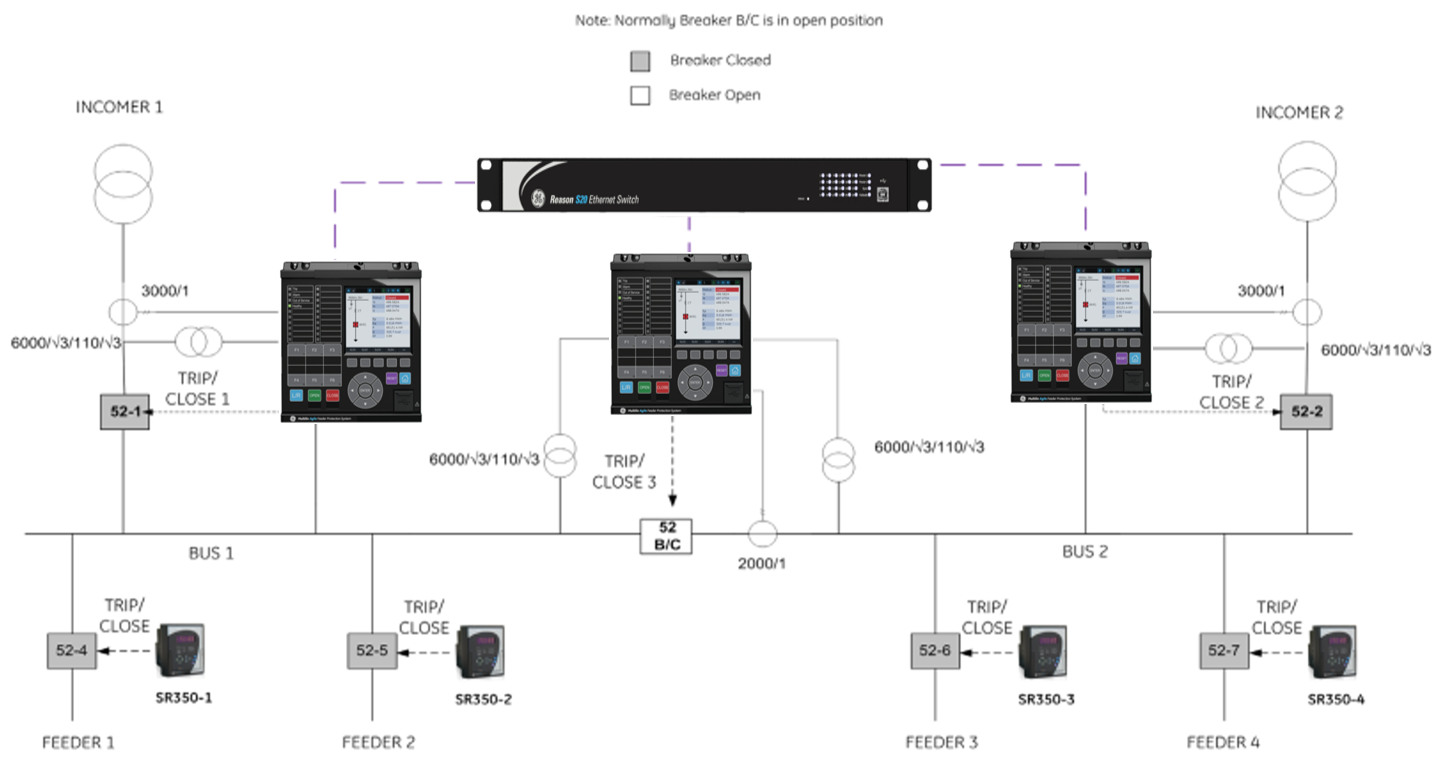
This type of configuration is mainly used in industrial plants. The example shows a solution with GOOSE 61850 inter-relay communication.
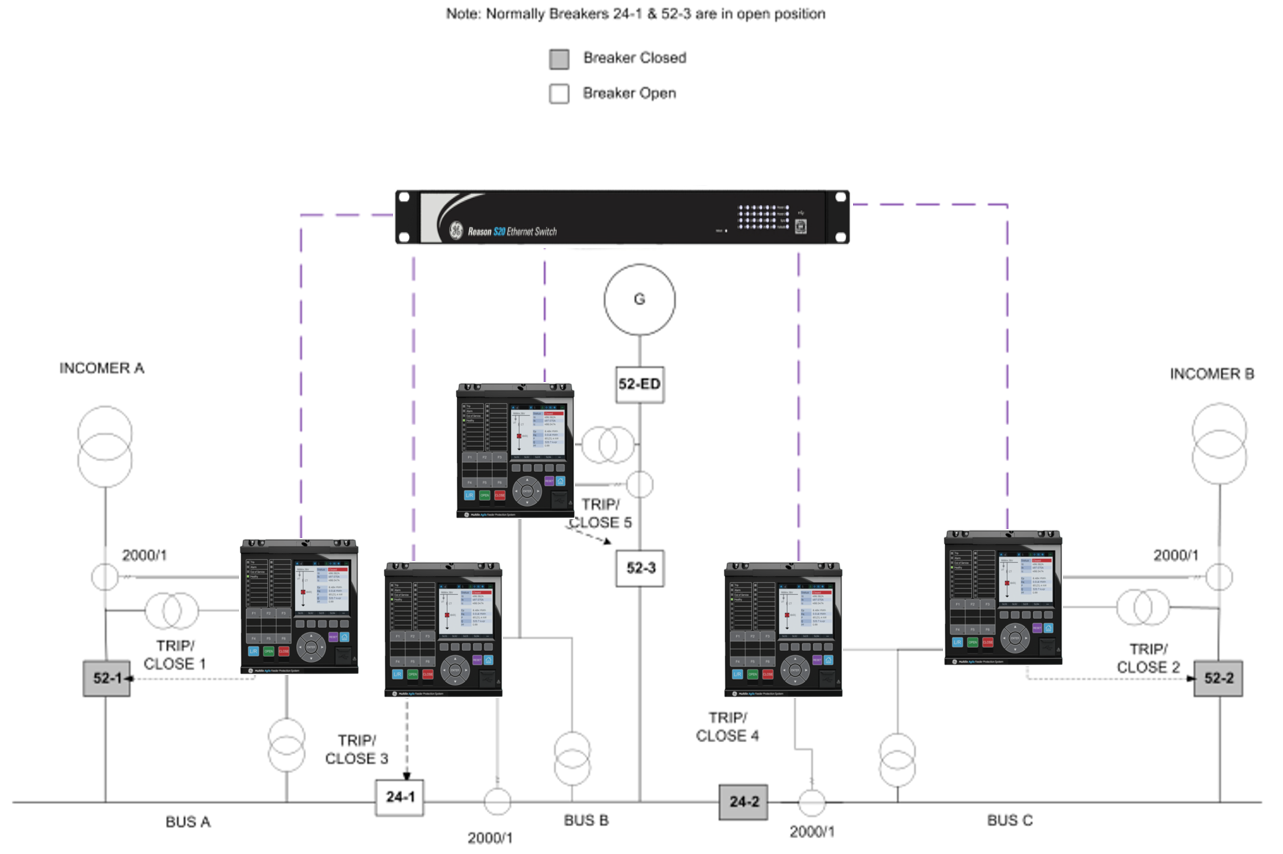
The Main-Tie-Main configuration can be improved by adding an emergency generator that would operate in case of loss of power on both main sources. The example shows a solution with GOOSE 61850 inter-relay communications.
The transition to digital substations has emerged as a transformative approach to enhance operational efficiency, flexibility, and reliability. Digital substation standardization is a critical process that defines consistent protocols, interfaces, and architectures for the seamless integration of intelligent electronic devices (IEDs), communication systems, and control infrastructure. Digital substation standardization is essential for driving the adoption and implementation of advanced technologies in power system networks.
Our team possesses extensive expertise and experience in digital substation standardization, offering comprehensive solutions tailored to the unique needs of power system networks, including:
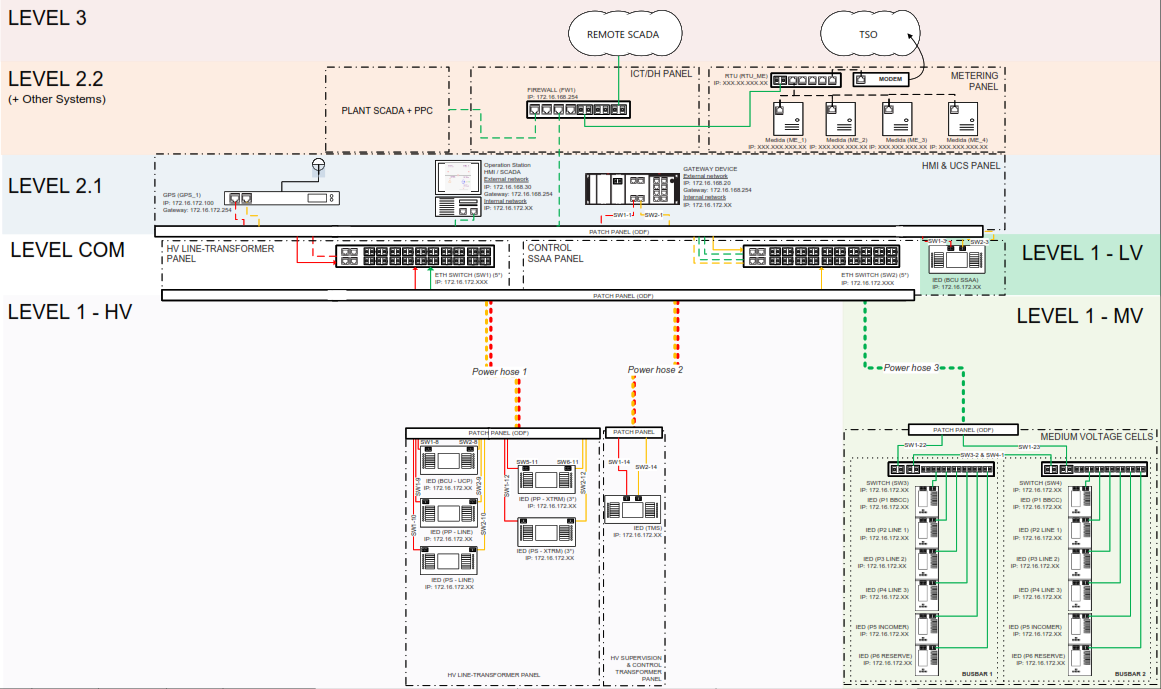
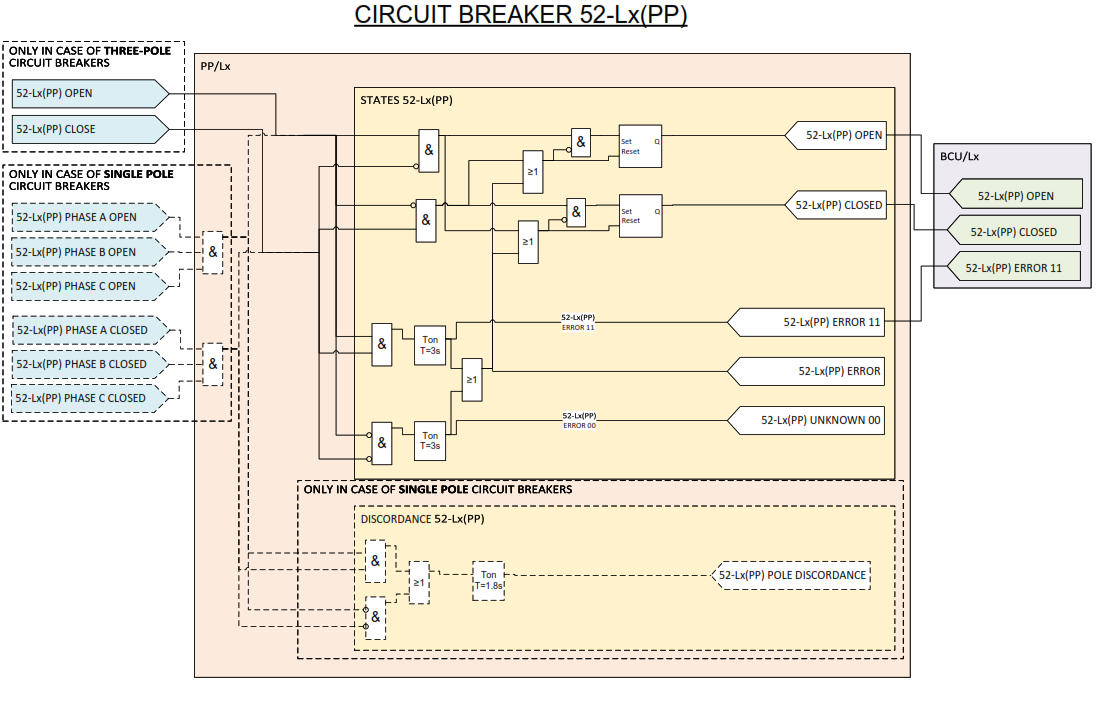
Challenge: Assure a new standard for digital substation design and provide new communications networks and architecture on digital substations.
Value Added Proposition: Design and implementation of standardized schematics for network architecture and communication signals exchange. .scd and .cid template file generation.
Benefits: A standardized solution for three typical topologies, making them more efficient on digital substation implementation. Closure of technology gap for customer employees.
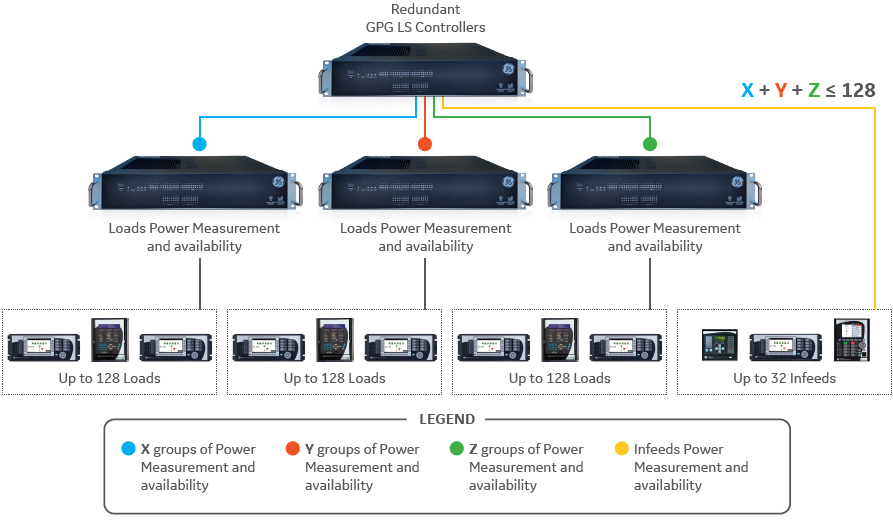
Remedial Action Schemes (RAS) are a type of Wide-Area Protection Scheme, also known as Special Protection System (SPS) or System Integrity Protection Scheme (SIPS). RAS systems can detect disturbances in one part of an interconnected network that could result in interconnection overloading, under/over frequency conditions, and under/ overvoltage scenarios, and remediates these situations using pre-defined protection and control actions.
Real-Time Digital Simulation (RTDS) has emerged as a crucial technology in the face of...
View More
Our field service engineers are available to provide technical expertise on-site. With...
View More
Our engineering services team provides a wide range of capabilities to assist you with...
View More