Search GE Steam Power
Recommended resources
Upgrades
Your outcomes—delivered
These days, we're all trying to do more with less, but GE Vernova can help. Our upgrades and modernizations can help you get more from your existing assets. Discover the possibilities with our interactive upgrades selector.

Controls
Control Lifecare Services
Whether you need 24/7 technical support, live remote diagnostics, onsite field engineering, or parts management, we have you covered with GE Vernova's Controls Lifecare Services (CLS).
Podcast
Cutting Carbon - Season 9
Join Dr. Jeff Goldmeer, Brian Gutknecht, and special guests for the final season of our 3-part series as they discuss the roles digital and electrification will play in the energy transition.

Decarbonization in action
Explore the future of energy
See how GE Vernova's Gas Power business is helping to build a world that works.
Featured videos
Let’s talk service strategy
- The backbone of reliability
- Coal-to-gas conversion
- Repair solutions
- Repairs in action
- Core services
- Outage services
The value of a coal-to-gas conversion
Discover how a coal-to-gas conversion can help you extend your operating window with lower maintenance costs and emissions, and deliver the ROI you need.
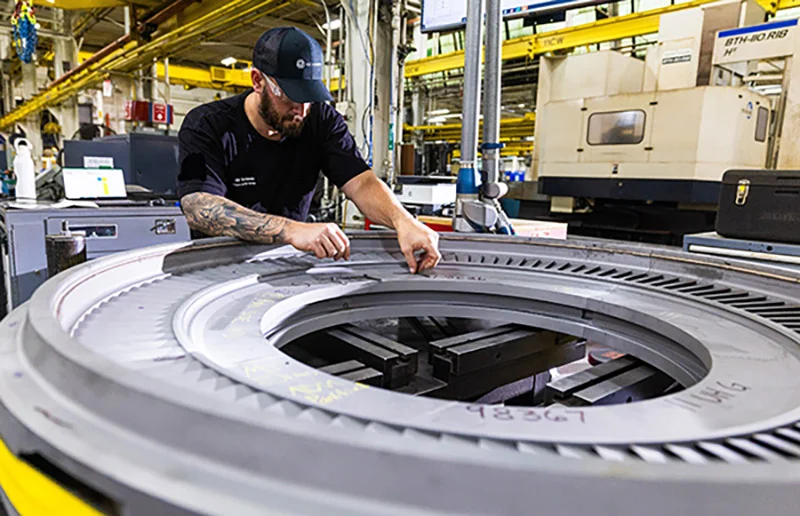
Repair solutions for aging steam plant operations
For steam plant operators in their later life cycles, squeezing the most life from their existing equipment in a cost-effective way is increasingly important. Our service team has developed repair solutions specifically for aging power assets… and that don’t break the bank.
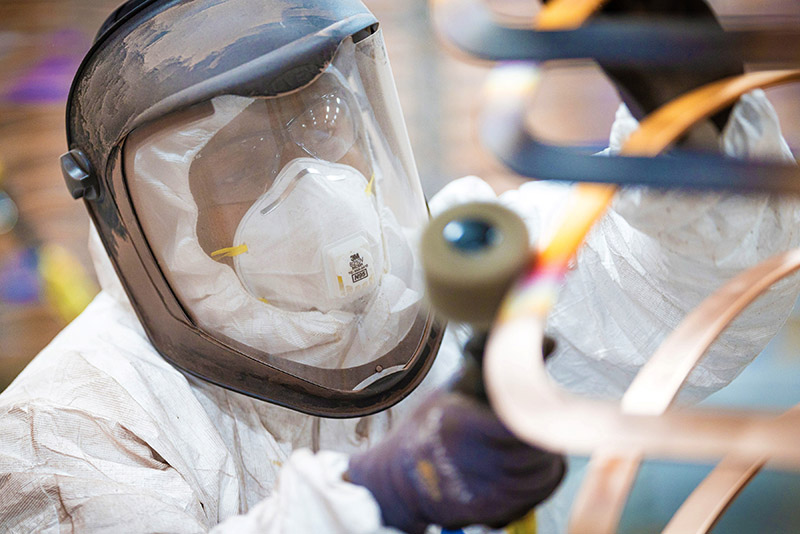
Repair innovations… delivered
See some examples of creative repair solutions our team has executed, in cost-effective ways, to keep customers’ aging equipment operating reliably through the energy transition.
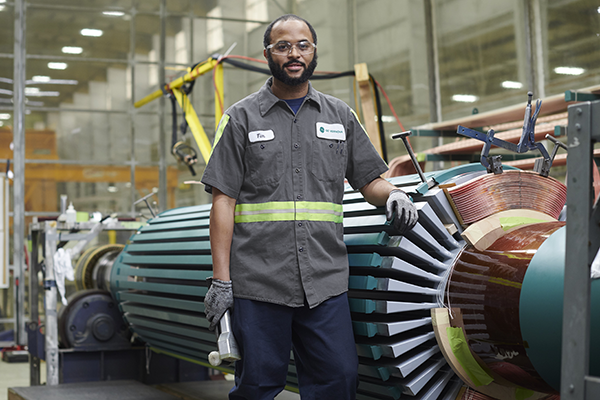
Parts and repairs for steam power plants
Our team continues to build on our parts and repairs capabilities—in collaboration with our suppliers—to deliver for our customers fast, without sacrificing quality.
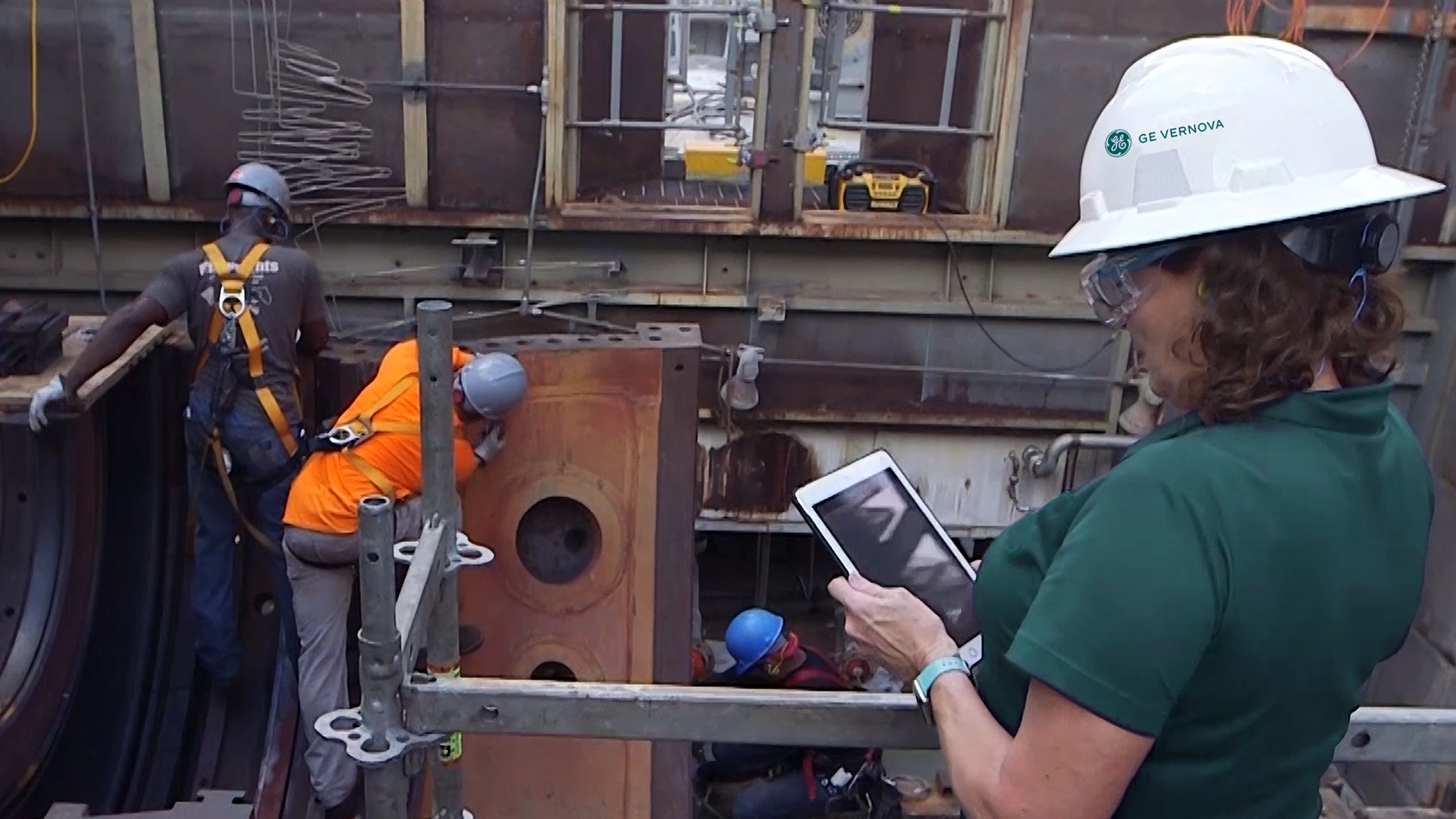
Outages: strengthening your services foundation
In today’s energy transition environment, our team knows we need to take your outage planning and execution—as the foundation of your service strategy—to the next level. See what we’ve been working on lately to reduce your outage cycle time, while maintaining safety and quality as our north star.
Discover
Future-proofing your operation
Parts: Your service strategy’s tip of the spear
Nothing helps ensure your steam plant’s performance and reliability as much as the parts that go into it. We are strengthening our parts capabilities—in partnership with our global supply chain—to reduce wear, risk, and unexpected downtime:
- Accelerated delivery cycles: Our process improvements have reduced the average order-to-delivery cycle by 30%* and cut quoting time by 40%.
- Engineered for durability: We prioritize life-cycle longevity and operating flexibility, utilizing high-grade materials and pre-assembled, drop-in solutions to sustain your plant's performance.
- Genuine OEM assurance: We provide components built to exact specifications, ensuring seamless integration and the long-term reliability that proprietary OEM parts can deliver.
Discover how we’re taking things to the next level.
*Average reduction across parts portfolio from 2024 to 2026; not applicable to all components

PARTS
Your service strategy’s tip of the spear

The value of speed

Navigating today’s environment

Designed to last

QUALITY BUILT IN

How it all comes together

Delivering for customers

Frequently asked questions
Common issues for aging generators
DETECTION MONITORING AND MITIGATION
What are some failures seen across the fleet from older units versus mid-life units?
In general, rotor and stator winding degradation, along with seal and cooler leakage account for ~80% of aging unit issues we've seen in recent years.
Others include:
- Exciter flashover
- HV bushing failure
- H2 seal wear/leakage
- Cooler leakage
- Auxiliary systems end of life
Slot insulation degradation can be an issue for units 25+ years old, while shorted turns are more likely for generators in the 10-20-year age range.
What's the difference between GE Vernova’s online and offline monitoring capabilities for partial discharge, end winding vibration, stray flux, or heat runs?
Online: Our portfolio features several online monitoring technologies including Generator Health Monitoring (GHM) and Stator Leak Monitoring (SLMS). GHM is a comprehensive system applicable for all GE Vernova and legacy brand generator types. This technology enables steam plant operators to independently monitor all major unit components or have our Monitoring & Diagnostics Center team provide 24/7 monitoring on your behalf. This software provides insights into partial discharge, rotor flux/shaft voltage, end-winding vibration, stator temperatures and more. SLMS technology is focused on monitoring for water-cooled stator winding leaks of hydrogen and maintaining cooling water oxygen content. Both solutions can help you side-step unplanned unit failures and/or forced outages.
Offline: Our team can perform an in-situ robotic inspection on all critical areas of the unit without removing components such as the rotor. This approach reduces your time offline and associated costs. A condition-based health assessment of your unit can also be performed—without having to shut down operation—to determine how much remaining life the generator has left. The assessment includes analysis of maintenance history, operating profile and a comparison to similar units and conditions across our generator fleet.
How effective are end-winding vibration sensors and online partial discharge monitoring?
End-winding vibration (EWV) can effect the entire unit, or just a localized area of the generator. In situations when a more widespread effect is occurring, EWV can typically be detected. If the effect is limited to one localized area, it can be more challenging to detect. Therefore, it’s important that sensors are applied to all of a unit’s critical components. Assessing partial discharge data can vary depending on the unit type. For hydrogen-cooled generators, support from GE Vernova’s remote Monitoring & Diagnostics team can provide 24/7 monitoring and support with this type of data evaluation.
What is the recommendation for partial discharge testing and intervals?
For sites without a permanent monitoring system, we recommend that partial discharge data is reviewed on an annual basis at or near the same operating point for each test, and do so at full load. If an anomaly or potential issue was noted in a previous test, we recommend testing after six months to monitor or rectify the issue as needed. Our Generator Health Monitoring (GHM) software has a module for monitoring partial discharge activities. This can help you detect deterioration of stator winding insulation, as well as contamination of the generator, bus and semi-conductive coating.
Our self-assessment checklist can help highlight areas to review.
What are the most common signs of a faulty generator rotor?
Some common signs include:
- Shorted turns
- Vibration issues
- Excitation current increases to maintain output
- Inability to maintain output due to excitation limitations
INSPECTION AND TESTING
What is needed for a complete picture of a generator’s condition?
A robotic visual inspection by a generator specialist (with the field removed) can provide a comprehensive summary of your unit's condition. Alternatively, a condition-based health assessment can provide a similar picture without having to shut down. This process involves reviewing your unit's maintenance history, operating profile and comparison to our fleet analytics to help predict how much remaining life your unit has left. Your GE Vernova service team can perform these activities on request. Our self-assessment checklist can help highlight areas to review.
Is vibration the only way to detect a rotor inter-turn short?
No, our service team can perform a flux probe test to help identify the potential for an inter-turn event.
With units running beyond the intended life span, what inspections, intervals and maintenance should we do?
The GEK 103566 maintenance manual for generators provides recommendations on these and other service activities. You can access this document in the GE Vernova customer portal. If you're not registered in the portal, you can do so online or ask your service manager for assistance.
Our self-assessment checklist can help provide an initial view of generator health needs.
MAINTENANCE AND LIFECYCLE MANAGEMENT
What stator issues pose the most risk to my steam plant operation?
- A stator bar ground fault can lead to a forced outage from a system protection trip.
- Leakage in the stator can result in hydrogen getting into the water which is a safety risk, or water can seep onto the stator bars.
- Damage to the stator core can also lead to a forced shutdown.
Repair and parts replacement solutions can address these issues, but an effective preventive action to avoid them is using software monitoring and/or inspection services to pinpoint emerging issues before they become serious.
What causes an exciter flashover and what damage can it do?
An exciter flashover is triggered by a progressive loss of contact between the rings and brushes. This can be caused by dirt contamination, worn brushes, vibrations or plugged vents. A flashover can burn out certain components which then need to be replaced. The best ways to prevent this from occurring is to replace brush holders when their springs are aging, or to polish/turn slip ring surfaces through machining which can be conducted on site.
How long does it take to repair a generator rotor winding?
Cycle time for a winding repair varies depending on the scope required. A pre-planned full field rewind takes, on average, approximately 30 days. However, some repairs can be performed in as little as 1-2 weeks. Rewinds related to forced outages typically take longer when new parts or materials need to be ordered.
How does degradation compare between age, operating profile and operating conditions?
Operations with more cycling typically experience degradation more quickly, especially for rotating parts. Over time, cycling can also result in stator bar abrasion and coil fatigue. Age is typically more of a factor with stator insulation, and frequent cycling can further accelerate degradation on insulation materials.
Our self-assessment checklist can help highlight areas to review.
Are there any TILs related to monitoring and servicing copper condition, insulation aging and the timing of replacing stator bars?
Yes. For liquid-cooled units, TIL 1098 addresses monitoring and water leaks that can damage these mentioned components. TIL 2106 is related to flex lead components that connect cooper connections; these components should be inspected and replaced according to the recommendations in the document. TILs and GEK maintenance manuals can be accessed through the GE Vernova customer portal. If you don't have access to the portal, you can register online or contact your service manager for assistance.
For generators around 30-years old, would you recommend a cooling system upgrade?
Our recommended services for maintaining your cooling system include monitoring and servicing heat exchangers, cleaning tubes, and changing filters and cooling bundles as needed. These activities should be performed throughout your unit's lifetime in addition to when it approaches the end of its original engineered life.
Our self-assessment checklist can help highlight areas to review.
What are the impacts on generators operating with other equipment that are uprated to expand the plant's megawatt capacity?
In many cases, our OEM and legacy brand generators have the capability to operate with other uprated equipment (typically the steam turbine) without any changes to the unit. In these scenarios, our engineering team can do an analysis to help ensure the unit will operate properly and reliably with other uprated equipment.
What are the leading causes of insulation degradation in generators? How can premature degradation be prevented?
A primary cause of insulation degradation involves the tightness of stator bars, slots and ties. Over time, these components can loosen; this can be addressed through a re-wedging process to re-tighten them. We also recommend replacing top ripple springs about every 10 years, in addition to performing a robotic inspection.
Our self-assessment checklist can help highlight areas to review.
What are the top concerns of taking generators offline?
A primary concern when a unit is taken offline is the possibility for condensation to develop, which can result in the formation of rust on components. When taking a generator offline, our service team employs space heaters to help prevent moisture from forming.
How far in advance should new bars for a stator rewind be ordered?
In the current high demand service environment, we recommend ordering stator bars at least 12 months prior to your planned outage to help ensure you have all the components you need to avoid a longer outage cycle.
SERVICE SOLUTIONS
What recovery options are there if we experience a generator failure? When is it best to rewind vs. repair vs. a partial rewind?
In situations when you've determined a rewind is needed and have time to plan ahead- including integrating into your next planned outage- that's the best scenario to perform a full rewind as it typically takes a cycle of 35-40 days. If a pre-wind kit is ordered in advance, you can shorten your planning schedule. In situations when you experience a forced outage and need to get back online quickly, a partial rewind or related repair may be your best option. This can give you the time to plan for a full rewind going forward, while continuing to operate safely. A partial rewind focuses on stator bars and insulation components, whereas repairs would focus on other components such as bushings and connection rings.
Does removing damaged stator bars apply to hydro generators and turbogenerators?
The removal of damaged stator bars to return a generator to service can be performed on a majority of unit types, including hydro and turbo units. For bottle clip water cooled units, an assessment would need to be made on the viability of this option on a case-by-case basis.
How many times can a generator be rewound?
As long as a generator's core and related components are in good condition, the unit can benefit from a rewind. If you have an aging unit, an Electromagnetic Core Imperfection Detection (ELCID) can be performed to assess the condition of the generator core.
How can you determine if more copper in a generator's bars is possible?
This would require an engineering study to determine, which our service team can perform. One potential limiting factor for this option is the unit's insulation.
How can you determine if a rotor life extension makes sense for your steam plant?
The best way to assess the ROI of a rotor life extension is to examine your operating profile within the context of your expected remaining life cycle. If your operation is more cyclical, you may want to do a starts-based calculation to determine how much more time a life extension will deliver to your operation. If you run your site longer periods of time without shutting down, an hours-based approach probably makes the most sense to understand your life extension ROI. Our team can collaborate with you to help calculate the benefits of a rotor life extension based on your specific operating profile.
When exchanging or replacing a rotor, are there are components that need to be replaced or modified with it?
Depending on configuration, some units don’t require other component replacements or modifications when replacing or exchanging a generator rotor. If any are needed, they commonly include:
- Oil deflectors
- Bearings
- Hydrogen seals
- Excitation system settings
What causes a winding short, and what is needed to repair it?
The degradation of insulation- which can be accelerated by oil contamination- can trigger a winding short. Copper distortion or connection issues can also cause this issue. Aging, along with more cyclical operation can be contributing factors to a winding short.
There are several repair solutions for a winding short including a full or partial rewind either on site or in a repair shop- this can be done with either existing or new copper. The additional benefits of a shop repair include the potential for faster, less costly work scope due to having an established, controlled work environment.
Common issues for aging steam turbines
What are common issues for aging steam turbine units?
For steam turbines, rotor or last stage blade cracking are among the more common risks with aging units/parts. These can also have the most significant impact on your operation in terms of a forced shutdown or potential safety issues.
Other common age-related issues include:
- Steam valve damage
- Outer casing damage
- Diaphragm creep
- Component brittlement
- Lubricant life
- Auxiliary systems end of life—including coolers
Understanding the operating boundaries of individual components in your steam turbine can help you better anticipate potential issues, as well as plan for emergent work that may be discovered during a planned outage.
Are there differences between potential risks for rotor issues in the HP/IP and LP sections of the unit?
In the HP/IP section, cracking or creep can be caused by cycling in terms of starts/stops or load changes, as well as high temperatures. In the LP section, surface pitting or corrosion in crevices can cause similar cracking or creep issues.
- Severity of cracks or creeping can be determined by assessing a sample of the rotor or conducting non-destructive testing, which in some cases can be done on site. These analyses can help determine the remaining life of the rotor, and a viable repair solution in many cases.
- For older un-bored rotors, an ultrasonic inspection can be conducted to pinpoint hard-to-access high-stress areas on the unit
Given the cost of replacing last stage blades, are there any other options if they show signs of damage?
Yes. First, non-destructive testing can be performed- in some cases on site- to determine if a last-stage blade can continue to be used in operation safely. If not, one option is having a thermal study performed to determine the impact of removing the blade(s) and operating without them. This will result in performance loss, but can be an option to safely resume your operation faster with temporary modifications. There are similar service options for both rotating or stationary blades/buckets.
What services can be done to a unit’s casing to avoid a full replacement?
In the inner casing, material loss can occur over time due to corrosion. To prevent further loss and if the casing is deemed to still be safely operable, a weld repair or erosion protection ring can be installed.
On the outer casing, cracks or deformation can occur from several factors. On site welding can address such issues in some cases, while others may also require additional machining which is typically performed in a repair shop.
What spare parts for steam turbines are most essential to have?
Essential emergency spare parts for steam turbines include bolting hardware and valve internals. While Steam Power maintains a stock of certain components, inventory availability varies. Therefore, anticipating and proactively planning for more commonly known parts issues related to wear and tear or aging helps reduce the incidence of failures, as well as keep outage schedules on track.
What is the recommended approach for repairing steam turbine joint leaks in the HP and IP sections?
Addressing steam joint leaks is crucial due to the potential danger posed to personnel, and it requires a system-level strategy. This includes diagnosing the root cause, making repairs such as bolting upgrades, steam dams, sealants, or half-joint repairs, and potentially machining the joint and boring internal fits to restore flatness and prevent leaks. Quick and reliable repairs are also essential when considering the impact of steam leaks into the atmosphere.
Managing your controls system
SERVICE STRATEGY/CAPABILITIES
How can GE Vernova's Steam Power business help you limit the costs of your controls services?
While we believe that maintaining your controls as a holistic system will deliver the best life cycle outcomes, we recognize that operators in later life cycle stages need to limit their maintenance costs.
With the ability to deliver individual components (including HMIs, controllers, cards and CPUs), we can help limit the scope of service work, which may result in lower project costs. By designing our parts with the compatibility for this ‘a-la-carte’ type of maintenance, our team can help ensure that your controls system has obsolescence protection with cost-effective services. For fleet-level operators, we can collaborate on end-to-end controls packages - featuring our most advanced technologies - to support your plant systems holistically and efficiently.
What is GE Vernova doing to help operators optimize their controls life cycle management?
We continue investing in a holistic platform of resources to help you optimize your controls systems throughout their life cycles. They include:
- Notification & delivery of software updates
- Preventive maintenance recommendations
- Cyber security assessments
- Cyber security updates/alerts
- Option for a controls ‘resident engineer’ on site
- Technical information letter (TIL) program
- Parts program
- Training
- 24/7 technical support
We’re also developing a dashboard that will provide visibility to your hardware and software life cycles, as well as your software vulnerability status. To help you plan for maintenance actions, this portal will also provide recommended software updates, both from obsolescence and vulnerability perspectives.
What controls maintenance work is recommended during an outage?
We recommend that your steam plant’s control system be assessed every year by either our service team or yours. This includes performing a system backup and restore, in addition to addressing any issues that may be seen. Our team can perform this scope during the course of a planned (or unplanned) outage for more efficient maintenance. In fact, some of our field engineers that service steam turbine and generator equipment can also service your controls during the same visit to your site.
What are the most important preventive measures to stay on top of when it comes to controls maintenance?
As with most technologies, taking a preventive approach to servicing your controls system will likely result in the most efficient life cycle costs and performance. Some key preventive actions include:
- Integrating your overall maintenance strategy into your outage cycle planning
- Identifying actions to address recent system alarms
- Testing for potential power supply failures or ground faults
- Taking a site-specific approach to cyber security with recommended patches and updates
- Assessing spares and obsolescence options
- Informal training/coaching as needed based on your evolving workforce
What are some common preventive maintenance activities operators can perform independently?
An effective independent maintenance program should start with reviewing our GEH-6721 volume 2 guide, which provides instructions on Mark* VIe maintenance including panel cleaning, cooling fans check, maintaining temperature, terminal tightening, air filters cleaning, review of diagnostics logs and execution of corrective actions.
You can also do an obsolescence evaluation to understand your future parts needs. In addition, review all applicable Technical Information Letters (TILs) that we’ve posted and implement them as recommended. Of course, our service team can assist with these activities as needed.
Can GE Vernova help with your spare parts strategy?
Absolutely. We have several resources that can support your spare parts strategies. The first step is to understand which control systems you have, and where they are in their life cycle. Our parts experts can help by performing a spare parts assessment of your existing spares to help ensure they are the latest revision, and are still applicable for your controls system. Recommendations can then be made for critical spare parts and recommended actions for your existing spare parts.
If we upgrade to new GE Vernova controls technologies, will we be able to use the spare parts we’ve purchased previously?
We’ve designed our newer controls systems to be compatible with many components designed for previous versions to help limit your life cycle costs, and offer more maintenance flexibility. There are some limitations on new parts availability with certain systems such as Mark* V controls, however, we do have limited refurbished parts available, as well as options for repairs and replacement exchanges.
Does GE Vernova's Steam Power business still service controls technologies on its legacy brands?
Yes. Our service team continues to support both OEM and legacy brand controls systems including the Mark* VIe and ALSPA systems. Our portfolio for both platforms includes core services and life extension solutions, along with current cyber security technologies to help protect your plant’s ecosystem.
Do you still support Mark* V controls systems?
The Mark* V system is not produced anymore, so new parts are not available. We do have limited refurbished parts available, as well as options for repairs and replacement exchange. We also have OEM factory-trained field engineering resources for your service needs. In addition to ongoing support, an existing Mark* V can be replaced in full with a new Mark* VIe control. A Mark* VIe control offers many advantages over the legacy Mark* V control, including a distributed control architecture, reduced footprint, enhanced computing, and simpler product structure.
Do you offer training on your controls systems?
Yes, our team provides in-person and remote training on our controls systems. In addition, using our virtual controller software, you can have a safe environment at your site for testing and training on control system activities.
If you’re interested in having a Steam Power consultant help your team maintain your controls system, we can provide you with a dedicated expert to help with activities including:
- Pre-outage assessments
- Spares and obsolescence assessments
- Preventive maintenance assessments
- Operational productivity assessments
- Cyber security assessments
CYBERSECURITY
How can Steam Power help you stay ahead of cyber threats in today’s environment?
We can partner with you to provide OT-specific cybersecurity assessments based on the Center for Internet Security (CIS) Top 18 Security Controls, with multiple levels to meet your unique needs. Implementing just the first five of these controls can reduce your risk of cyber attack by up to 85%.
Additionally, patching your systems is essential to protect your assets. Our patch validation program provides monthly operating system and application patches, as well as antivirus and intrusion-detection signature updates for human-machine interfaces (HMIs), servers, switches, and network intrusion-detection devices. Monthly updates can be applied to individual HMIs or via the SecurityST appliance for network-wide deployment.
And, our team posts security updates—for all of our controls platforms—on our public website as they become available to help you stay informed on current events in cybersecurity. As part of your ongoing efforts, we recommend that you do a cybersecurity assessment once a year to help ensure your systems and site are protected against cyber threats
What is important to know about a network intrusion detection system?
If a network intrusion detection system is installed or to be installed, we recommend that you look for syslog/SIEM messages to understand if there are any cyber attacks being attempted. In addition, vulnerabilities related to Windows OS, tool boxST, QNX OS, CISCO NW switch IOS, and fortigate OS, are updated in our cybersecurity portal. These notifications also include recommendations for software updates, so we recommend you keep an eye out for them, and install software updates/patches as soon as you can once they’re available.
Does isolating your controls systems from one another make your cyber protection stronger?
Controls isolation is becoming less viable as a cybersecurity strategy, in part because there are other mechanisms used by infrastructure managers and adversaries alike to perform the necessary task of moving data into and out of islanded control system networks. These include the use of USB sticks and removable media to bring patches and updates into the control system environment, and to move business data regarding production out to an otherwise unreachable business network. These mechanisms can carry viruses and malware without the knowledge of plant maintenance personnel.
Unfortunately, one of the largest threats comes from inside the power plant, like a disgruntled employee or someone unintentionally connecting a phone or USB port with a virus.
Beyond the risks associated with removable media, there are other potential issues with unexpected connectivity enabled by an adversary, malicious insider, or even an insider acting in good faith but incautiously. Even if wireless networks are forbidden, one of these kinds of actors can easily add wireless access points to the network by plugging it into an unused and unblocked network port. Such wireless access may even be accessible from outside the plant perimeter.
How GE Vernova's Steam Power business is adapting as your energy transition partner
What is GE Vernova's Steam Power business doing to be more nimble and quick with the core services you provide?
In the spirit of continuous improvement, our team is focusing on several areas to build on our service capabilities to support steam plant operators through the energy transition, including:
- Developing in-house manufacturing capabilities in our service center network (select locations/regions) for components such as generator stator bars to reduce the cycle time of generator rewinds
- Collaborating with key suppliers to deliver certain parts faster than they have before... as example, we’ve slashed the delivery cycle time of select steam turbine blades by as much as four months
- Introducing advanced new robotic inspection technologies allowing our team to identify higher risk equipment ‘hot spots’
- Continuing to optimize our emergency response capabilities by improving the cycle times across all activities, from ‘on-the-ground’ solutioning and proposals through parts delivery, resource mobilization and repairs execution
What is GE Vernova doing to help steam operators with a limited remaining life cycle to plan for what’s next?
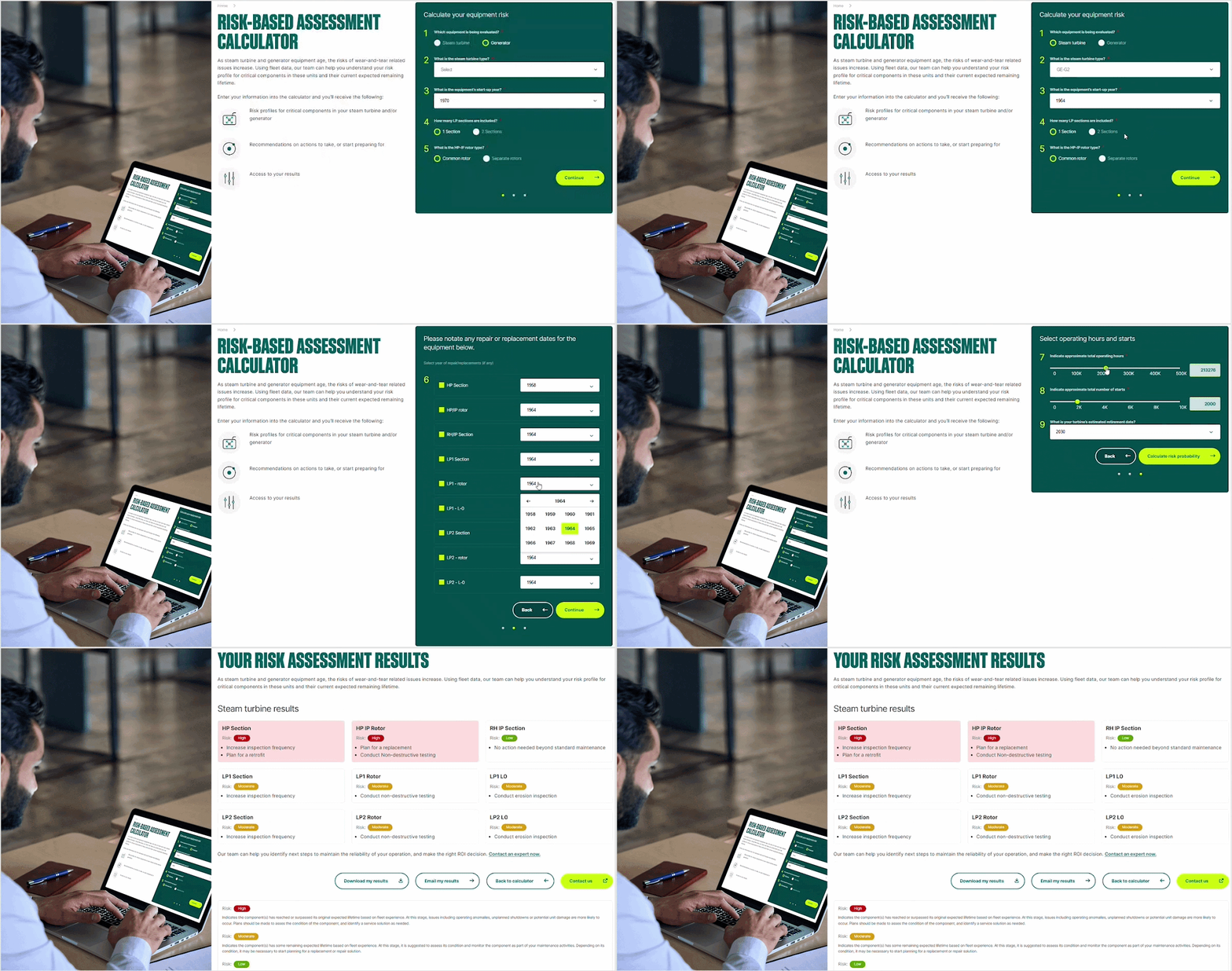
We’ve developed a new asset management program that focuses on supporting plant operations that have identified general time horizons for their remaining operating life in their current configuration. Whether a site plans to shut down or convert their site within just a few years, or looking for another 10-15 years of operation, this program is designed to help operators:
- Understand how much more life their plant equipment has left
- Identify a custom service strategy for their remaining life cycle and ROI goals
- Integrate a risk management strategy to help ensure their reliability and safety
- Calculate the economics of options for what comes next... whether staying in cold reserve, converting to a gas or other configuration, or shutting down and repurposing assets
What is the best risk management strategy for a steam plant today navigating the energy transition?
While numerous factors feed into an effective risk management strategy, one of the most effective technologies you can tap into is asset monitoring software. Using sensor technologies, these services can help you cost-effectively:
- Detect operating anomalies/early failure modes in real time (e.g., Temperatures, vibrations, stress points)
- Identify changing boundary conditions affecting equipment life (e.g., Corrosion, fatigue, creep)
- Reduce risks of forced shutdown from aging assets
- Plan outages with more precision and predict emergent work
Contact us