Comprehensive Grid Code Compliance Support

Meeting grid code requirements takes more than technical expertise—it requires a clear understanding of evolving regulations, plant performance, and compliance impacts. GE Vernova helps customers navigate regulatory requirements, assess plant modifications, validate equipment performance, and maintain compliance with confidence.

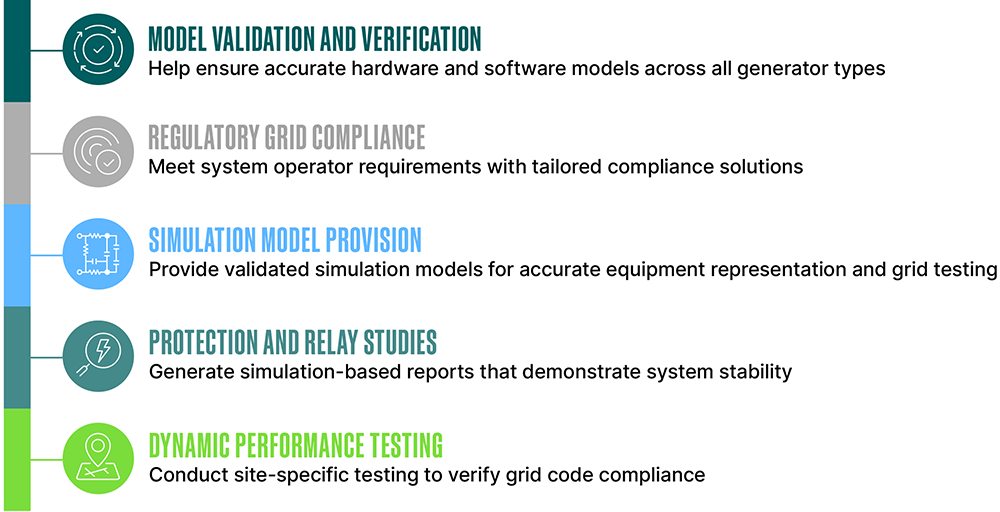
odc00693-01-protection-solutions-features-1000.png

Ready to get grid code compliant? Contact our experts to get started.

Compliance insights

Avoid compliance surprises

Even seemingly minor modifications can affect compliance status over time. Understanding these triggers early can help reduce the risk of delays, rework, operational restrictions, and unexpected project costs.

Know the triggers

Many asset owners assume compliance testing is only required during initial interconnection, but there are several common situations that may trigger the need for revalidation:

  • Significant changes in unit output or capability since the last compliance submission.
  • Replacement of equipment or components that are not functionally identical to the original design.
  • Changes in how the plant responds to the grid, including modifications to controls, protection systems, or operating characteristics.

Modernization projects are designed to improve performance, flexibility, and long-term value—but achieving those benefits requires more than new equipment or updated controls. Grid code compliance plays a critical role in determining whether upgrades can be approved, connected, and operated as intended.

Why GE Vernova?

Extensive expertise for grid code compliance

Grid code compliance demands deep technical expertise, practical field experience, and a thorough understanding of evolving grid requirements. GE Vernova combines decades of power system knowledge with extensive testing, modeling, and validation capabilities to support customers across a wide range of technologies and equipment types. From planning through final reporting, we help customers streamline compliance activities, reduce risk, and make informed decisions with confidence.
Expertise
Global grid code compliance expertise.

Track record of conducting grid code compliance studies and testing on more than 2,000 units worldwide, backed by extensive international experience.

Insight
Deep industry leadership and technical insight

Decades of involvement in developing industry standards and technical references related to grid code compliance and testing.

Knowledge
Broad fleet knowledge and equipment understanding

Unique expertise across GE Vernova and non-GE Vernova turbines, generators, controls, AVRs, and protective relays, combined with a strong understanding of equipment capabilities and limitations.

Common concerns

Frequently asked questions about grid code compliance

We have the capability to test both GE Vernova and Non-GE Vernova equipment. We offer unique knowledge of GE Vernova units as well as wide-ranging experience with non-GE Vernova turbines, generators, controls, automatic voltage regulators (AVRs), and protective relays. 

Grid code is not a stable assumption. The rules are changing faster than upgrade cycles - the environment an upgrade lands in is different than what the team assumed at the start. A trigger for checks could include even a >10% change in output since the last interconnection agreement (and not since the last upgrade).

Updates to software, firmware, plant controllers, inverter controls, protection settings, or other automation systems can materially affect dynamic performance. Modernization projects are not free from inheriting assumptions, tests results, practices, and bad habits. Grid code compliance is often the last hurdle between an upgrade and commercial operation. The energy economy is complicated enough; do not let paperwork stand between your plant(s) and operating commercially.

Treat compliance as a design constraint, not an afterthought. Demanding a compliance checkpoint early in the planning phase and requiring them throughout the entire upgrade project lifecycle is being proactive and ensuring nothing gets in between your commercial operations. Compliance is ongoing – we can help you climb with it.

Waiting until the end can lead to avoidable testing delays, approval setbacks, and missed commercial operation targets. Bringing compliance in early helps reduce project risk, protect schedules, and keep your path to operation clear.

Compliance may not be the most riveting part of operating a project, but it is never a one and done exercise. Having an expert in charge of compliance ahead of time plan for periodic retests and internal audits is a lot more proactive than the constraint of being unable to operate when the time to report compliance comes. Grid code compliance is dynamic, and you need experts behind the ever-changing standards and environment.

Anything can change the dynamic behavior of your machine (even if you can’t see it). A trigger for checks could include even a >10% change in output since the last interconnection agreement submission (and not since the last upgrade). Plants can cross the 10% threshold and not realize it. Additionally, any replacement, for example, may comply with NERC’s definition of “in kind” and not with OEMs. If you’re unsure, reach out to our team of experts to clear out any concern.

Similar or “like for like” does not automatically mean “compliance neutral”. A replacement that appears identical on paper can still introduce differences in controls, response behavior, software versions, or interaction with the rest of the plant. Those changes may be enough to trigger the need for review, testing, or revalidation. It is always better to confirm early than to discover a compliance gap later.

Passing once does not guarantee ongoing compliance forever. Grid codes evolve, equipment performance changes over time, and plant configurations rarely stay static. Even small operational or control changes can affect how a facility responds to the grid. Revalidation helps confirm that past assumptions still hold true in today’s regulatory and operating environment.

Plus, stable day-to-day operation does not prove compliance under grid disturbance conditions or against current code requirements. Compliance requires evidence, validation, and documentation, not just the absence of obvious problems.

There is no such thing as too early, but there is such thing as too late. As long as you contact us at least 30 days prior to the day you would like for us to show up onsite, we will be able to help with your compliance needs. Advanced scheduling is also an option, for up to 5 years.

No, we cover a multitude of equipment and systems, such as inverters, synchronous systems, batteries, solar, and more. If a control system is password protected or proprietary, we would collaborate with other OEMs. We offer steady-state and dynamic model validation for all equipment types - gas turbine, steam turbine, hydro, for example and other renewables.

We stand behind the quality and rigor of our compliance work and remain actively engaged through the compliance and audit process. Our team works closely with customers to help address requirements, resolve technical questions, and support successful outcomes with regulators, system operators, and other reviewing entities. As your partner, GE Vernova’s Consulting Services will support and affirm the analyses and reports we deliver, and we remain available throughout the audit and review process to provide technical clarification, documentation support, and follow-through as needed.

Explore our grid code compliance and testing solutions

Contact us

Contact us today for your grid code compliance and testing needs