Systems to monitor and control critical HV equipment
Category image
Subscription
No
Has legacy products
Off
Overview

Systems to monitor and control critical HV equipment
GE Vernova's DWatch performs permanent real time monitoring of the operational parameters of disconnectors and records all operating curves locally.
The DWatch also controls the speed of the live part during opening and closing in a specific and programmable manner for all disconnector types. These profiles can be easily set by internal dip-switches. Such control helps in always having a constant operating time in different conditions of power supply and load.
GE Vernova's DWatch performs permanent real time monitoring of the operational parameters of disconnectors and records all operating curves locally.
The DWatch also controls the speed of the live part during opening and closing in a specific and programmable manner for all disconnector types. These profiles can be easily set by internal dip-switches. Such control helps in always having a constant operating time in different conditions of power supply and load.
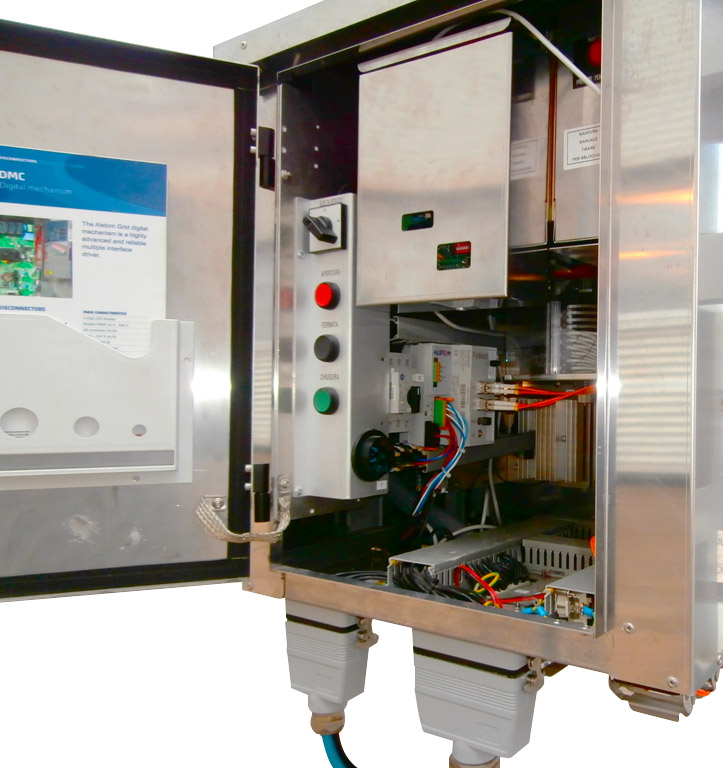
GE Vernova's DWatch performs permanent real time monitoring of the operational parameters...
View More
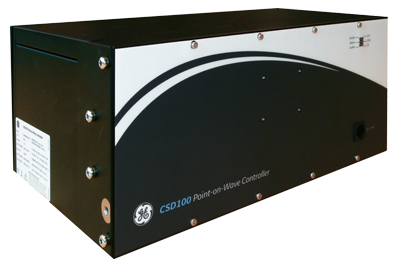
Point-on-wave switching is a technique consisting in operating AC system switchgear /...
View More
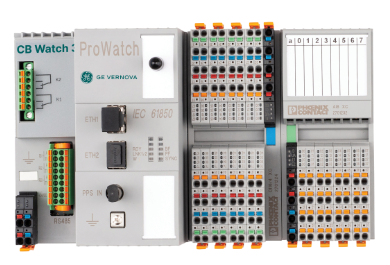
GE Vernova’s CBWatch is a compact, modular, online monitoring solution suitable for...
View More
Point-on-wave switching is a technique consisting in operating AC system switchgear / circuit-breaker at optimum time to reduce switching transients
GE Vernova’s CSD100 is an advanced Controlled Switching Device for high voltage AC circuit-breakers. The ability to mitigate switching transients is becoming a key issue for today’s grids as the generated stresses lead to power quality problems and accelerated aging.
Point-on-wave switching is a technique consisting in operating AC system switchgear / circuit-breaker at optimum time to reduce switching transients
GE Vernova’s CSD100 is an advanced Controlled Switching Device for high voltage AC circuit-breakers. The ability to mitigate switching transients is becoming a key issue for today’s grids as the generated stresses lead to power quality problems and accelerated aging.
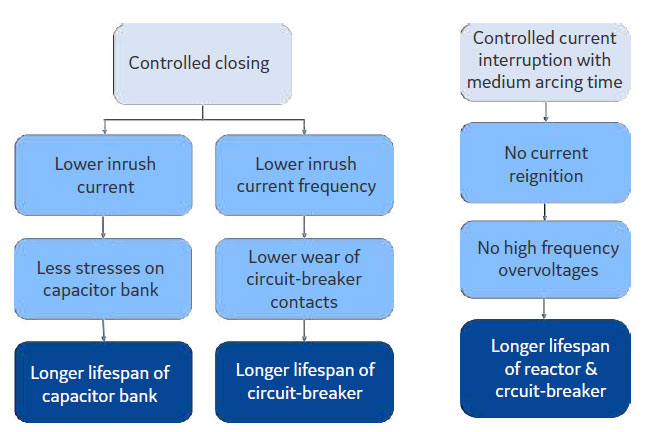 CSD100 Operation Cycle
CSD100 is an advanced controlled switching device for high voltage AC circuit-breakers for any kind of application.
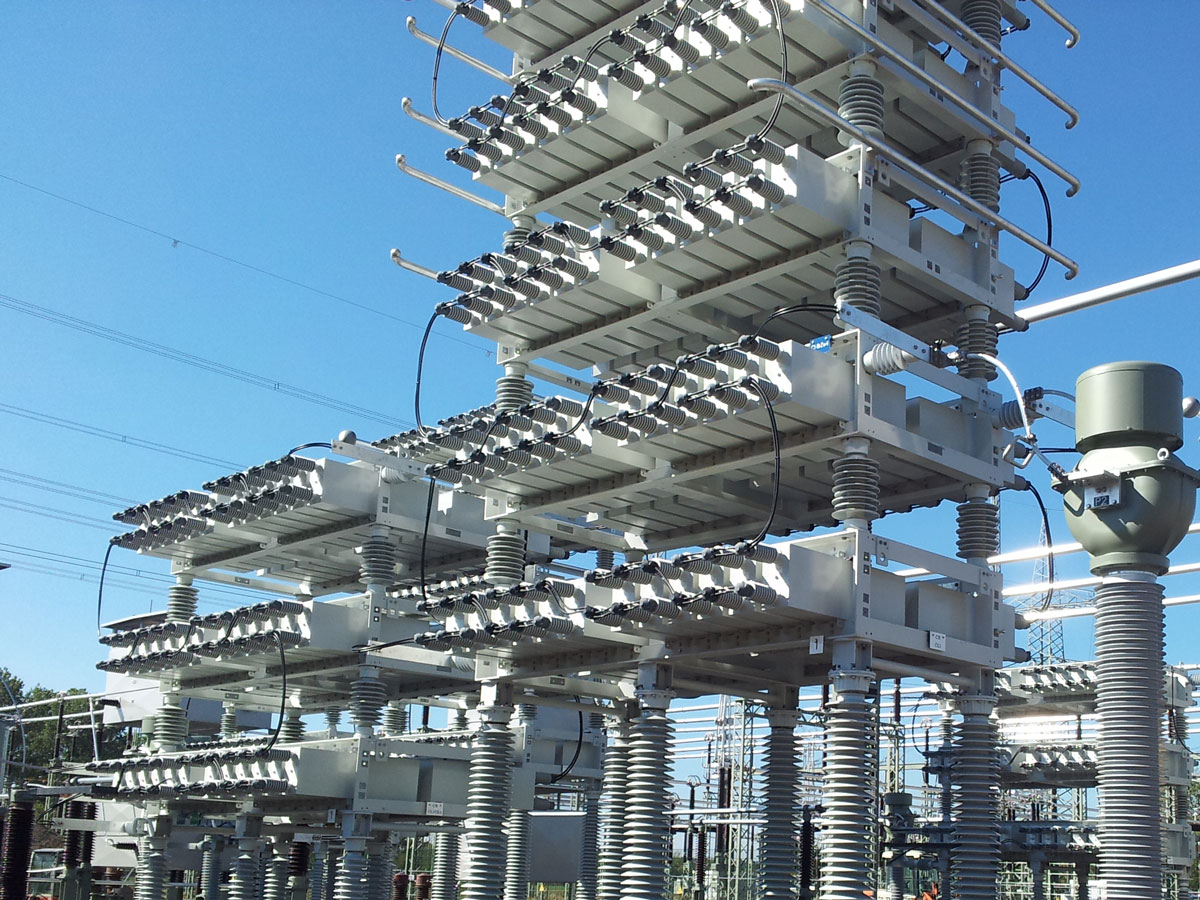
Intermittent power sources generate important daily load variations. Capacitor banks and shunt reactors help stabilize and improve the power factor. Acting as reactive power generators, their switching needs to be controlled precisely to mitigate the related electrical transients. It allows to limit damageable stress on the circuit-breaker and the compensation load.
CSD100, used with GE Vernova's advanced circuit-breakers, is a cost-effective solution to reduce stress on reactive power compensation equipment and increase their lifetime.
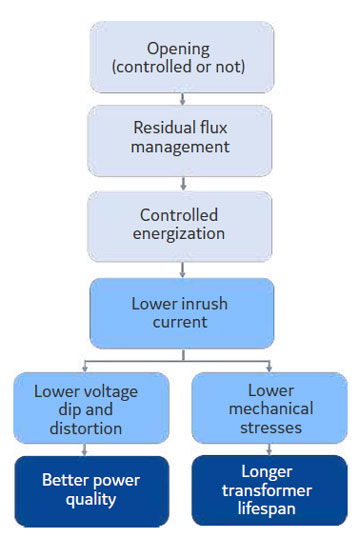 CSD100 Operation Cycle
CSD100 is an advanced controlled switching device for high voltage AC circuit-breakers for any kind of application.
Connecting and disconnecting intermittent power sources -such as wind or solar farms, pumped storage or gas power plants- to the country grid may generate switching transients with damageable consequences for the transformer and the power quality (high inrush currents, voltage dip, protection trip).
CSD100 reduces power transformer inrush current and voltage deep by energizing each phase (winding) at magnetic flux continuity condition, considering the transformer core residual flux.
CSD100 takes into consideration the transformer magnetic flux in order to switch and connect the transformer to the lines when the source flux matches the transformer residual flux. The inrush current and voltage dip are minimized. The power quality is improved, the transformer lifetime is extended.
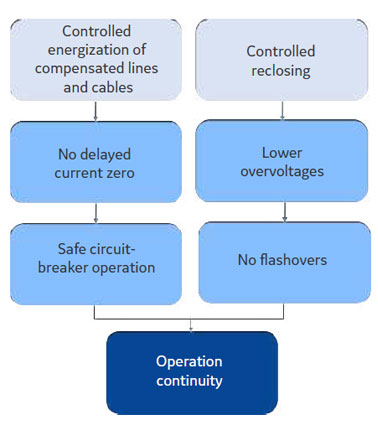 CSD100 Operation Cycle
CSD100 is an advanced controlled switching device for high voltage AC circuit-breakers for any kind of application.
Power generation sources are often located far from main consumption areas. As a result, large amounts of energy need to be transmitted over long distances. The random circuit- breaker switching of no-load lines generates a travelling voltage wave which, provokes an over-voltage along the length of the line. Also, auto-reclosing of the line circuit-breaker may cause even larger over-voltages than simple closing due to trapped charge on the line.
CSD100 is a cost-effective solution to limit overvoltage during closing and auto-reclosing of line circuit-breakers.
CSD100 helps to optimize line design and could generate important savings at the conception stage. The value of over-voltages directly determines the insulation and protection levels of the lines, as well as their cost.
CSD100 is an advanced controlled switching device for high voltage AC circuit-breakers for any kind of application.
Depending on substation architecture, one single circuit-breaker will operate different loads. Maintain optimal performance in such situation is a real challenge.
GE Vernova has developed for the CSD100 a multiple load switching feature, allowing to use one single device per circuit-breaker.
The positions of the substation apparatus (circuit-breakers, disconnector switches) define the load to switch. The CSD100 selects the programmed switching strategy accordingly.
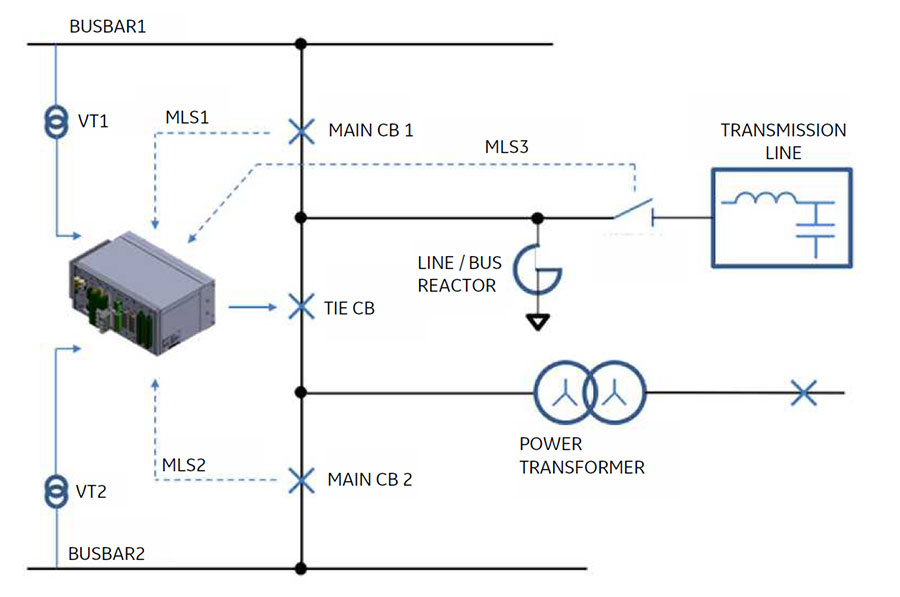 Example of multiple load switching. Circuit breaker may be used to switch line or reactor or a power transformer.
GE Vernova's DWatch performs permanent real time monitoring of the operational parameters...
View More
Point-on-wave switching is a technique consisting in operating AC system switchgear /...
View More
GE Vernova’s CBWatch is a compact, modular, online monitoring solution suitable for...
View More
Gas Insulated Substations have become more frequent sites due to their reduced footprint and high reliability of operation. But this reliability can be undermined by the presence of free moving metallic particles originating from breaker operations or mechanical vibrations. These particles can generate high electric fields locally initiating partial discharges (PD) within the insulation. Repeated partial discharges will eventually produce a flashover necessitating shutting down the GIS for repairs.
Gas Insulated Substations have become more frequent sites due to their reduced footprint and high reliability of operation. But this reliability can be undermined by the presence of free moving metallic particles originating from breaker operations or mechanical vibrations. These particles can generate high electric fields locally initiating partial discharges (PD) within the insulation. Repeated partial discharges will eventually produce a flashover necessitating shutting down the GIS for repairs.
GE Vernova's DWatch performs permanent real time monitoring of the operational parameters...
View More
Point-on-wave switching is a technique consisting in operating AC system switchgear /...
View More
GE Vernova’s CBWatch is a compact, modular, online monitoring solution suitable for...
View More
With worldwide scrutiny on SF₆ gas usage, increased environmental reporting requirements and even possible penalties, precise early detection of small gas leaks in Gas Insulated Substations that use so much SF6 is essential.
The BWatch uses the latest generation of EMC resistant digital gas sensors to continuously measure gas pressure and temperatures in order to track changes in density and detect gas leaks down to 0.1% per year.
With worldwide scrutiny on SF₆ gas usage, increased environmental reporting requirements and even possible penalties, precise early detection of small gas leaks in Gas Insulated Substations that use so much SF6 is essential.
The BWatch uses the latest generation of EMC resistant digital gas sensors to continuously measure gas pressure and temperatures in order to track changes in density and detect gas leaks down to 0.1% per year.
GE Vernova's DWatch performs permanent real time monitoring of the operational parameters...
View More
Point-on-wave switching is a technique consisting in operating AC system switchgear /...
View More
GE Vernova’s CBWatch is a compact, modular, online monitoring solution suitable for...
View More
GE Vernova’s CBWatch is a compact, modular, online monitoring solution suitable for high voltage circuit breaker. It records information using non-invasive sensors and performs local real time monitoring of operational parameters attached to key breaker functions. It looks for threshold breaches, warns of any significant change in operating performance and assembles an overall condition assessment of the breaker.
GE Vernova’s CBWatch is a compact, modular, online monitoring solution suitable for high voltage circuit breaker. It records information using non-invasive sensors and performs local real time monitoring of operational parameters attached to key breaker functions. It looks for threshold breaches, warns of any significant change in operating performance and assembles an overall condition assessment of the breaker.
GE Vernova's DWatch performs permanent real time monitoring of the operational parameters...
View More
Point-on-wave switching is a technique consisting in operating AC system switchgear /...
View More
GE Vernova’s CBWatch is a compact, modular, online monitoring solution suitable for...
View More