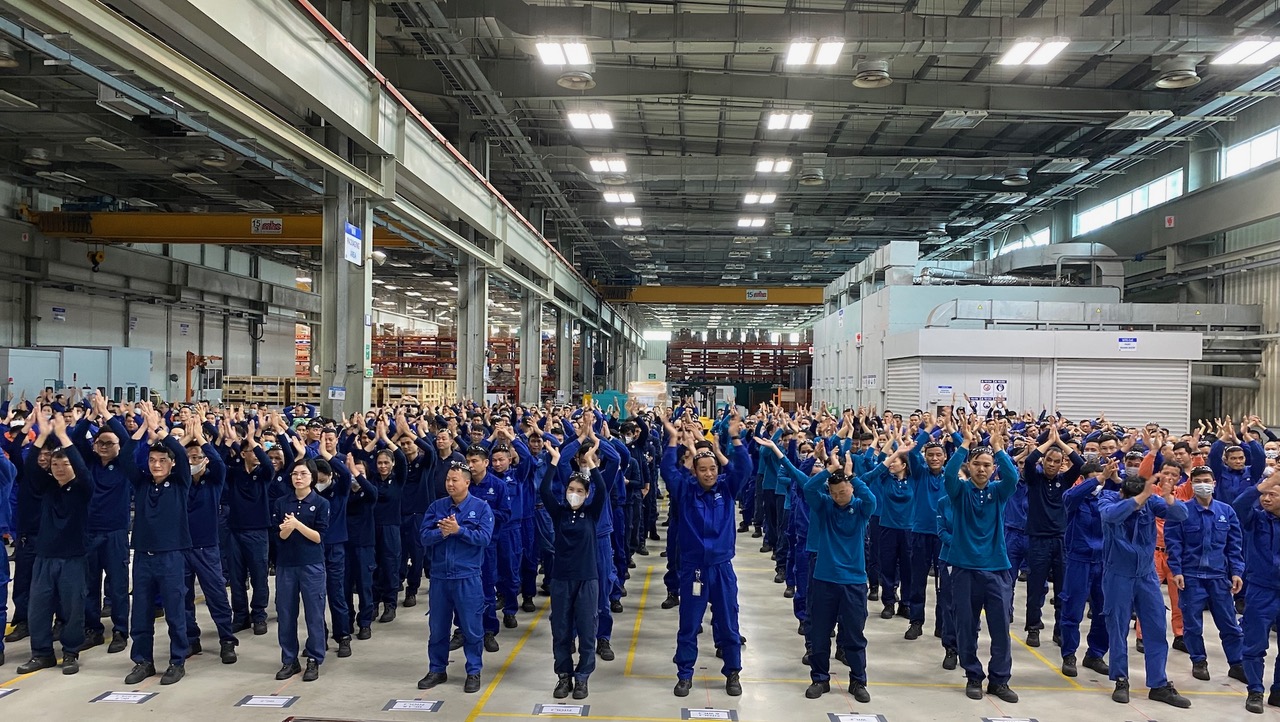
Wind power is entering a period of accelerated growth. By the end of the decade, global capacity is expected to nearly double, to more than 2,000 gigawatts. Meeting that demand will require not only new factories, but more from the ones already operating — producing at greater scale, moving faster, and operating more efficiently.
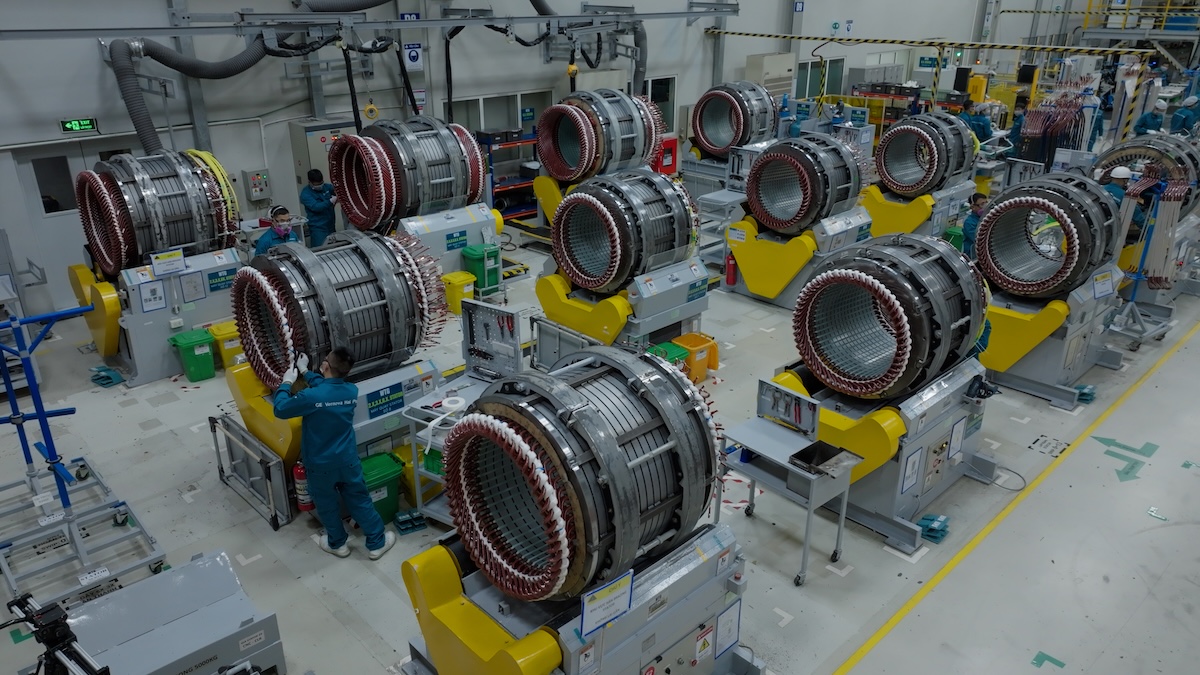
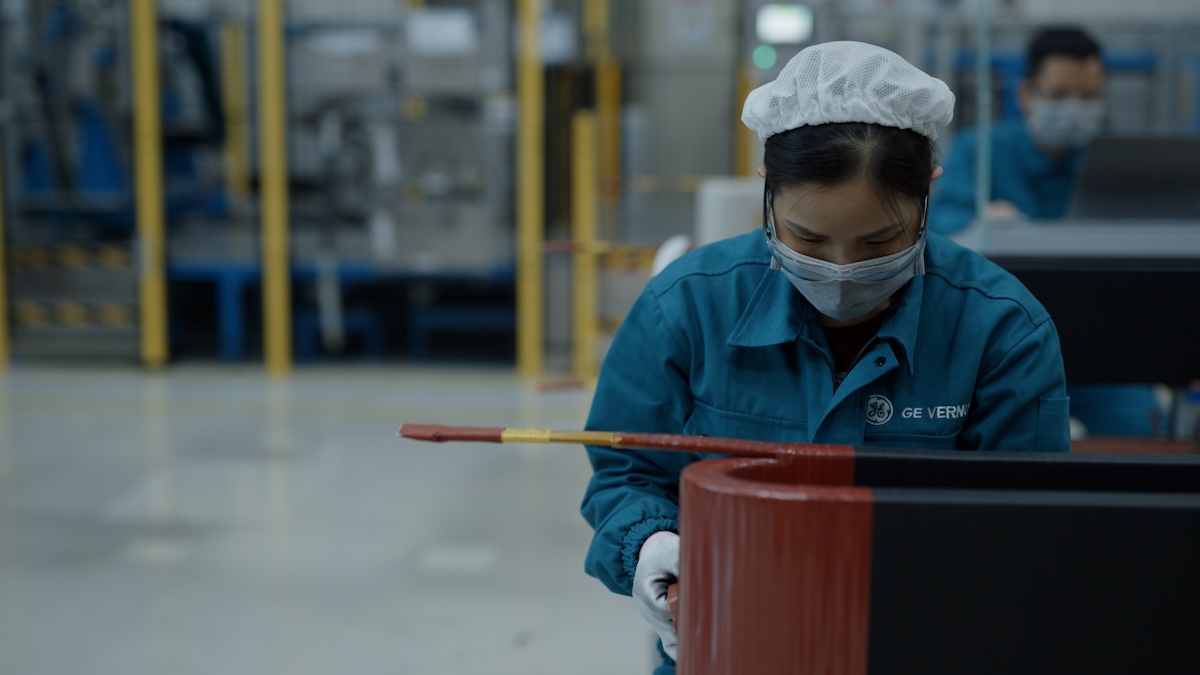
GE Vernova’s Hai Phong site, near Vietnam’s northeastern coast, is demonstrating what modern manufacturing can look like, and how quickly it can transform. Established in 2009 and employing more than 800 people, the plant manufactures wind turbine generators and electrical parts shipped worldwide, accounting for four-fifths of the company’s renewable electrical components.
Over the past year, the site has reworked how production is planned and executed, delivering measurable gains. “We’ve increased productivity by 15%, improved efficiency by 25%, and reduced lead times by 30%,” says Vu Trang, general director of Hai Phong and a member of a leadership team that is nearly 70% female — more than double the Vietnamese average for women in leadership roles. These gains mean the plant can now meet growing global power demand without adding new machinery or compromising on safety.
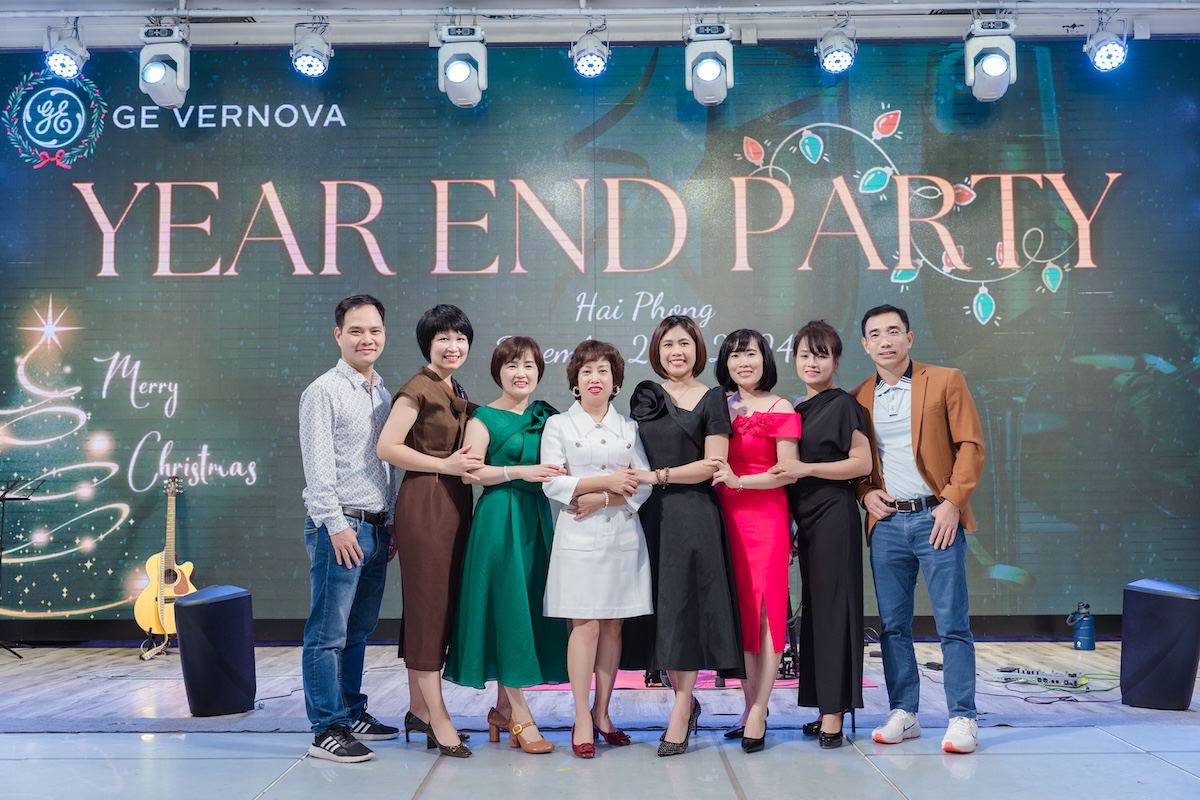
For Trang and her team, rising demand became an opportunity to reshape how the factory works — and who gets to shape its future.
Turning Pressure into Improvement
Keeping pace with the ramp-up of renewable energy depends not only on speed, but on planning well ahead. At Hai Phong, workers review forecasts 12 to 18 months in advance, preparing across a number of fronts, including materials supply, equipment capacity, and workforce readiness.
That long-term approach has been central to addressing what Trang describes as the facility’s main bottleneck: the limits of existing machinery. To increase output, teams have launched improvement workshops to reduce downtime, tighten maintenance routines, and address process constraints before they restrict throughput.
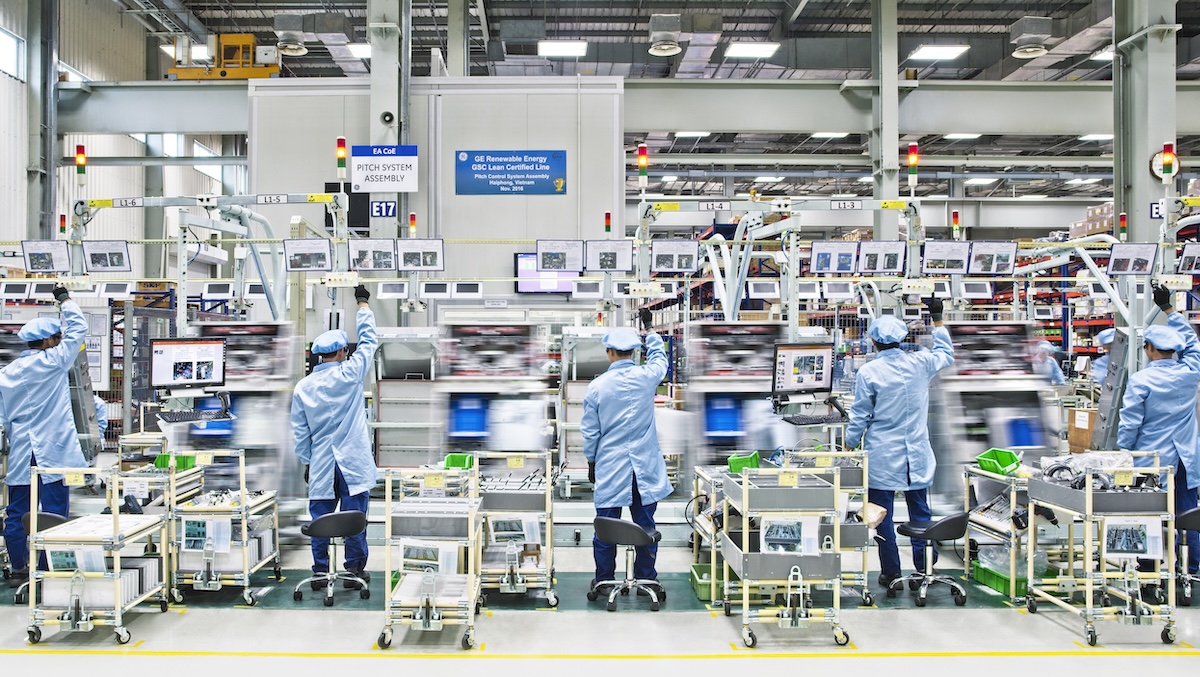
Performance gains have also come through targeted projects. In 2025, engineers focused on reducing high-risk lifting activities: By eliminating non-value-adding tasks and combining workflows, the team eliminated nearly half of annual crane movements and reduced reliance on forklifts.
But technical upgrades alone weren’t enough. Hai Phong’s teams realized that progress would be sustainable only if the factory’s culture evolved with it.
From Capability to Culture
The Hai Phong site’s focus on workforce development has been key to making these upgrades possible. As projected demand increases, the plant assesses whether existing staff have the skills required for more complex or higher-output production. Recruitment and training plans are adjusted accordingly, and employees are cross-trained so that lines can adapt as production levels change.
Building workforce capability is a continuous process, Trang emphasizes. “It’s not one-time training; we keep sharing, communicating, and learning from mistakes instead of blaming each other.” The aim is to build awareness — of safety standards, quality expectations, and improvement principles — so that progress becomes part of daily work rather than a short-term initiative.
A participatory culture also plays a significant role. Employees are encouraged to identify inefficiencies and propose new methods based on their direct experience running production processes. Engineers and shop-floor teams register projects, form small working groups, and review progress regularly with leadership.
Performance Starts with Empowered People
Facilities like the Hai Phong site play a pivotal role in supporting reliable and sustainable power systems worldwide. Advanced tools provide the foundation for growth, but it’s the people at this plant who are turning challenges into measurable results. Their work ensures that the world’s growing wind power needs are met safely, efficiently, and sustainably.
With that in mind, Trang’s message to young engineers — particularly women considering careers in manufacturing — is straightforward. “Believe in yourself,” she says. “With ambition, enthusiasm, and commitment, you can achieve your goals.” In an industry striving to be inclusive for all, Hai Phong offers a tangible example of what inclusive leadership looks like at scale. “We bring different perspectives to the table, and that affects how we implement change. We work collaboratively, stay disciplined, and share responsibility for results,” adds Trang.
Sustaining Improvement for the Future
Looking ahead, Trang argues that performance gains must be embedded ever deeper into daily operations rather than treated as a one-off push. “Lean transformation is a journey, not a destination,” she says. “Requirements keep increasing, and if we stop improving, we will fall behind.”
In a sector shaped by record wind demand and global competition for talent, the Hai Phong plant’s experience shows how disciplined operations and inclusive leadership can help accelerate the energy transition at scale.