Meeting the urgent challenge of the global energy transition requires solving massive infrastructure hurdles at unprecedented speed. It means mastering the invisible forces that dictate performance: the airflow around wind turbine blades, the effect of moisture trapped inside a power transformer, the change of phase from liquid to gas within a small modular nuclear reactor.
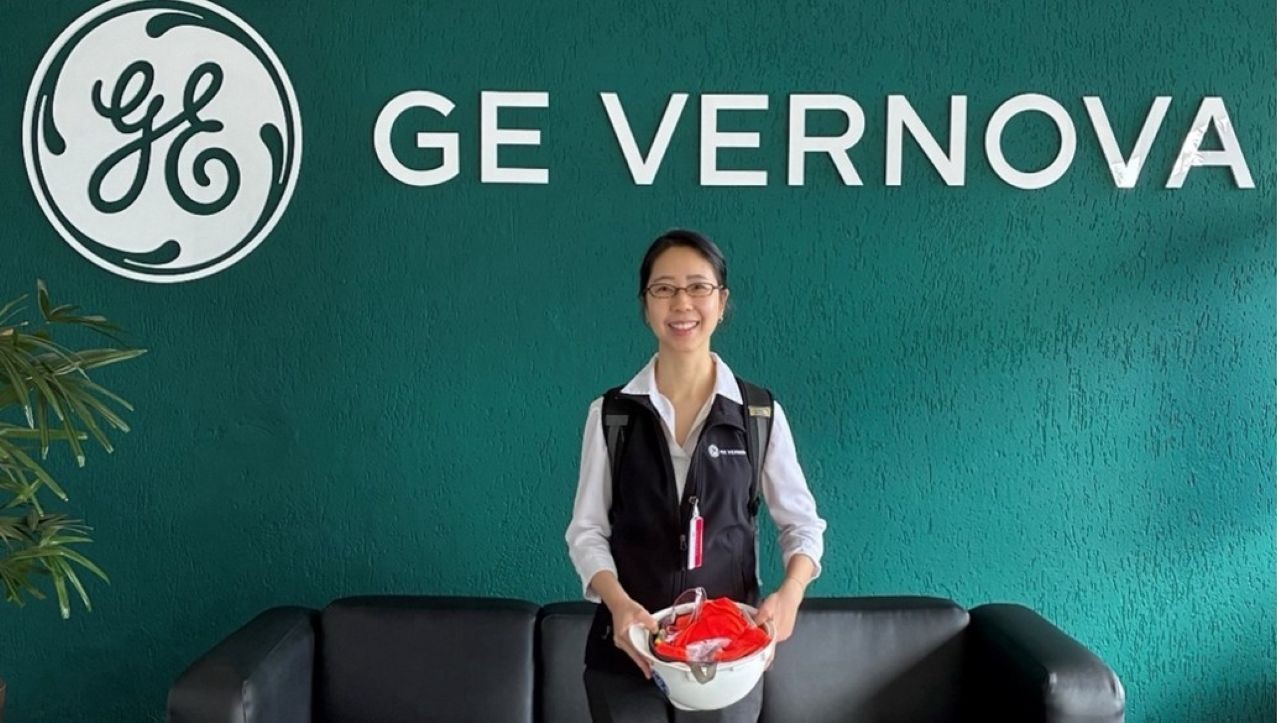
At GE Vernova, analyzing these patterns safely and efficiently means looking into the future before a single piece of steel is cast. Melanie Li Sing How, an aerodynamics and thermosciences engineer at the GE Vernova Advanced Research Center, explores these physical phenomena through advanced computer simulations. Constructing physics-based digital models, she efficiently simulates how air, water, and other fluids move around objects before decisions are made about designing real-life experiments.
“With simulations, you can get an understanding of what’s really happening when a system is so large that experiments would be far too costly,” says Li Sing How. “Simulations also are helpful when you have so many variables — temperature, pressure, chemicals — and decisions to take that you don’t know which ones to prioritize. You can save time and budget, and once you have honed your parameter space, you can choose which ones to validate. Right now we’re also trying to bring in AI to optimize the process.”
How Family Innovation Sparked a Career in Engineering
This knack for practical problem-solving began long before she entered a lab. When Li Sing How was growing up in Mauritius, a tropical island in the Indian Ocean far off the coast of Madagascar, her father had access to none of these advanced technologies. Living with their family on land cut off from the electric grid, he learned through trial and error to power their home with solar panels and wind turbines, and captured filtered rainwater. “I was really exposed to the world’s best tinkerer,” Li Sing How says.
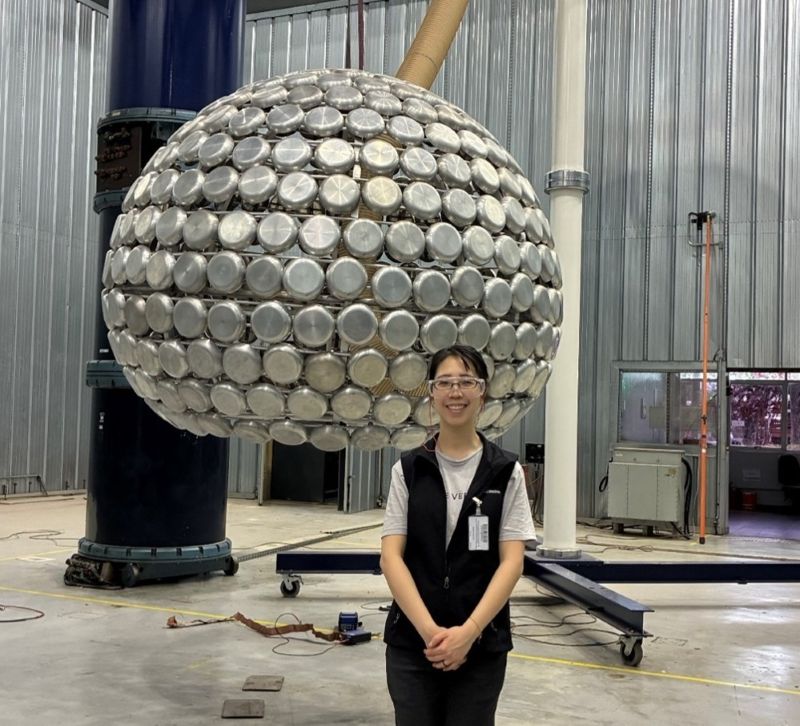
His example inspired her to become an engineer, guided by a strong commitment to sustainability. Because most of the local Mauritian economy was based on tourism and sugarcane cultivation, Li Sing How moved to the United States for college and graduate study. “I knew early on that I wanted to do research and push the boundaries of how we understand the physical world,” she says.
After receiving her PhD in mechanical engineering from Cornell University in 2021, Li Sing How joined what was then known as GE Research in Niskayuna, New York. Her work spans decarbonization, renewable energy, and electrification, with a growing focus on robotics and automation, enabling her to contribute to a wide range of projects aimed at accelerating the energy transition.
Li Sing How tackles technical challenges to produce tangible improvements for customers and grid reliability. One current study involves optimizing the manufacturing process for power transformers to help meet a growing backlog of global utility orders; she aims to address a production bottleneck by modeling how to dry materials more efficiently. To support renewable energy capacity, Li Sing How has helped predict the long-term durability of offshore wind turbines by assessing the wind conditions and mechanical loads on their blades. She has also evaluated the behavior of sprayed protective coatings on HA gas turbines exposed to extreme combustion temperatures, and examined how safety protocols prevent the buildup of dangerous gases inside small modular reactors.
Adaptive Leadership for the Future of Tech
This ability to connect deep technical expertise with real-world impact is why Li Sing How has been chosen as a fellow for the 2026 Aspen Ideas Festival, which kicks off on June 25. Joining more than 170 young leaders selected for their ability to transform ideas into action, she will participate in discussions centered around the festival’s theme of “Inventing Tomorrow.” Along with nine other GE Vernova fellows, she will discuss the infrastructure needed to power emerging technologies.
At GE Vernova, Li Sing How is also active in Asian Pacific Allies and Friends, one of the company’s core employee resource groups. She credits one of her mentors, Voramon Dheeradhada, for encouraging her to get involved. “We try to create a community around shared cultures and celebrate it — and all are invited,” Li Sing How says.
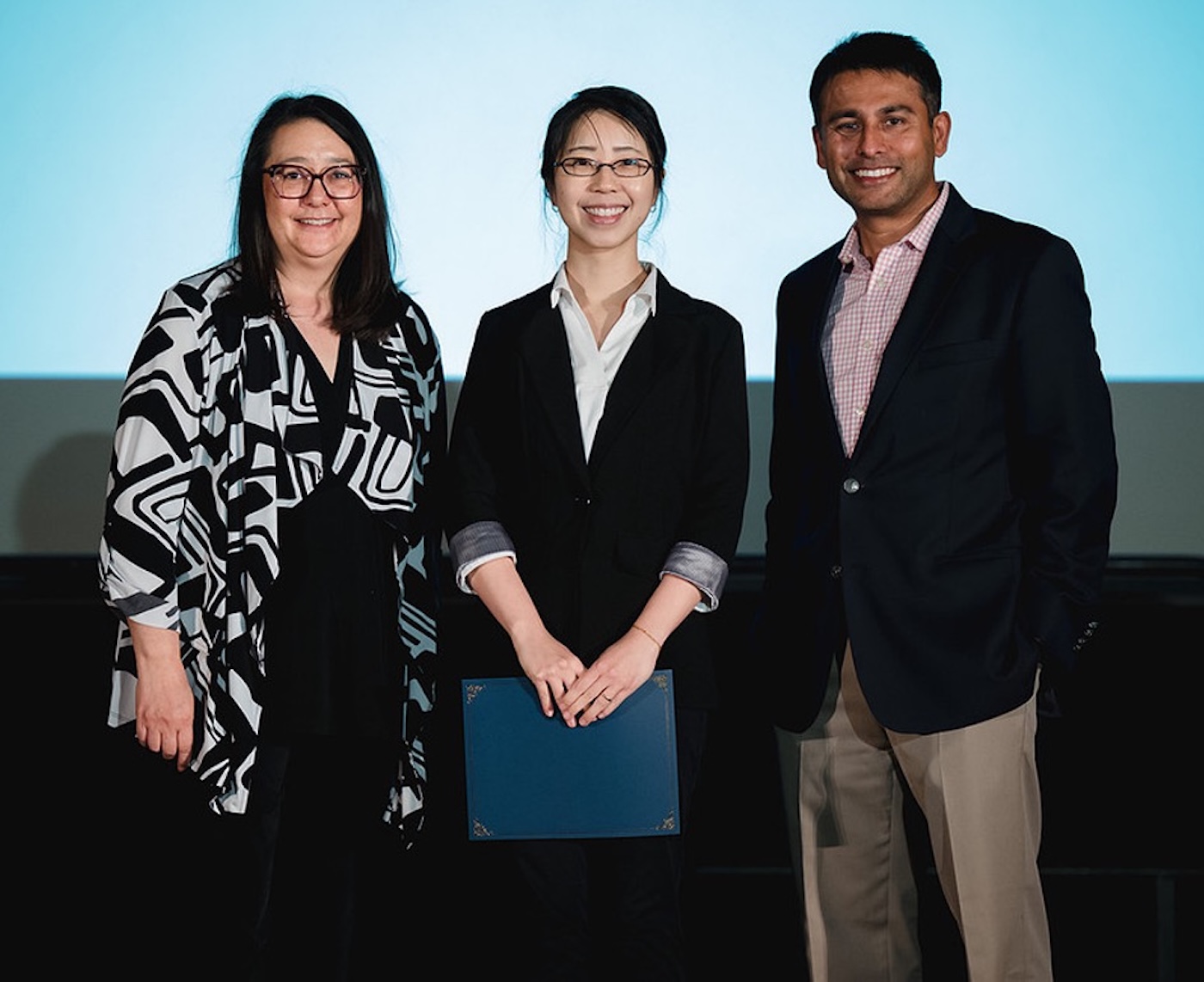
Her combination of technical skill and inclusive leadership is getting attention inside and outside the company. In 2024, the Advanced Research Center honored Li Sing How with its Next Generation Award, which recognizes early-career researchers who lead in execution excellence. Outside of the company, she is a recipient of the prestigious 2025 Society of Asian Scientists & Engineers (SASE) Professional Achievement Award, which celebrates her outstanding contributions to engineering and her commitment to advancing diversity in the global energy ecosystem.
For Li Sing How, the future of energy will require people who can pair advanced tools like AI with engineering fundamentals, optimism, and practical problem-solving.
“The technology we have right now, in terms of science and engineering, I think it’s enough to propel us toward whatever’s going to come in the future,” she says. “The advent of AI came faster than what we would have ever thought, even for me in the research area. We want to make full use of it and, at the same time, not forget the tools we had in the past. It’s important to be honest with oneself about what makes us afraid of the unknown, to have an adaptive mindset for what comes next, and always be optimistic and hopeful.”