Search Consulting Services
Recommended resources
Webinar
Power your plant for the future
Power plants built 20 years ago weren't optimized to achieve the operational goals of today and physics and financial challenges of the near-future. So, how can we prepare?

Podcast
Cutting Carbon - Season 2
Learn more about hydrogen-based fuels, capturing and sequestering carbon, and tangible pathways to a more decarbonized future.

Decarbonization
Explore the future of energy
See how GE Gas Power is helping to build a world that works.

Webinar
Exploring carbon capture
While the energy industry continues to prepare for the future of decarbonization, in addition to preparing for a hydrogen society, could CCS be a viable option?
Prefer to listen?
Stream our audio version
This audio content was developed with the use of Generative AI.
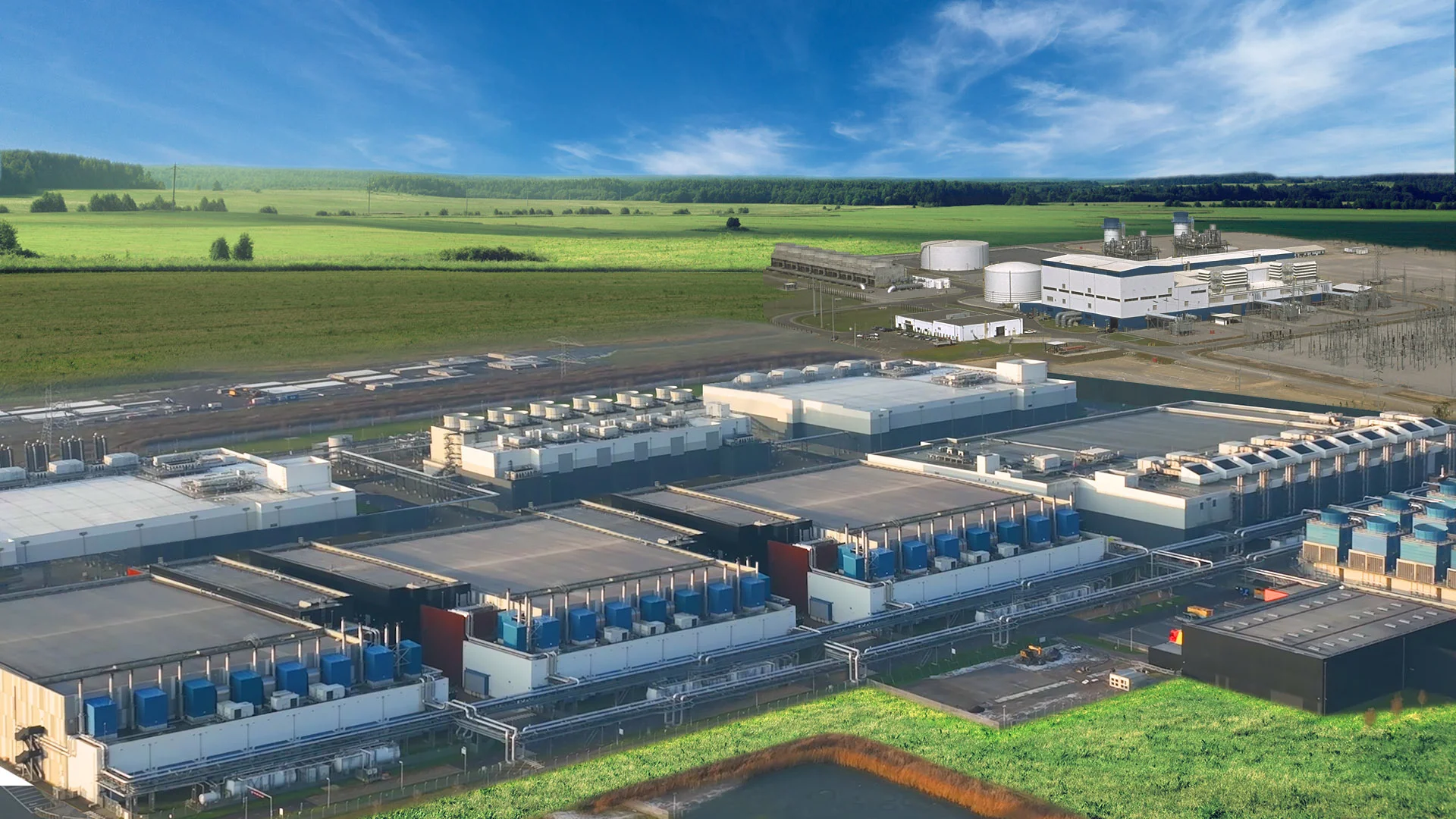
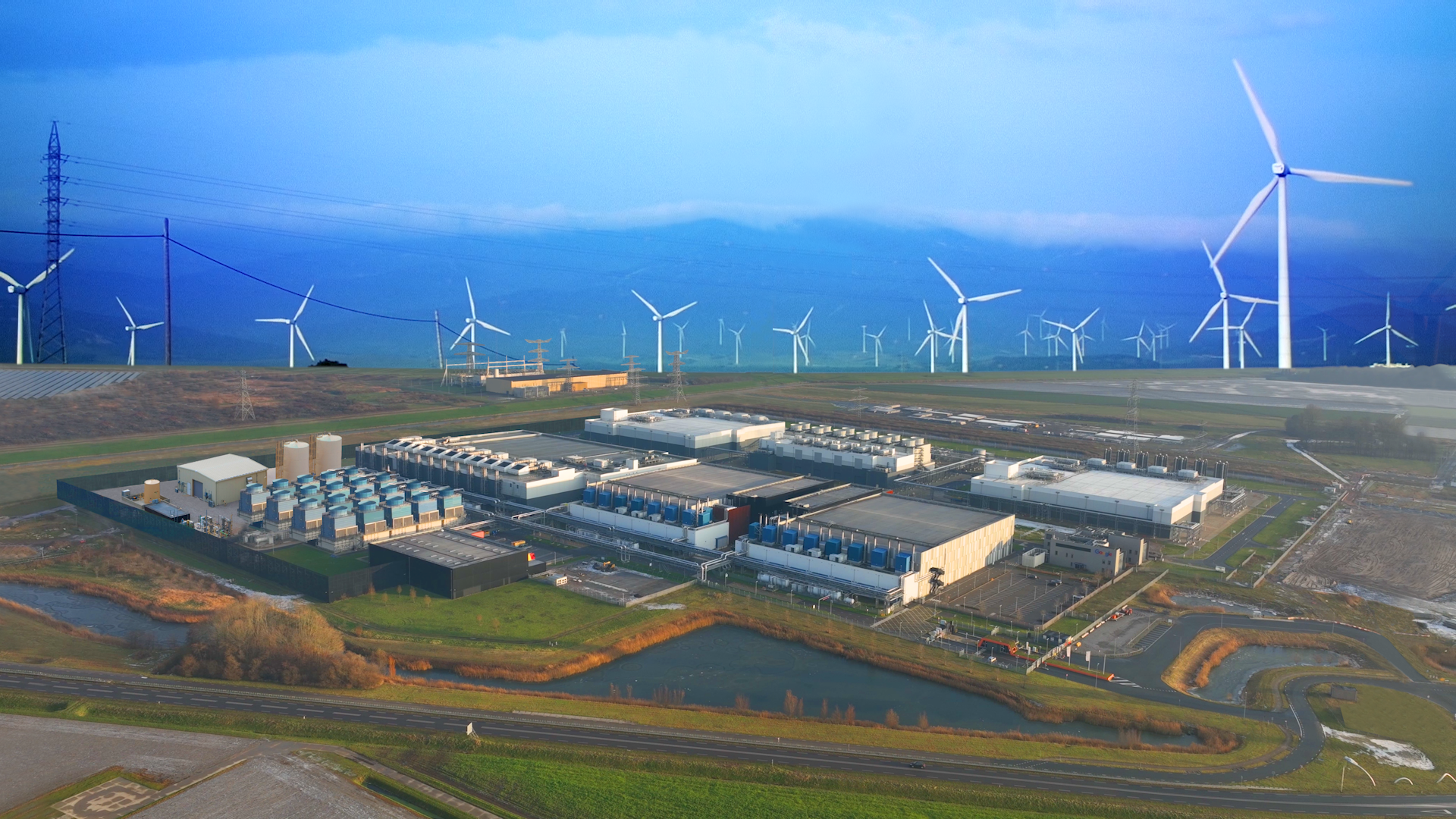
Today’s data centers are too complex to be planned in silos. They need to be understood, and planned, as part of a larger, dynamic power system.
In this third installment of our blog series, we examine why early, integrated power system planning is the foundation of data center development, how it's shaping what’s architecturally feasible, operationally reliable, and economically sustainable, and how GE Vernova can guide customers through that complexity.
The new realities of data center power
As data centers scale, their influence on the grid—and the grid’s influence on them—can’t be overlooked. AI-driven workloads introduce fast cycling and volatility that can strain traditional planning approaches. This is why early, integrated planning is essential.
Making a large-scale data center work often requires:
- A coordinated portfolio of generation sources
- Grid-forming battery systems
- Stability solutions for dynamic loads
- Controls that can operate harmoniously across equipment
- Resilience measures enabling the facility to ride through disturbances
- A roadmap for long-term scaling and future grid interconnection
Step one: Choosing the right stakeholders
While no team can force different players to work together, successful data center projects begin by identifying who needs to be on the team—and when.
For large data centers, the essential stakeholders typically include:
- The local utility
- The ISO/RTO
- Power equipment OEMs
- Developers and EPC partners
- IT and workload planners
- Energy and sustainability teams
- Long-term offtakers
Each stakeholder brings visibility into different attributes of the system: capacity, reliability constraints, interconnection risk, operational flexibility, and regulatory considerations. The Consulting Services team can convene the right stakeholders and translates between industries that historically haven’t spoken the same language.
Big Tech understands computing demands and utilities understand grid constraints. But both stakeholders need a shared perspective, and our role is to bridge that gap with system-level analysis and decades of experience in integrated planning.
Two industries still learning from each other
Perhaps the biggest barrier today is that Big Tech and power system operators are only now learning to collaborate. Developers often lack visibility into utility constraints and utilities rarely understand the unique electrical behavior of AI-driven loads. This mismatch can lead to misaligned expectations, planning delays, and costly redesigns.
A structured, integrated approach can solve this by:
- Identifying the technical challenges first
- Translating them into system-level impacts
- Developing clear mitigation paths
- Modeling scenarios to understand long-term constraints and opportunities
A holistic view: The foundation of successful development
Stakeholder convening is not the end goal, it’s the byproduct of a holistic planning approach built around system-level questions like:
- How will the data center behave under real workload profiles?
- What are the grid-forming, stability, and inertia requirements?
- How do generation resources, batteries, and controls need to interact?
- What are the interconnection and transmission constraints—today and in the future?
- How scalable is the design across 5, 10, or 20 years of anticipated growth?
- What risks emerge when the facility transitions from islanded to grid-connected modes?
This type of integrated thinking has long been part of GE Vernova’s work in renewables, storage, transmission, and power systems engineering. We know the challenges because we’ve spent the past 20 years helping the renewable energy sector solve them—so we’re not just familiar with the story, we’ve helped write it. Now we’re bringing that experience to AI-driven digital infrastructure.
The technology side of integration
Choosing the right technologies is as important as choosing the right stakeholders. For modern data centers, this often includes:
- Generation technology that meets load and reliability requirements
- Grid-forming battery systems for stability and disturbance ride-through
- STATCOMs and dynamic reactive power solutions
- Advanced controls architectures ensuring interoperability across vendors
- System-wide modeling to predict failure modes and interoperability limits
The magic isn’t in the individual technologies—it’s in orchestrating them so the system works as a cohesive whole.
Our advantage is deep familiarity with the equipment and its real-world behavior, combined with decades of modeling experience across multiple grid environments. This helps us forecast risks, identify constraints, and design architectures that will hold up under future conditions.
What we offer: Clarity in a fuzzy space
Data center developers know they need help but often struggle to articulate what that help should look like. Our role is to turn that uncertainty into structure.
GE Vernova provides:
- System-level modeling to understand the full power ecosystem
- Stakeholder mapping based on the technical requirements of the site
- Risk identification and mitigation strategies
- Technology integration planning across batteries, controls, and generation
- Guidance on regulatory, marketplace, and interconnection dynamics
We’ve already used these methods to support hyperscalers and developers in finding viable locations, evaluating grid constraints, and shaping long-term planning with utilities and state agencies.
Looking ahead: What’s next for integrated planning?
As data centers continue to scale—and as sustainability and carbon reduction requirements get stricter—integrated planning will expand to include:
- Marketplace mechanisms for valuing grid services provided by data centers
- Evolving interconnection and technical standards
- New regulatory structures around high-density load pockets
Final thoughts
In modern data center development, success comes from choosing the right stakeholders, understanding the full power system, and integrating the right technologies from the start.
This is where GE Vernova is uniquely positioned—and why integrated, holistic planning is the new prerequisite for building the next generation of resilient, efficient, and scalable digital infrastructure.
Contact us
Want to learn more about power integration for data centers?
Related solutions