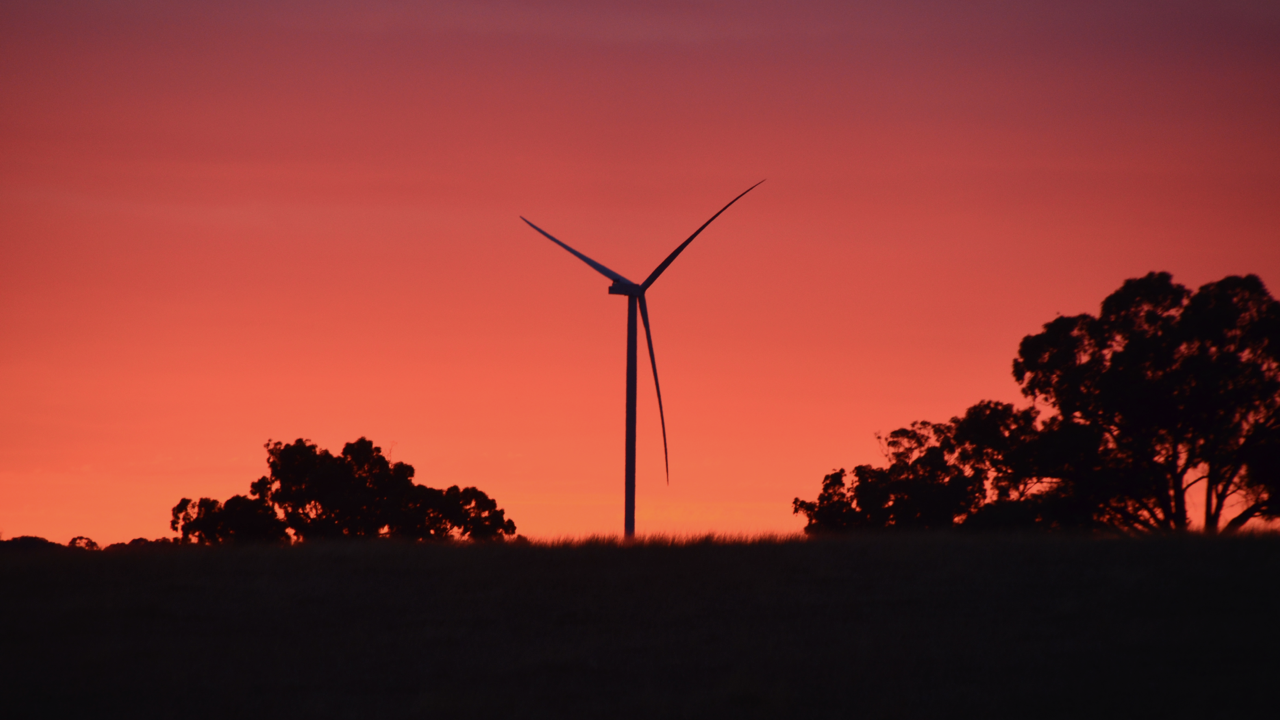
Getting huge infrastructure projects built requires resources, patience, technical know-how, and a certain amount of ambition. In the case of Aula Energy’s newest wind farm, in remote South Australia, it also took teamwork among a diverse group of experts from various organizations who had to coordinate everything from building new roads to studying unlikely power outages under a tight deadline. The result: Carmody’s Hill Wind Farm earned approval from Australian regulators much faster than is typical and went from being awarded to GE Vernova to the construction phase in less than a year, likely the fastest timeline of any wind project in the country.
“Normally, this phase of a project is quite drawn out, typically two to three years,” says Jackie Brown, commercial director of onshore wind for Australia, New Zealand, and Asia at GE Vernova. “Getting this project closed as quickly as we did guarantees that this site will be producing electricity before 2030, which is a key target that Australia has committed to.”
A Rugged Region in Transition
The Mid North region of South Australia is wind country. It’s the traditional land of the Nukunu people, colonized in the mid-19th century, and once a hub for mining and farming. Today this vast expanse north of Adelaide and south of the Outback still hosts scenic towns, vineyards, dairies, and vegetable farms. Over the decades, as farms consolidated and labor-intensive industries declined, large swaths of this beautiful country reverted to grazing land for its famous merino sheep.
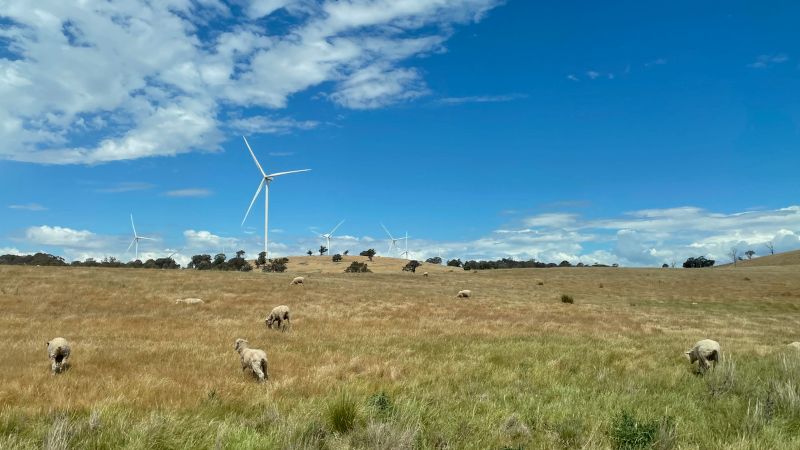
Australia’s nationwide push to reach carbon-neutral energy by 2050 created an opportunity to use the Mid North’s steady breezes and sparsely populated plains for renewable energy production. Today South Australia has more than 2,000 megawatts (MW) of installed wind power. But even when public policy and economics favor wind, getting a massive project such as Carmody’s Hill off the ground still requires a combination of proven technology, technical know-how, and a spirit of collaboration.
There’s value in speed, and developers like Aula Energy recognize it. Says Chad Hymas, CEO of Aula Energy: “We’re pleased to be partnering once again with GE Vernova to deliver Carmody’s Hill Wind Farm. We’re building enduring partnerships to lead Australia’s energy transition, faster, smarter, and with shared value for all. We’re committed to delivering a project that creates meaningful, long-term benefits for the Nukunu people, local communities, shareholders, and the sector.”
One reason Carmody’s Hill flew through permitting, says Brown, is the GE Vernova 6.1 MW–158m “workhorse” onshore wind turbine, 42 of which will produce 256 MW of low-carbon power once the site is complete. With decades of operation and 57,000 wind turbines installed around the globe, GE Vernova has years of data showing how they behave under a wide range of conditions. That matters because adding wind energy, which is intermittent, to a power grid means ensuring that the grid operator understands how the system will perform under any condition, Brown adds.
“Australia has an advanced technical framework when it comes to grid connections,” says Ajay Gururaja, senior grid project manager at GE Vernova’s Wind business. This set of rules is designed to ensure system security and reliability — essentially, that an unplanned shutdown at a power plant or a fallen tree that severs a transmission line somewhere doesn’t cause a cascade of problems for the entirety of the network.
GE Vernova’s team includes specialists with expertise about South Australia’s power and transmission infrastructure. Combined with the grid operator’s familiarity with the GE Vernova 6-MW workhorse turbine platform, this enabled grid approval in just nine months.
A Proven Wind Playbook
GE Vernova’s track record with wind power in Australia also contributed to the project’s rapid progress. Boulder Creek Wind Farm, a 228-MW installation in Queensland, also now under construction with Aula Energy, involved many of the same parties as Carmody’s Hill. Other projects in South Australia utilize the same 6-MW GE Vernova turbines that Carmody’s Hill uses. All told, GE Vernova achieved financial close on at least one wind project in Australia for nine consecutive years from 2017 through 2025, the only turbine supplier to do so. As a result, 3.5 gigawatts (GW) of workhorse-powered wind energy are now in operation or under construction in the country.
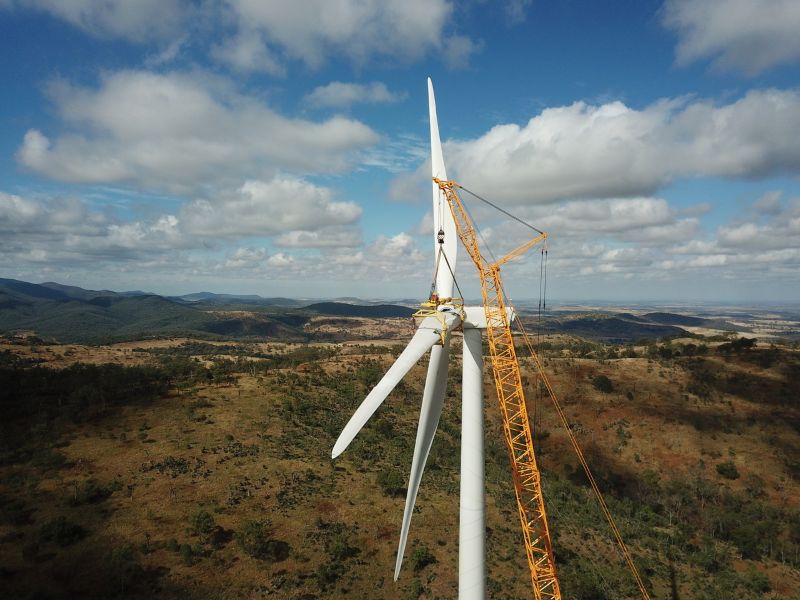
“Carmody’s Hill Wind Farm demonstrates how our workhorse strategy — deploying fewer turbine variants at scale — can help streamline contracting, accelerate grid approvals, and enhance quality and reliability across the fleet,” says Gilan Sabatier, chief commercial officer for GE Vernova’s Onshore Wind business in international markets.
Even with the wind at their backs, the team will need to pull off a major feat of coordination to successfully deliver Carmody’s Hill. While GE Vernova will supply the massive turbines, other firms will build roads, pour foundations, and lay electrical conduits to the site, which is roughly two and a half hours’ drive from Adelaide. It’s equivalent to baking a complicated cake but with a different chef supplying each ingredient, says Gururaja.
One thing that helps: teamwork. Many of the stakeholder companies and team members have already worked together on Boulder Creek.
“People already had a feel for each other,” says Brown. “You’re really relying on one another to do the right thing for the project.”
That includes the local community, who were consulted frequently on plans for the wind farm and whose feedback was incorporated into the project’s design. The $900 million wind farm also led to the establishment of a community fund, and Aula Energy expects construction to support 200 jobs. When power starts to flow in 2028, the wind farm will deliver enough for 195,000 homes.
“That Carmody’s Hill has earned regulatory approval and reached financial close so quickly is a real milestone for everybody working on the project,” says Brown.
Forward-Looking Statements
This article contains forward-looking statements, which provide current expectations based on certain assumptions. Except as required by law, we disclaim any obligation to update these statements.