In 2010, India’s grid was in crisis. The Asian nation struggled with power deficits close to 13% during periods of peak demand, while around one in four Indians still lacked access to electricity. But India has come a long way, and fast. Today 99.6% of Indians have electricity access. Given that the country’s population is almost 1.5 billion, these achievements are nothing short of a modern miracle. But India isn’t stopping there.
“Almost everyone now has access to power,” says Deepak Maloo, who heads up GE Vernova’s Onshore Wind business in India and the Asia Pacific region. “Now they want 24/7 supply.” To achieve reliable, round-the-clock power that can support its rapidly growing economy, India plans to double its power capacity to almost 900 gigawatts (GW) by 2030. It also has a mission to power its future with clean, sustainable energy. It is seeking to install 500 GW of “non–fossil fuel” power capacity by 2030, which would include renewables, large hydropower dams, and nuclear plants.
It might sound like a tall order, but India has Mother Nature on its side. Some Indian regions, like the sandy flats of Gujarat, receive more than eight hours of sunshine per day. Monsoons gust back and forth over India’s long coastline, which extends over 6,900 miles (11,000 kilometers) from the Arabian Sea to the Bay of Bengal. The elements work together to India’s advantage, with sunny days and windy nights. “That allows for round-the-clock renewable power,” says Maloo.
India also plans to write its own renewables story. It is seeking to manufacture the thousands of wind turbines and millions of solar panels required for its upcoming electrification needs domestically, rather than import ready-made power plants. Since 2014, its government has championed a Make in India initiative, which encourages investments in India’s domestic manufacturing sector to boost GDP, increase its economic independence, and create millions of new jobs. There’s a mantra, too: “We say ‘Atmanirbhar Bharat,’ which means ‘self-reliant India,” explains Maloo.
Work in Progress
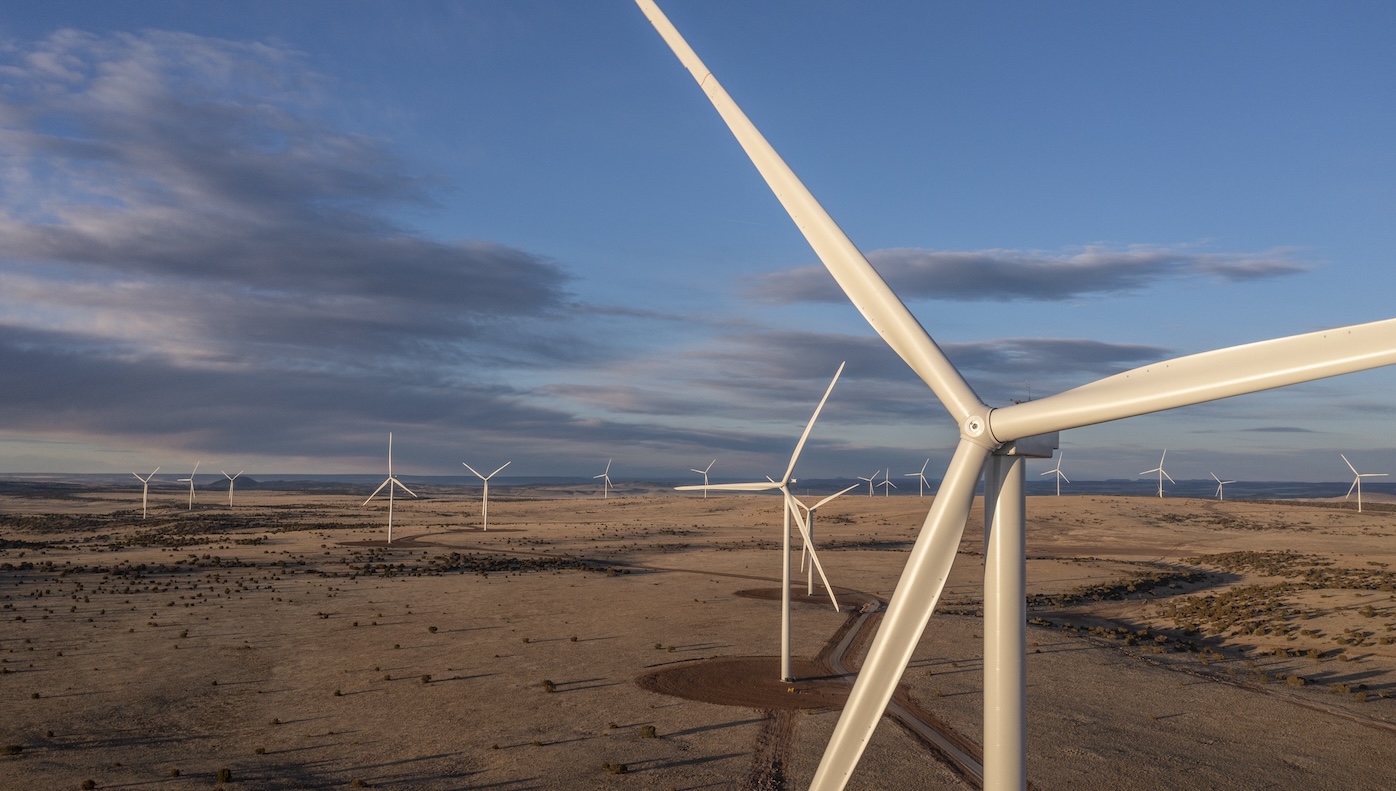
India has already written the first chapter in the story. The country now boasts more than 50 GW of wind power capacity — more power than is found on the entire Argentine grid. A poster child of India’s “first 50 GW” was a GE Vernova onshore wind turbine, designed for the country’s low wind speeds and vast expanses.
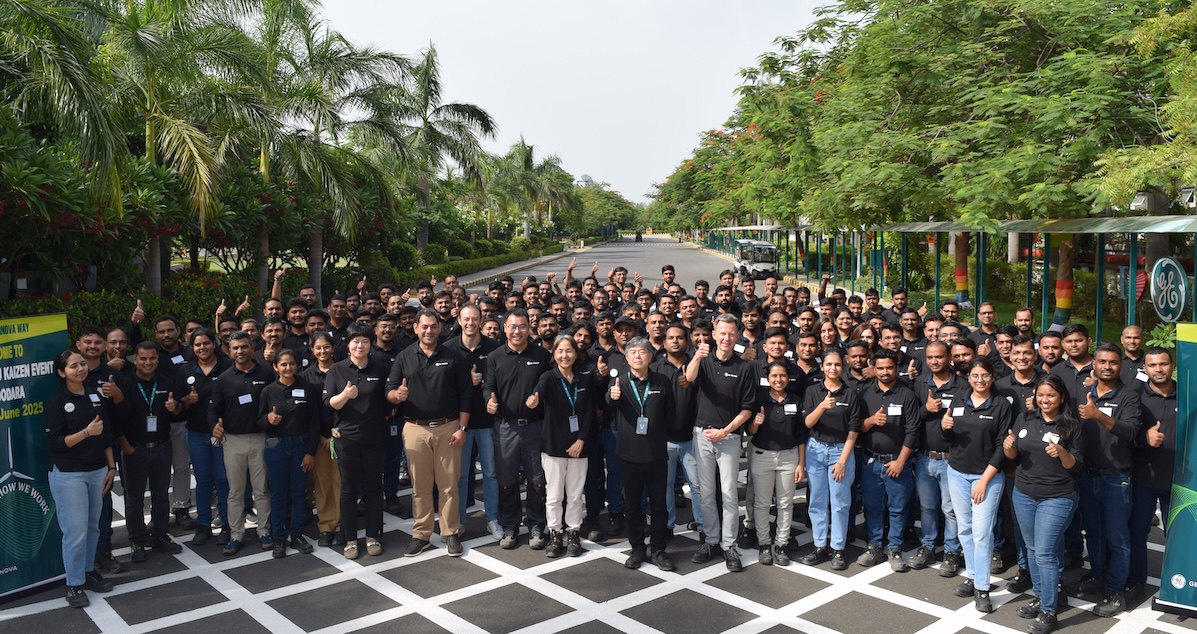
India was the hero of that story, too: The turbine, which can generate 2.7 MW, was homemade, from start to finish. The concept was hatched at GE Vernova’s engineering and design hub in Bengaluru, while factories in Gujarat (“one of India’s biggest,” says Maloo) and Karnataka made the turbine’s blades. A plant in Maharashtra assembled the nacelle, the giant box that houses the turbine’s critical machinery, such as the gearbox, generator, and electronic controls.
These shop floors teem with homegrown talent. For example, the Maharashtrian city of Pune has forged a reputation as “the Oxford of the East” for its many excellent universities. “They help provide us with fresh talent in different areas like manufacturing, services, operations, or maintenance,” says Maloo.
The Road to 500 Gigawatts
But with its breezy landscapes capable of supporting up to 200 GW, India has only scratched the surface of its wind power potential. “Land is also becoming more constrained, so we want high-performing, high-capacity-factor turbines,” says Maloo. Fortunately, GE Vernova boasts an even larger onshore turbine that’s ready to pick up the mantle and propel India to its 500-GW target.
It’s capable of generating 3.8 MW, which is enough electricity to supply the equivalent of 30,800 Indian households. What’s more, it’s already the most tested wind turbine in GE Vernova history, and up and spinning in the U.S. Maloo explains that the Asian country imposes fewer tip height restrictions, which allows for a taller hub height. These larger dimensions help to shrink a wind farm’s total footprint, he says. A typical onshore wind farm of 300 MW now requires just 79 next-generation turbines, rather than 112 with the previous model.

Like its predecessor, the supersize turbine will also be homemade. In addition to its engineering hubs, blade shops, and assembly lines, GE Vernova is collaborating with manufacturers in several Indian states to make its turbine tower, which shortens the journey of the huge components to their destined wind farm. The reliance on homegrown companies will push the “local content” value of GE Vernova’s wind turbine manufacturing operations well over 70%, says Maloo. This highlights GE Vernova’s unwavering dedication to bolstering local industries while simultaneously driving forward innovative renewable energy solutions in India.
The engineer notes that the made-in-India movement is a two-way street. While manufacturers adhere to stringent local content rules, they receive a huge prize in return: access to the mighty Indian market. “In some European countries, a large equipment manufacturer might install 500 megawatts a year,” says Maloo. “In India, we’re talking about 6 gigawatts.”
GE Vernova is ready to seize the opportunity. It has been present in India since 1902, when it constructed Asia’s first hydroelectric power station at Shivanasamudra Falls, near Mysore, which generated power for the region’s gold mines. Today the company has 11 manufacturing sites, five technology and engineering centers, and a workforce of more than 10,000 employees.
While they’ll be standing on their own two feet, they won’t be alone: GE Vernova will use all its scale, experience, and knowledge, with a presence in more than 50 countries and a total installed base of 57,000 wind turbines, to support them every step of the way. “Our people can deliver what India is looking for,” says Maloo. “That’s reliability, quality, and uniformity at scale.”