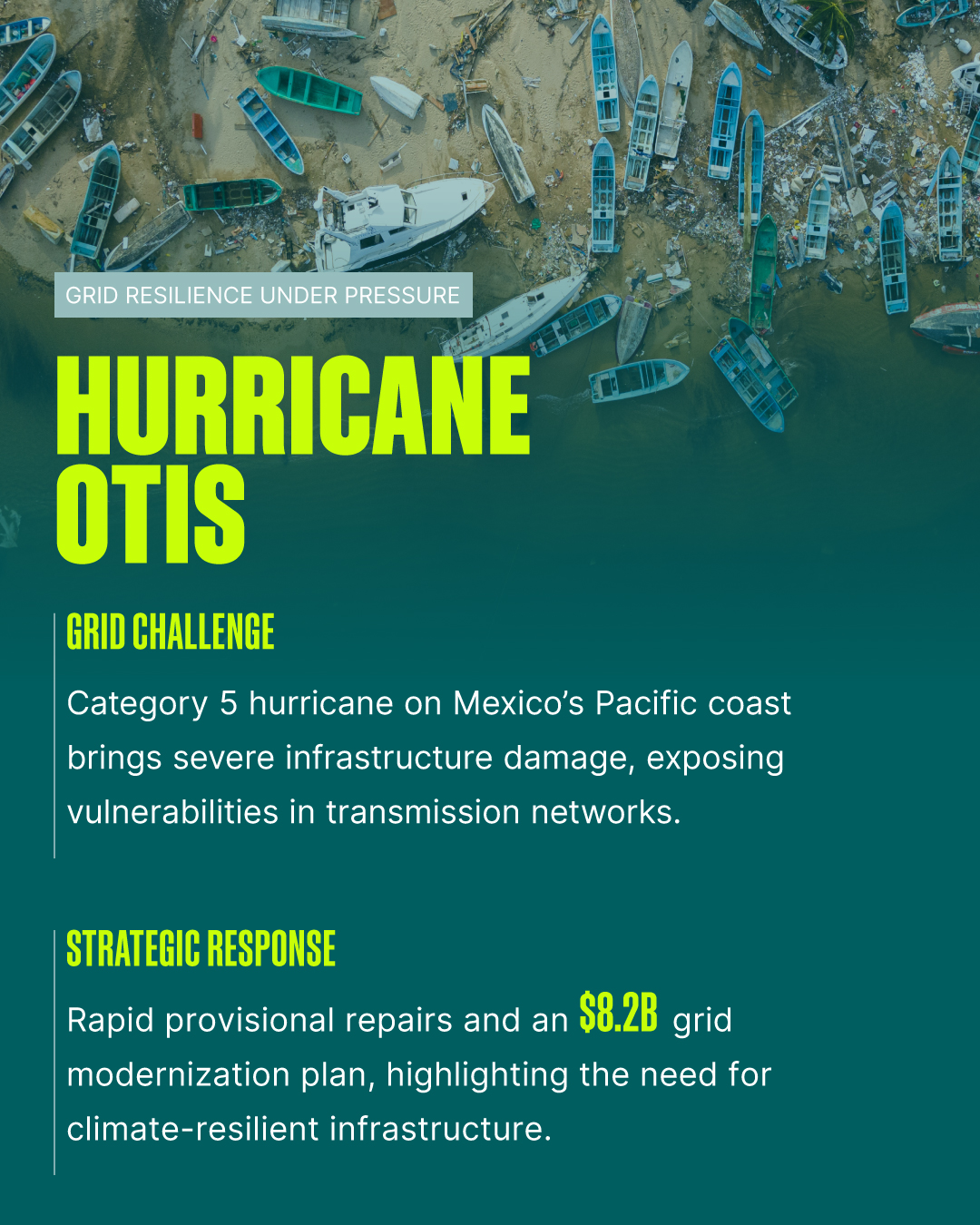
In the early hours of October 25, 2023, residents of Acapulco watched Hurricane Otis gather strength offshore. Forecasts had suggested a manageable storm. Instead, within less than 12 hours, Otis intensified from a Category 1 to a Category 5, with gusts exceeding 165 miles per hour. When it struck Mexico’s Pacific coast, howling winds tore through homes, hospitals, and businesses — and left the city’s electrical infrastructure in tatters.
Transmission lines collapsed, substations failed, transformers were destroyed, and thousands of poles were snapped or uprooted. By the time conditions began to calm, more than half a million people had lost electricity. It would be more than a week before essential services were restored, and months before full reconstruction was completed, at the cost of more than $200 million.
While Otis was an extraordinary storm, it was not an isolated event, and the vulnerabilities it exposed are becoming more common all over the world. The current global grid system was built in a different era; increasingly it is being tested by weather, conflict, and demand. Addressing these risks will require grids that are more digital, distributed, flexible, and interconnected. Companies like GE Vernova are working with grid operators and planners to develop the needed tools and strategies.
Power Grids on the Front Lines
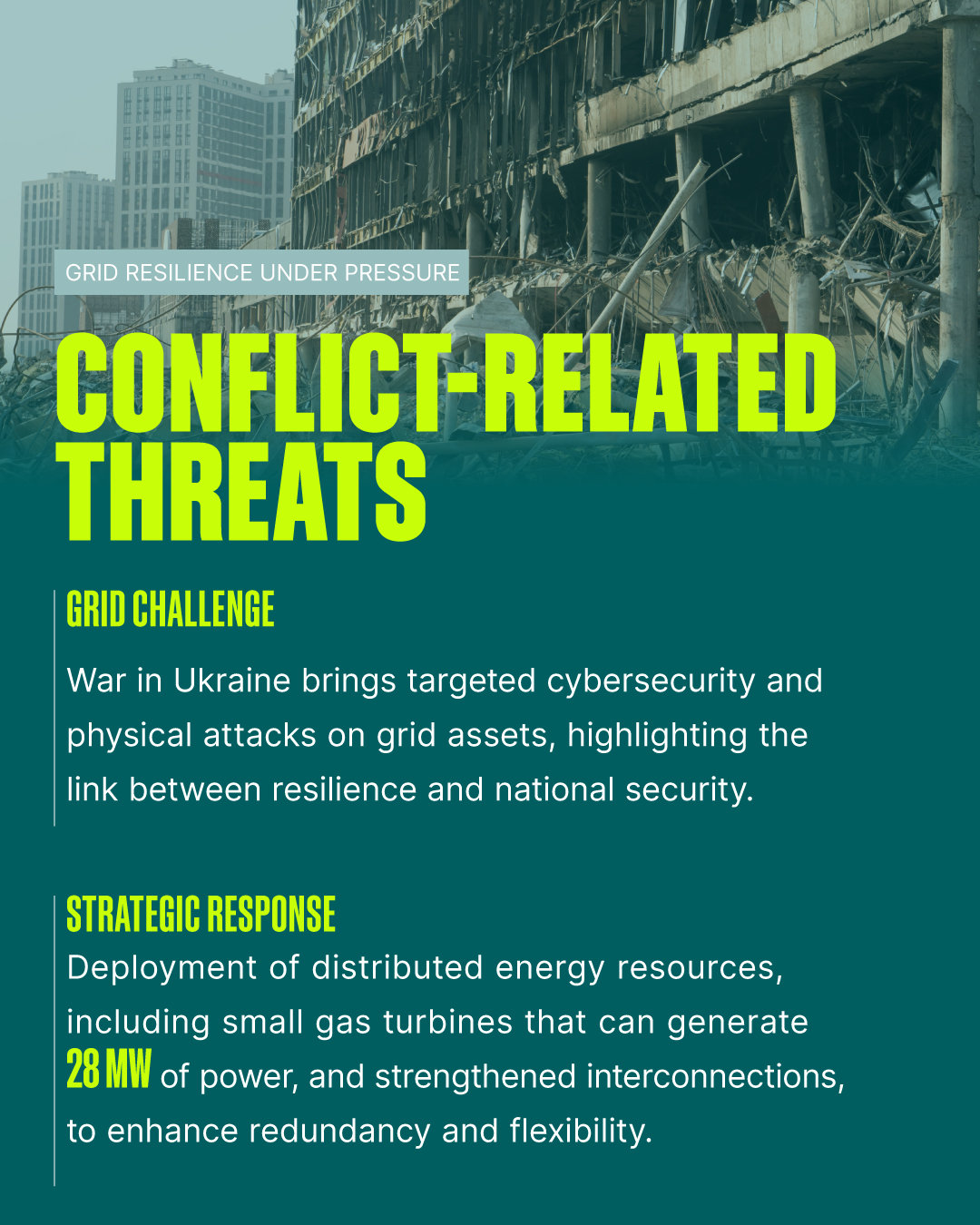
Since Russia’s full-scale invasion of Ukraine in 2022, the Eastern European country’s energy infrastructure has been repeatedly targeted by missiles and drones as well as cyberattacks. The grid is hit almost daily, analysts say, forcing emergency shutdowns and leaving millions of Ukrainians with scant access to electricity. In winter, when temperatures fall far below freezing, the consequences of this can be devastating. For Ukraine, grid resilience is not only an operational issue but a national security one.
The strikes have also revealed a deeper structural weakness. Ukraine’s grid was built around a relatively small number of large power stations that presented easy targets when hostilities began. Now, as officials work to stabilize and repair the system, planners are turning toward distributed energy resources — smaller gas turbines, solar installations, and battery storage — that can be deployed across the network and are far harder to disable in a single attack.
Rising Demand, Expanding Renewable Energy
Elsewhere in the world, the stress on energy systems comes not from disaster or conflict, but accelerating growth, driven by a combination of end‑use electrification (transport, buildings, and industry), new digital loads (data centers), and climate impacts.
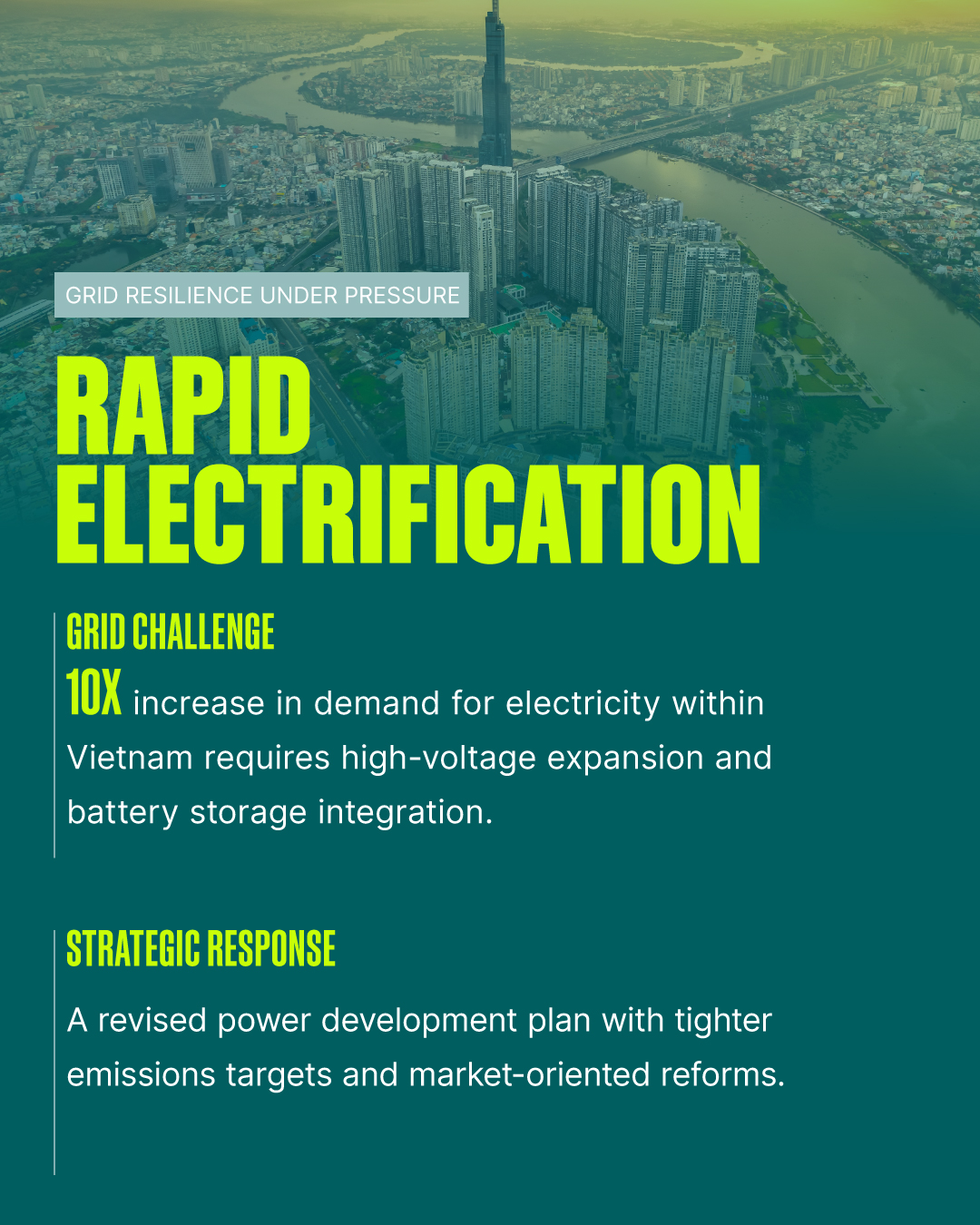
In Vietnam, driven by a booming economy and the electrification of industry, electricity demand has increased roughly tenfold since 2000. This surge shows no sign of slowing. Government projections suggest consumption could continue rising by 10% to 12% a year through the end of this decade.
To keep pace, emerging economies like Vietnam are expanding transmission networks, upgrading substations, adding renewable generation, and introducing battery storage. Smart grid technologies — digital sensors, automated controls, and more efficient long-distance transmission lines — and regional power interconnections are also being developed as the system becomes larger and more complex. In some cases, that includes high-voltage direct current (HVDC) links, which can move large amounts of electricity efficiently over long distances and strengthen connections between regions. When a system of this size scales this quickly, such complexity can become a risk in itself — making digital visibility, automation, and stronger interconnectivity essential to maintaining reliability.
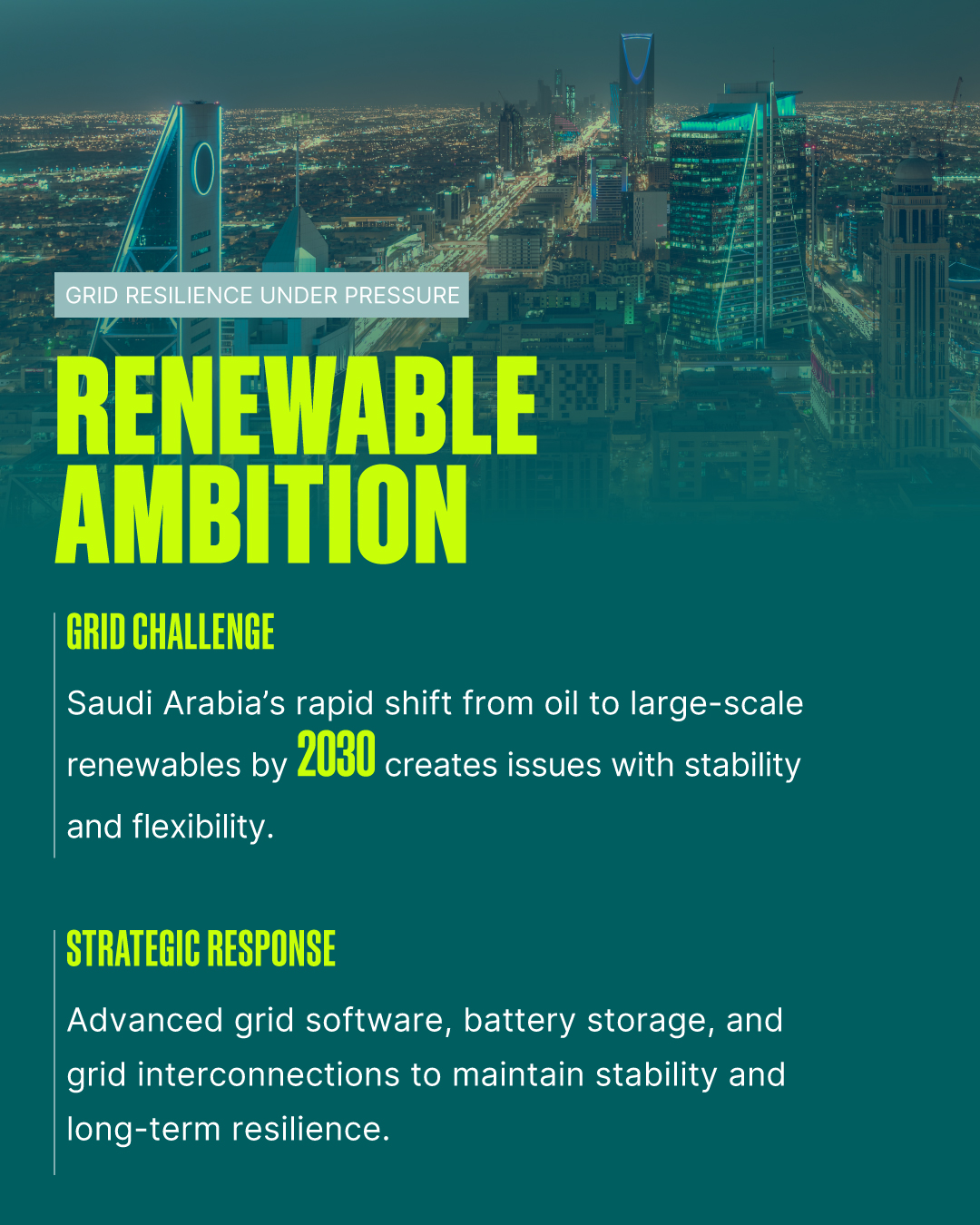
Saudi Arabia faces a different challenge: integrating large amounts of renewable energy while safeguarding grid stability. Under its Vision 2030 program, the country aims to generate about half of its electricity from non-fossil sources by the end of the decade — a target that can make balancing the grid more difficult, as solar and wind output rises and falls with the weather.
To maintain smooth operation of the grid, Saudi authorities are investing in battery storage, synchronous condensers — devices that help keep the flow of electricity steady by stabilizing voltage and frequency — and advanced grid management software to monitor the system and respond quickly to disruptions. They are also building a high-voltage interconnection with Egypt that will allow electricity to flow between the two countries, helping balance supply and demand during periods of peak use. The challenge highlights a critical shift: As renewable penetration grows, grids must become more flexible and responsive in real time, not just larger.
Energy Resilience in an Era of Risks
Meeting the challenges of extreme weather events, geopolitical tensions, rising electricity demand, and rapid renewable growth requires a fundamental shift in how power systems are designed and operated. Increasingly, that shift is centered on making grids more digital, distributed, flexible, and interconnected.
Access to better information is central to this rethink. Digital tools now give operators real-time visibility across the grid, while sensors, smart meters, and digital models of network infrastructure help detect problems earlier and allow planners to test how systems might respond before failures occur. Grid automation is also becoming more important. Intelligent switches and fault isolation technologies can contain disturbances before they spread, helping response teams restore services more quickly after an outage.
Other solutions focus on flexibility. Distributed energy resources — such as compact generators and solar panels — spread across the network can provide backup power when centralized plants go dark. Large- and small-scale battery storage can also help manage fluctuations in renewable generation.
Finally, stronger interconnections — both within and between countries — allow power to move more efficiently across regions. This helps balance supply and demand, reduces system stress during peak periods, and provides a buffer when disruptions occur in one part of the network.
Power grids worldwide are entering a new phase of risk and complexity. Building a grid that is more distributed, digital, flexible, and interconnected will be critical not only to prevent outages, but to support economic growth, energy security, and the energy transition. The path forward is increasingly clear, and the urgency to act is only growing.
A new analysis from GE Vernova, “The Resilient Power Grid,” takes a deeper look at these challenges and lays out an action roadmap for a more secure energy future. Read the report here.