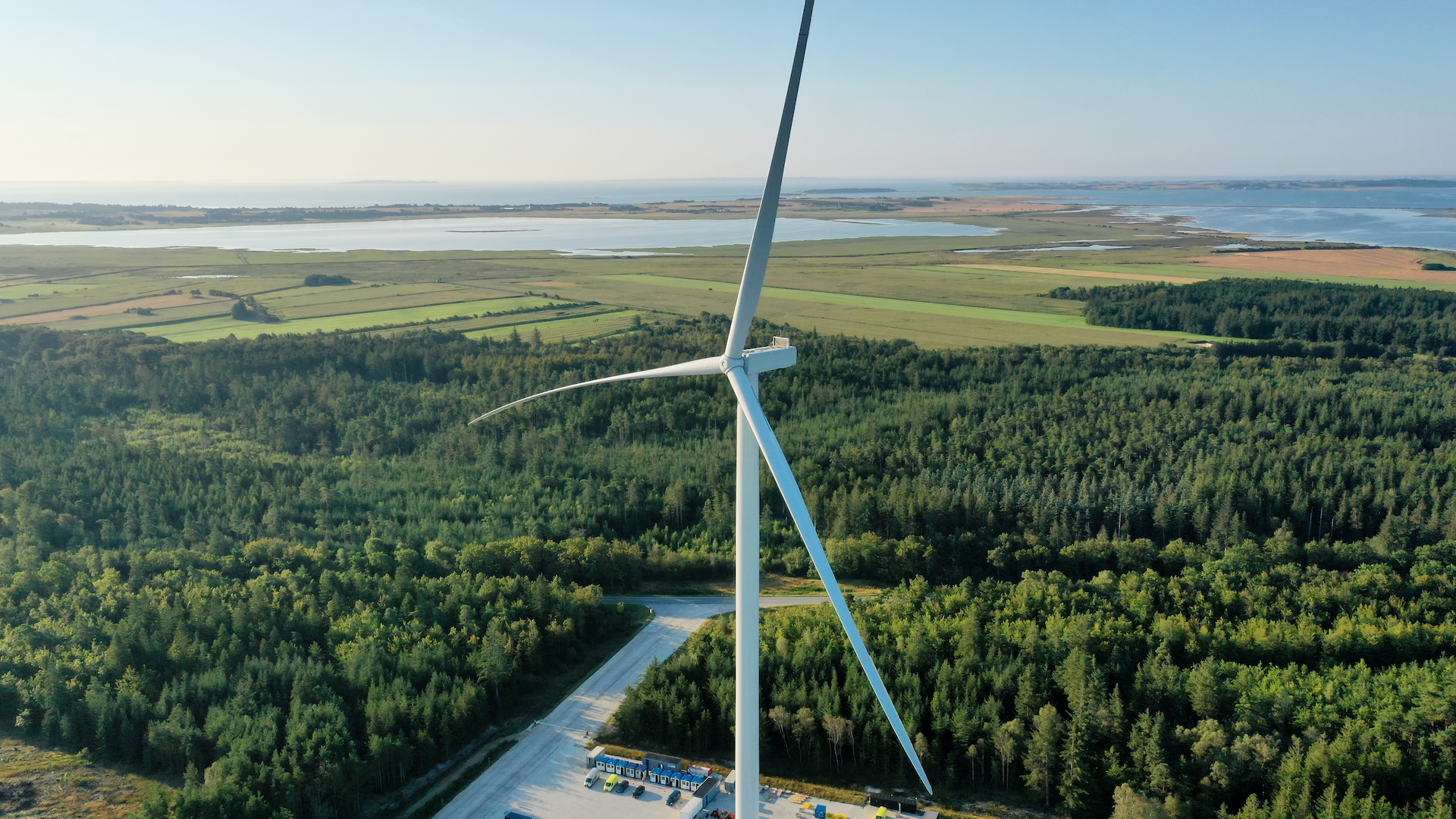
The conditions for building new wind projects in Germany are evolving rapidly. Developers are working within a sophisticated landscape of auction tariffs and evolving regulations. Planning reforms have helped bring more permits into the industry, but auction volumes have not always kept pace. This environment rewards precision and high-level coordination. The result is a business model that prioritizes disciplined execution and operational certainty.
Despite this, ambition is not in short supply in the country’s wind industry. Germany remains one of Europe’s most important renewable hubs for onshore wind, with a deep industrial base and a long history of community participation in the energy transition. Wind turbines still need to remain cost-competitive, but they also need to help customers improve project financial models through manufacturing, transport, installation, and long-term operation.
For Dimitri Schneider, managing director and executive sourcing leader at GE Vernova, the answer begins with “reliability at scale” as a competitive advantage in today’s wind industry — delivering proven solutions through disciplined execution and continuous improvement. The company’s 6.5 MW-164m onshore wind turbine is the latest evolution of an established turbine family, with processes from factory to site already tested and standardized.
Reliable Performance over Time
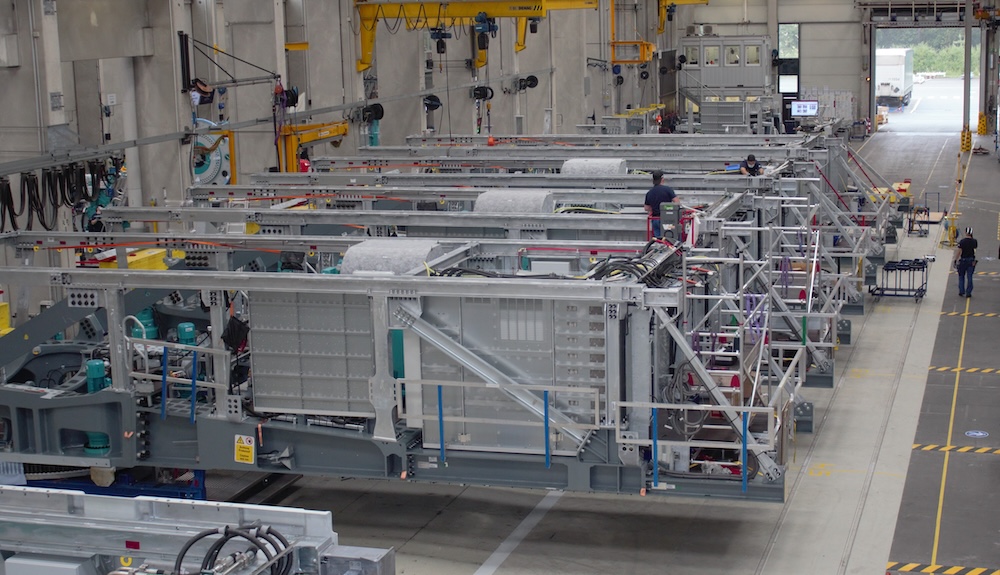
The 6.5 MW-164m is produced at GE Vernova’s Salzbergen manufacturing site in northwestern Germany, where the focus on repeatability recently reached a new landmark. The facility has now produced more than 25 GW of onshore wind turbine capacity, demonstrating a disciplined product strategy and a model of partnership in one of Europe’s most competitive regions for wind energy.
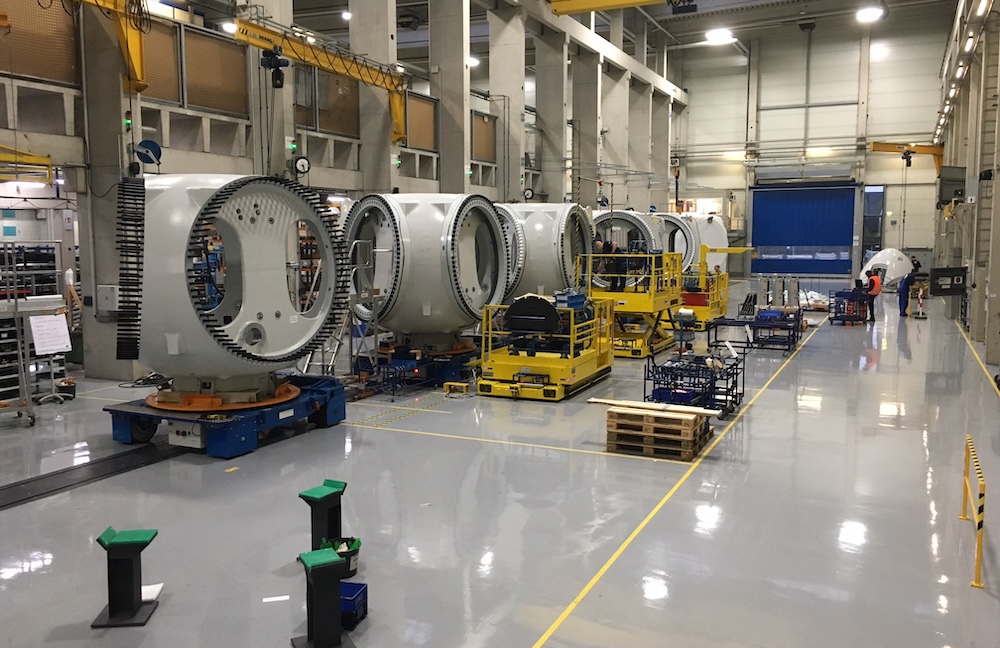
GE Vernova’s 6.5 MW-164m turbine is both a driver and a product of this success. Launched globally in 2019, the machine builds on years of operating experience and project data. “Quality, long-term performance, and long-term reliability have been at the forefront of our product development,” explains Marcas Breatnach, Northern Europe sales leader for Onshore Wind at GE Vernova. “You can only achieve a low levelized cost of electricity (LCOE) if the turbine performs well over the full duration of its use.”
This shift elevates the importance of consistent execution. Today, developers benefit from a closer alignment between the project plan and the actual work. Auction prices have made operational excellence more important than ever. Consistent performance over the operating life of the asset has a direct commercial impact, which means LCOE not only is driven by turbine rating or cost but also depends on proven reliability.
Community Impact
The milestone has a distinctly German character, with the turbines marking Salzbergen’s 25th gigawatt of production bound for a community-owned wind farm — part of a segment that has long defined the country’s renewable energy story. In Germany, local communities aren’t just hosts for new infrastructure; they participate directly in the transition, with a clear stake in how cleaner power is developed, financed, and delivered.
This reinforces the significance of the milestone, Breatnach says, and reflects GE Vernova’s goal to work pragmatically with partners of different sizes, from large utilities and developers to neighborhood projects. “Our commitment is to pragmatism and partnering with customers on an equal footing, whatever their scale.”
Local production at Salzbergen creates local jobs (the site employs around 700 people) and strengthens and shortens the German supply chain, while also giving developers and operators confidence that critical energy infrastructure is being produced close to end users.
The Road Ahead
As a key node in GE Vernova’s wider European wind operations, Salzbergen’s reach extends well beyond Germany. The site is “positioned with strong logistics infrastructure,” says Schneider. It also exports internationally, connecting German industrial capability to renewable projects across the continent. Its central location allows the company to work closely with suppliers, improving coordination and responsiveness when conditions change. In a sector marked by supply chain disruption, regulatory pressure, and the need to speed up construction, this is vital.
Looking ahead, Schneider believes three factors will determine the success of Europe’s decarbonization effort: the ability to deliver, resilience, and collaboration. Ambitious targets will translate into new capacity as the industry completes projects with precision, with technologies that perform under real-world conditions and relationships that hold over time.
“At GE Vernova, we believe Salzbergen represents exactly this mindset,” Schneider says, “combining reliability, partnership, and industry strength to help scale onshore wind energy across Europe and beyond.”