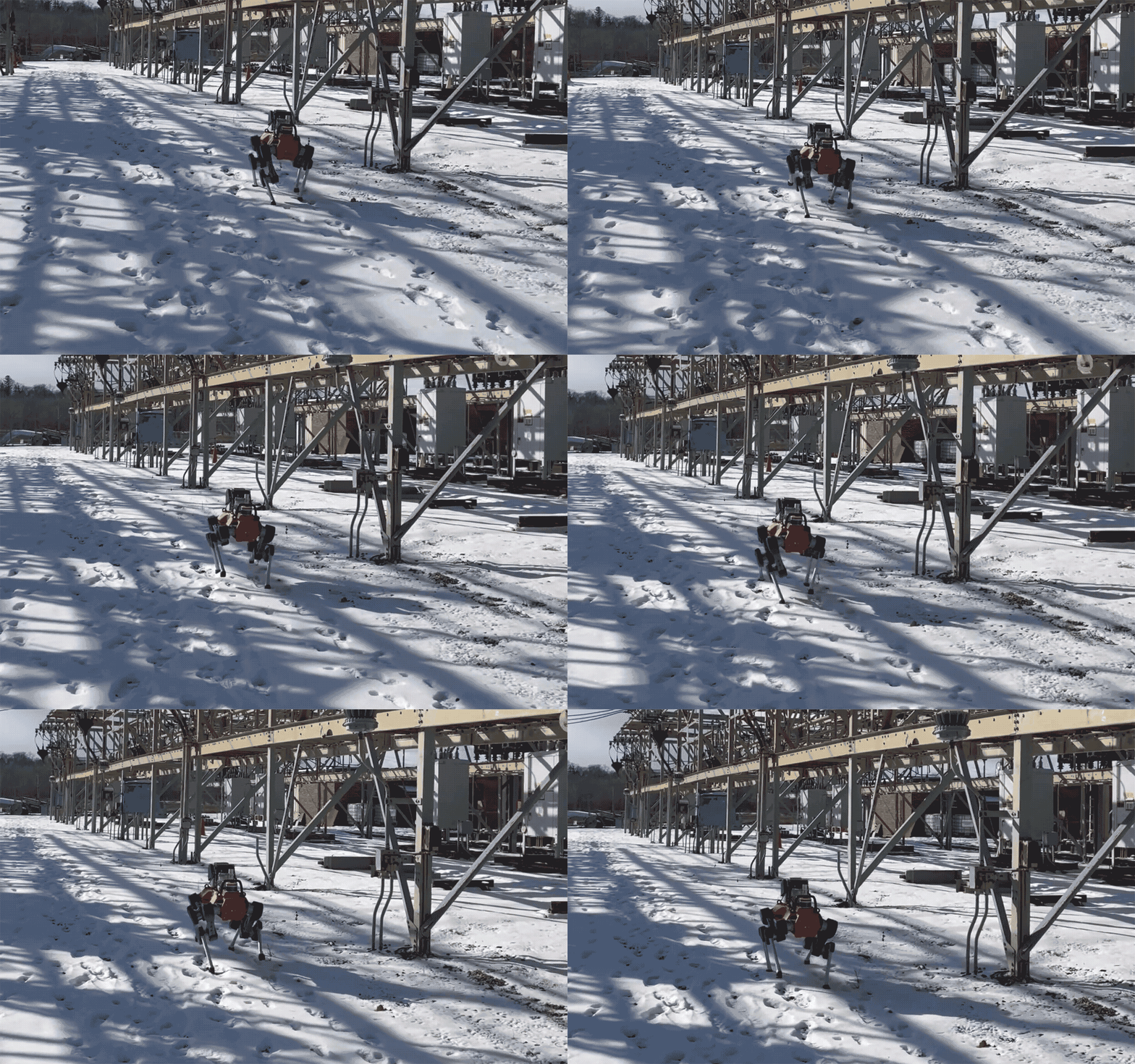
Neha Joshi first heard of ANYbotics in 2024, from a colleague who’d just deployed one of the Swiss company’s four-legged robots at a power site in Israel. Little did she realize that the next few weeks of her work life would involve taking data recorded in Israel, testing it in Schenectady, New York, where Joshi is based, and deploying a robot to another site in Ireland to confirm the findings.
By all accounts, the robot served its humans honorably: It climbed stairs, squeezed into narrow spaces, captured images, ran thermal scans, detected acoustic signatures. The only challenge came when the team had to process all the data the robot captured.
“They had a large amount of underutilized visual data that was sitting on-prem,” says Joshi, GE Vernova’s product leader of artificial intelligence (AI) and machine learning, meaning that the data was stored on physical servers on the premises rather than in the cloud, making it inaccessible for modern data processing. “This left them unable to use it for further analysis.”
This observation was one in a chain of discoveries that led to GE Vernova collaborating with ANYbotics to bring the heady promises of AI and cloud computing to on-the-ground industrial inspection. As an original equipment manufacturer whose technology helps generate approximately 25% of the world’s energy, GE Vernova is committed to helping power generators run their plants safely and efficiently. By combining robotics, AI, and cloud computing, GE Vernova’s collaboration with ANYbotics seeks to solidify those commitments.
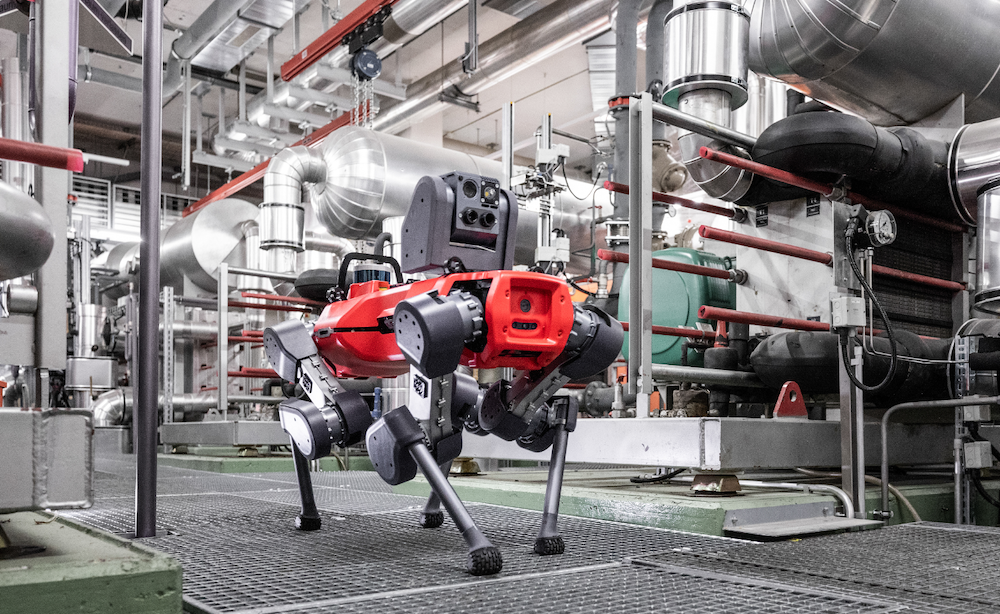
Autonomous robots are a physical manifestation of AI for GE Vernova’s Power & Energy Resources Software business, whose expertise in Asset Performance Management (APM) and technology finds powerful applications scrutinizing pipelines, inspecting gas turbines, and probing tight or perilous spaces in oil refineries. “Robots are becoming increasingly important in the energy field,” says Ryan Finger, a GE Vernova product marketer focused on AI and software as a service (SaaS). At the same time, the assets they service often operate in adverse conditions where high voltage and harsh temperatures make robotics an obvious solution.
“AI comes in a physical form like robots — which can capture data that fixed cameras and manual inspectors can’t — and in software forms like AI and machine learning. Both help industry leaders make maintenance decisions,” Finger says.
ANYbotics + APM = Faster Results
Both Finger and Joshi were already aware of the power computer vision has when it comes to transforming the asset inspection process. “They had 400 images of flanges, bolts, and pipe surfaces that their inspectors said would take two weeks to go through,” Finger says. “Our models took 30 minutes. That’s the kind of step change we’re talking about.”
In addition to reducing humans’ exposure to dangerous industrial environments, a device like ANYbotics’ ANYmal offers operators “a multimodal data capture device,” Joshi explains, complete with “light detection and ranging technology (LiDAR), an RGB camera, an ultrasonic microphone, and gas and thermal sensors.” This means an array and amount of data no local server can effectively process. By putting this data on the cloud, GE Vernova’s APM, which is designed to increase asset reliability, minimize costs, and reduce operational risks, is able to pull in the robot’s findings, turn them into time-series data that reveals trends and patterns, and merge this with everything the operator knows about its asset. Based on the validation provided by the power proof of concept in Israel, the team observed that combining APM with robotics resulted in fewer surprises, less unplanned downtime, faster, more accurate troubleshooting, and up to 40% reductions in both reactive maintenance and health, safety, and environment costs.
Validating the Robot’s Work Through Autonomous Inspection
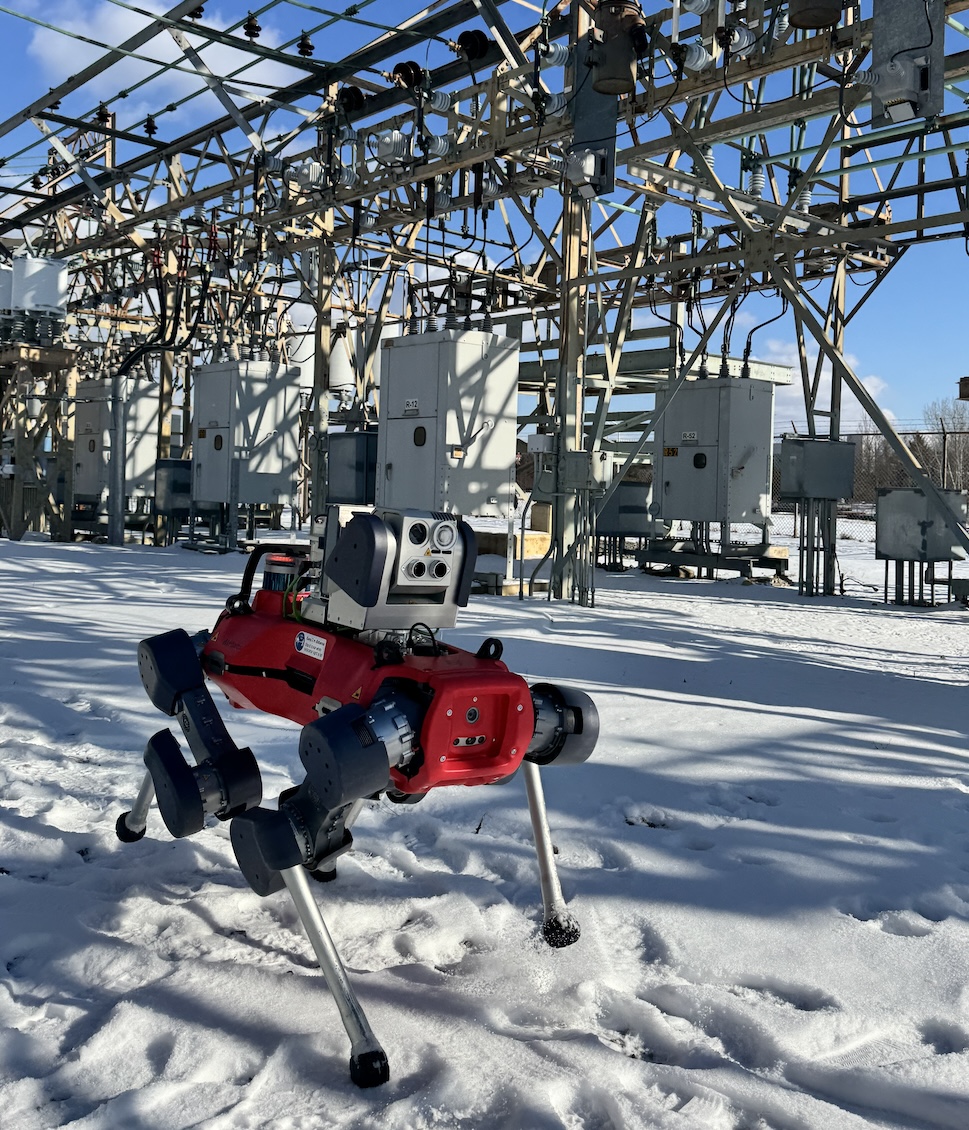
To test the system, Joshi and Finger’s teams ran a two-week proof of concept at GE Vernova’s Advanced Research Center in Schenectady, New York. “Week one was fully testing the robot, indoors and outdoors,” Joshi says, looking for “water leakage, corrosion, even ultrasonic noise from the transformers. In week two, we processed all that raw data through our Autonomous Inspection application, which we consider to be the eyes of our APM software. We saw that the robot’s data matched the manual inspector’s results.”
The next step was to deploy ANYmal to a GE Vernova customer site in Ireland. “The robot is already on the ground there,” says Joshi. “Now we’re configuring it, connecting it with our cloud servers and APM. The first milestone is thermal monitoring, then we’ll move on to ultrasonic sound, gas detection, and beyond.”
APM for Gas Turbines, Chemical Plants, and More
These applications only scratch the surface of what such linked platforms can deliver. “Our APM is robot agnostic and asset agnostic,” says Finger. “We’re starting with gas turbines, but the same approach works for transformers, chemical plants, and anywhere else you’ve got complex assets and safety risks. We even see an application for data centers.”
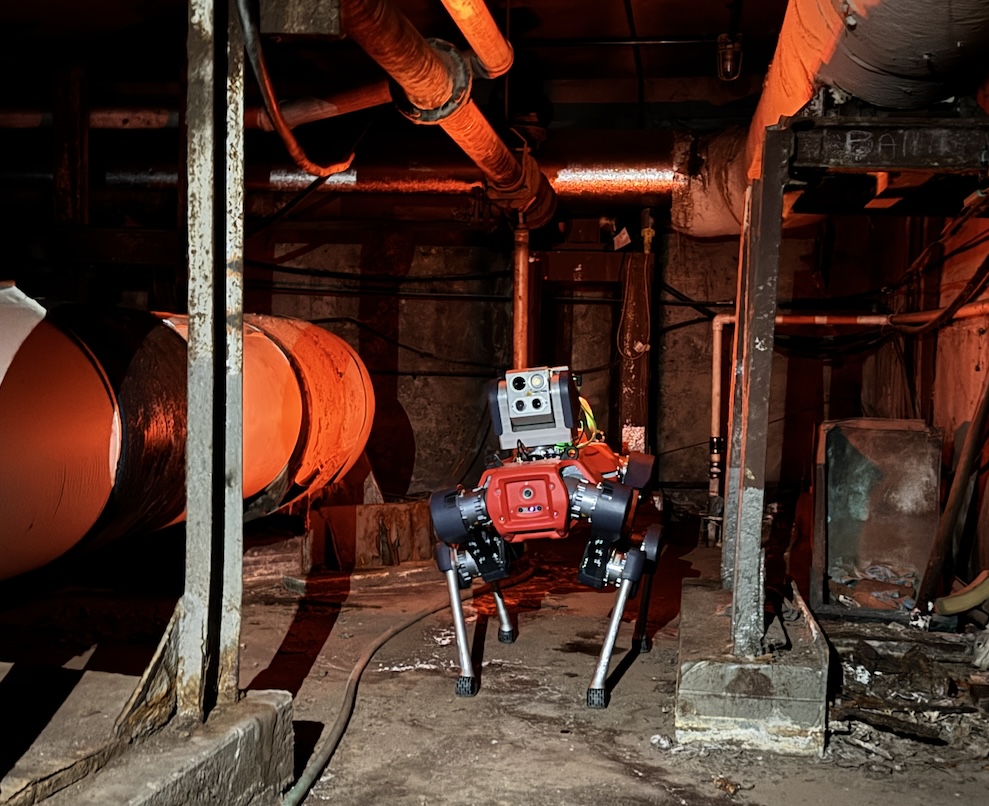
Joshi and Finger imagine a future when APM can send instructions back to the robot. “Say that our APM finds a problem,” says Joshi. “It sees some corrosion on a certain part and thinks, ‘Maybe I want the robot to go back and check this — perhaps over the weekend when no one’s there.’ In this case, the APM adds a new step into the robot’s existing route and sends that command to the robot to execute. That’s what we’d like to see in the future.”
No matter where the APM goes, humans remain in the driver’s seat. Robots can’t make key decisions, Finger says, “but to be able to quickly schedule another route based on what software flags will be a powerful advantage.”
The AI journey from a learning experience in Israel to live deployment in Ireland was quick, but based on core GE Vernova principles. “The robots extend what inspectors can do,” Joshi says. “And the software turns data into decisions. But in the end, it’s always about safety, cost savings, and efficiency.”