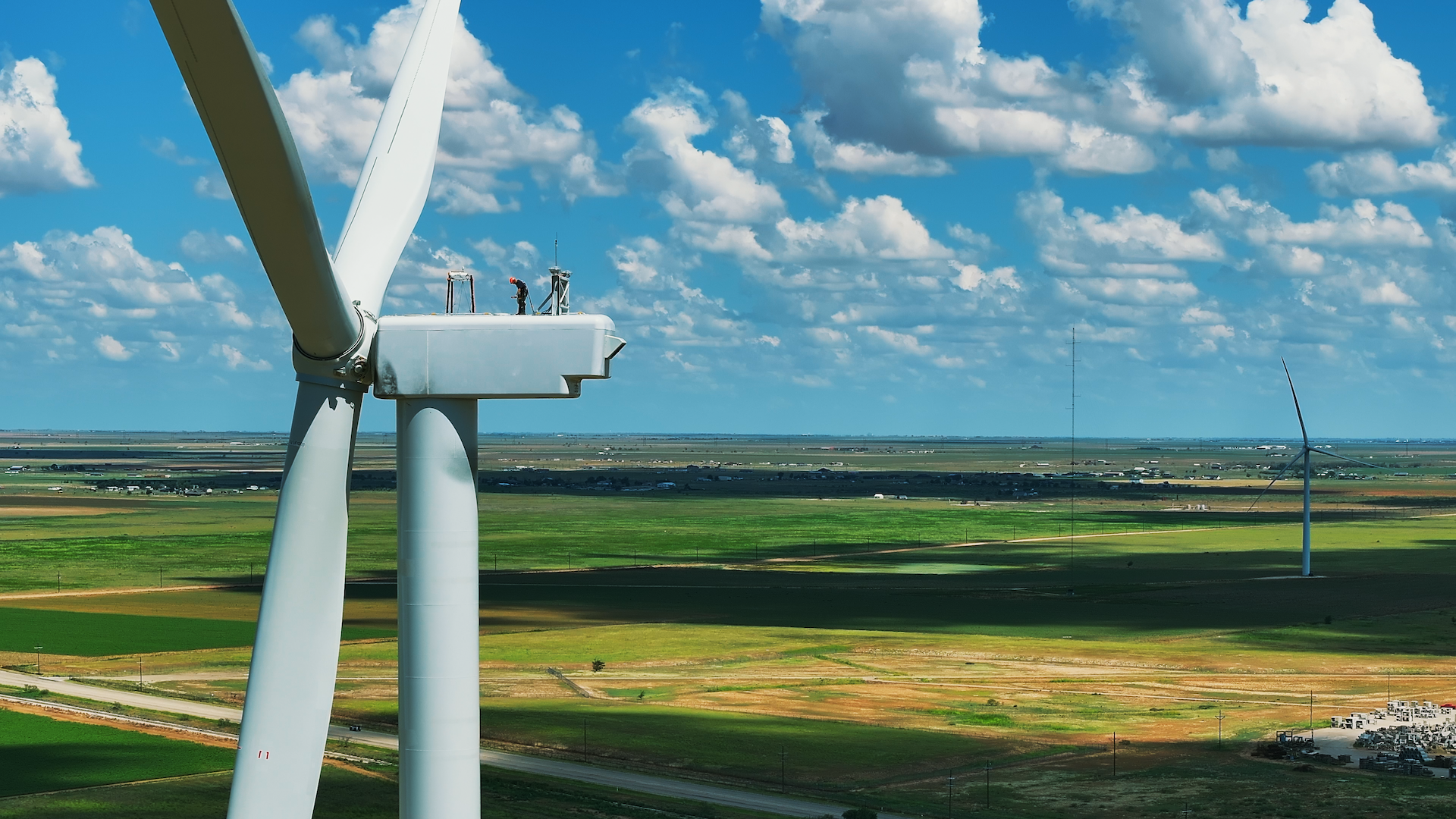
Towering above hilltops and open plains, wind turbines are a common symbol of renewable energy and the global fight against climate change. However, even renewable power sources can leave a carbon footprint. Case in point: The tall towers that hold the energy-creating rotors and machine head aloft are made from a material that accounts for between 7% and 9% of all human-made greenhouse gas emissions: steel.
While steel itself is not a pollutant, its manufacturing process is a significant source of greenhouse gases (GHGs). Steelmaking produces 2.8 gigatons of carbon dioxide globally each year — more than the emissions from any country except China, the U.S., and India — and accounts for about 8% of all human-made GHG emissions. In fact, using the industry’s prevailing production method, for every kilogram of steel produced, there are two kilograms of carbon dioxide sent into the atmosphere.
But what if wind towers themselves could be sustainable, like the energy they generate? To minimize the towers’ environmental impact, GE Vernova is turning to the Swedish steelmaker SSAB, whose SSAB Zero offering is manufactured in Iowa using fossil-free electricity and renewable natural gas (captured from decomposing organic waste), resulting in steel that is otherwise identical to the company’s standard plate products. MIT Technology Review named “green steel” one of the top 10 breakthroughs of 2025, citing the efforts of SSAB and other companies.
By incorporating SSAB Zero, GE Vernova now offers some of the lowest-emission wind turbines on the market. Customers have already installed 500 of them at onshore wind farms across the U.S.
“At GE Vernova, our mission is to electrify to thrive and decarbonize the energy sector,” says Emira Biser, GE Vernova’s senior director of supply chain sustainability. “That starts with decarbonizing our own products, and GE Vernova is committed to leading this shift in the wind industry. We will not stop until we have found sustainable solutions for all the most emitting turbine components.”
A First Step
As one of the turbine components with the highest carbon footprint — accounting for around a quarter of the carbon footprint of the turbine manufacturing for North American products — the tower was GE Vernova’s first target.
However, steelmaking is proving to be one of the most stubborn sources of GHGs. An alloy of iron and carbon, steel does not form naturally on earth — it’s the product of human innovations going back 15 centuries. Because it is highly reactive, pure iron is extremely rare; most of the iron on the earth’s surface is combined with oxygen in minerals called ores. To make steel, metalworkers must first strip away the oxygen and then add carbon. The recipe hasn’t changed much since the end of the iron age: Melt ore in furnaces lined with coke, then blast the mixture with hot air. The temperatures in these furnaces approach 4,000 degrees Fahrenheit (2,200 Celsius), requiring a significant amount of fuel that makes them the main culprit for GHG emissions in steelmaking, generating about 70% of the industry’s carbon footprint.
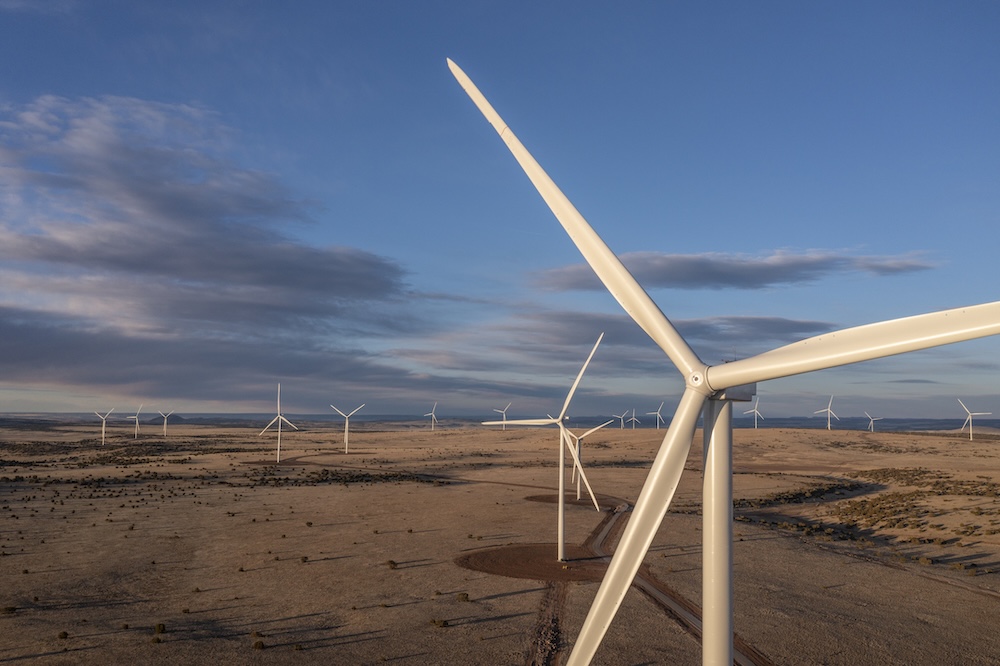
To decrease steel’s environmental impact, SSAB Americas is powering the electric arc furnaces at both of its U.S. sites almost entirely with fossil-free energy. And all SSAB steel in the U.S. is made from 98% recycled scrap rather than iron ore, conserving natural resources and cutting waste.
By reducing the carbon impact of its wind towers, GE Vernova is helping customers shrink their environmental footprints. But Biser and her team hope the collaboration with SSAB also paves the way for broader change, by both setting a new standard for sustainable sourcing in wind power and pushing the steel industry to adopt lower-emission technologies.
“This effort demonstrates that it’s possible to make meaningful progress even in hard-to-abate sectors,” Biser says. “We want to inspire other industries to be more ambitious about their own targets.”
One Piece in a Larger Sustainability Strategy
To take the initiative full circle, GE Vernova is helping equip SSAB’s new shop in Oxelösund, Sweden, to produce fossil-free steel. Electric arc furnaces consume huge amounts of energy — enough to stress the power grid. Designed specifically for electric arc furnaces, GE Vernova’s Direct Feed system relies on the company’s modular multilevel converter and transistor technology to ensure a consistent power supply without disrupting electrical service to other customers. The system, which will be installed in 2026, will help bring low-emission steel to a wider market. SSAB is also replacing its traditional plant in Luleå, Sweden, with an electrified steel mill.
This deliberate, step-by-step strategy is helping GE Vernova and its customers fulfill their climate commitments. But for Biser and her team, the search for sustainable solutions goes beyond numbers and quotas; ultimately, they want to make a meaningful difference.
“Sustainability isn’t just about the numbers; it’s about passion,” Biser says. “That’s why it’s so exciting to work in this field — because you see the real impact. We’re delivering something bigger than ourselves.”
This article contains forward-looking statements, which provide current expectations based on certain assumptions. Except as required by law, we disclaim any obligation to update these statements.