
XRT Electromechanical Relay Tool Kit - Legacy
Applications
Manufacturing for XRT has been discontinued.
Model No. XRT12A covers a set of relay tools contained in a flexible vinyl pouch. The set consists of 18 selected tools, of suitable variety, for the proper maintenance of General Electric relays. Individual tools are described in the brochure.
XRT Electromechanical Relay Tool Kit - Legacy
Applications
Manufacturing for XRT has been discontinued.
Model No. XRT12A covers a set of relay tools contained in a flexible vinyl pouch. The set consists of 18 selected tools, of suitable variety, for the proper maintenance of General Electric relays. Individual tools are described in the brochure.
Recommended Products & services
XLB Test Block Panels
The XLB Test Block Panel is designed for use with GE Vernova relays that do not have test facilities; an example being the model of the DLP digital distance relay without test facilities. The Test Blocks used in this test panel utilizes the same design features used in the drawout type construction of GE Vernova component relays. The standard test plugs used in testing component relays may also be used to test relays connected to the XLB test panel, such as the XLA12A or XLA13A test plugs.
XLB Test Block Panels
The XLB Test Block Panel is designed for use with GE Vernova relays that do not have test facilities; an example being the model of the DLP digital distance relay without test facilities. The Test Blocks used in this test panel utilizes the same design features used in the drawout type construction of GE Vernova component relays. The standard test plugs used in testing component relays may also be used to test relays connected to the XLB test panel, such as the XLA12A or XLA13A test plugs.
Recommended Products & services

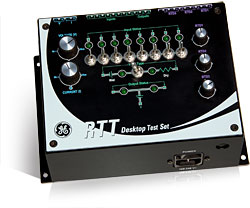
XLA Test Plugs for Drawout Relays
Applications
The test plug provides a quick and easy means of testing drawout case relays or meters without removing them from their cases. The test plug is substituted for the regular connecting plug and there is nothing to disconnect. The XLA12A enables power to be applied to the relay from either a separate source or the source that feeds the equipment. The XLA13A can only be used when a separate source of power is available.
To insure low-contact resistance the test plug contact fingers are silver plated.
XLA Test Plugs for Drawout Relays
Applications
The test plug provides a quick and easy means of testing drawout case relays or meters without removing them from their cases. The test plug is substituted for the regular connecting plug and there is nothing to disconnect. The XLA12A enables power to be applied to the relay from either a separate source or the source that feeds the equipment. The XLA13A can only be used when a separate source of power is available.
To insure low-contact resistance the test plug contact fingers are silver plated.
Recommended Products & services
XCA Test Probes and Plugs - Legacy
Manufacturing for XCA has been discontinued.
Three different XCA test plugs are available to provide an easy means of testing C-case drawout relays without removing them from their cases.
XCA Test Probes and Plugs - Legacy
Manufacturing for XCA has been discontinued.
Three different XCA test plugs are available to provide an easy means of testing C-case drawout relays without removing them from their cases.
Recommended Products & services
PK-2 Test Blocks and Plugs
Type PK-2 test blocks are essentially 4-pole and 6-pole jacks, provided with molded Textolite covers that have internal plug contacts, which make a through connection when the cover is in place. The contacts in the blocks are of the line- pressure type and provide positive contact with minimum contact resistance. For all current circuits, auxiliary contacts are used which automatically short circuit the current transformer when the cover, or plug is removed.
PK-2 Test Blocks and Plugs
Type PK-2 test blocks are essentially 4-pole and 6-pole jacks, provided with molded Textolite covers that have internal plug contacts, which make a through connection when the cover is in place. The contacts in the blocks are of the line- pressure type and provide positive contact with minimum contact resistance. For all current circuits, auxiliary contacts are used which automatically short circuit the current transformer when the cover, or plug is removed.
Recommended Products & services
P990 Series
P990 Series
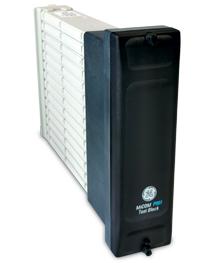
The P991 Test Block, designed as part of the MiCOM range, offers safe and configurable facilities for monitoring and secondary injection testing in any power system protection scheme when used with the P992 multi-finger Test Plug. A single-finger test plug is also available (type P993) that provides a safe and isolated means solely for the verification of CT circuits.
P990 Series
P990 Series
The P991 Test Block, designed as part of the MiCOM range, offers safe and configurable facilities for monitoring and secondary injection testing in any power system protection scheme when used with the P992 multi-finger Test Plug. A single-finger test plug is also available (type P993) that provides a safe and isolated means solely for the verification of CT circuits.
Recommended Products & services
P990 Series
The P991 Test Block, designed as part of the MiCOM range, offers safe and configurable...
View More
MMLB / MMLG
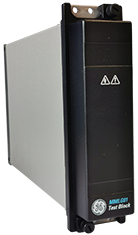
Designed as part of the Midos range, these test blocks offer facilities for monitoring and secondary injection testing of any power system protection scheme when used with the multi-fingered test plug type MMLB 01.
The MMLG test block carries 14 circuits, each of which is brought out to separate pairs of terminals at the rear of the case.
Each circuit comprises a pair of internal contacts which are normally sprung together to complete the circuit link through the block when the associated protective equipment is in normal service.
MMLB / MMLG
Designed as part of the Midos range, these test blocks offer facilities for monitoring and secondary injection testing of any power system protection scheme when used with the multi-fingered test plug type MMLB 01.
The MMLG test block carries 14 circuits, each of which is brought out to separate pairs of terminals at the rear of the case.
Each circuit comprises a pair of internal contacts which are normally sprung together to complete the circuit link through the block when the associated protective equipment is in normal service.
Recommended Products & services
MMLB / MMLG
Designed as part of the Midos range, these test blocks offer facilities for monitoring...
View More
HGA Hinged Armature Auxiliary Relay
The Type HGA hinged armature auxiliary relays are designed to provide additional contacts, higher contact carrying and interrupting ratings, timing, interlocking, electrical separation, or other auxiliary functions.
HGA Hinged Armature Auxiliary Relay
The Type HGA hinged armature auxiliary relays are designed to provide additional contacts, higher contact carrying and interrupting ratings, timing, interlocking, electrical separation, or other auxiliary functions.


NGA Auxiliary Relay
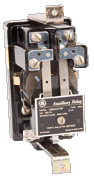
The Type NGA15 is the general designation for a family of telephone- type DC auxiliary relays mounted in a small molded case similar to Type HGA relays. These auxiliary relays are available with several different contact arrangements and operating times. All models are continuously rated. Some have a surge limiting diode circuit for the operating coil as noted in the Selection Guide.
NGA Auxiliary Relay
The Type NGA15 is the general designation for a family of telephone- type DC auxiliary relays mounted in a small molded case similar to Type HGA relays. These auxiliary relays are available with several different contact arrangements and operating times. All models are continuously rated. Some have a surge limiting diode circuit for the operating coil as noted in the Selection Guide.
HMA Hinged Armature Auxiliary Relay
The Type HMA relay is an instantaneous auxiliary device whose contacts are opened and closed by the movement of a hinged armature.
Type HMA Century Series auxiliary relays are designed to provide additional contacts, higher contact carrying and interrupting ratings, timing, interlocking, electrical separation and other auxiliary functions.
The Century Series coil design provides longer operating life than previous designs as a result of changes in the entire coil insulation system.
HMA Hinged Armature Auxiliary Relay
The Type HMA relay is an instantaneous auxiliary device whose contacts are opened and closed by the movement of a hinged armature.
Type HMA Century Series auxiliary relays are designed to provide additional contacts, higher contact carrying and interrupting ratings, timing, interlocking, electrical separation and other auxiliary functions.
The Century Series coil design provides longer operating life than previous designs as a result of changes in the entire coil insulation system.