Roger Martella, GE Vernova’s chief corporate officer and chief sustainability officer, used to tell the story of the company by starting in the past. He felt the weight of history as he made his way to work each morning, remembering how Thomas Edison built the world’s first commercial power plant on Pearl Street in Manhattan, a small coal-fired station that powered more than 10,000 incandescent lamps, before founding the General Electric Company in 1892.
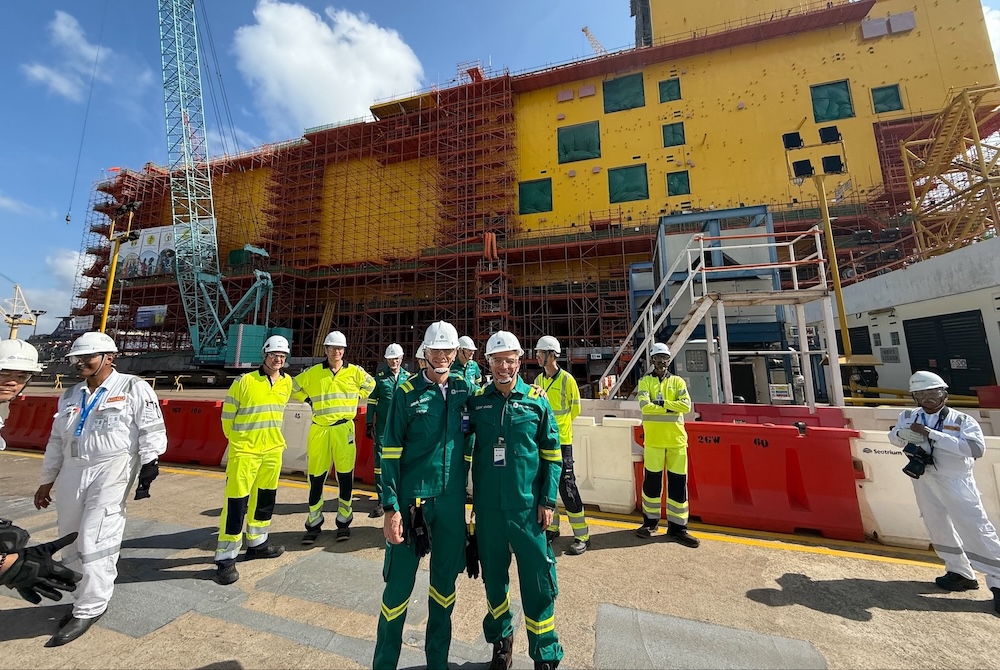
As Martella (pictured above, at right, with Chief People Officer Steven Baert at the GE Vernova Singapore Services facility) writes in his foreword to GE Vernova’s 2025 Sustainability Report, the company’s spin-off in 2024 marked a turning point. For the first time in 132 years, GE Vernova became a purpose-built electrification company, with a focus shifting from its proud legacy to serving a people-first energy future. In this interview, Martella reflects on what it means to reimagine the future, turning bold concepts into real projects, real infrastructure, and real impact. From small modular reactors (SMRs) and direct air capture (DAC) to people development and energy access, he emphasizes that the future demands technologies and a workforce to help meet the world’s surging demand for electricity so that communities can thrive, all while advancing goals to decarbonize the grid.
“The world’s growing needs are changing, and we need to change to be ahead of it,” says Martella. “We are fundamentally reimagining how we operate, invest, and innovate to meet these needs.”
The Current: How is GE Vernova positioned for the future of energy in this year’s Sustainability Report?
Martella: We have a clear message. We are turning concepts into reality with an unrelenting focus on delivering the technologies the world needs not just today, but for the decades ahead.
Let’s drill down into that a bit more. How will this play out?
Well, nothing inspires me more than seeing earthmoving equipment give way to concrete and steel. But a small, very intentional change in our mission statement has brought focus to our strategy, making it clear that we believe energy is about people. It’s not just about providing electrons or improving emissions, but ensuring people and communities can thrive every day.
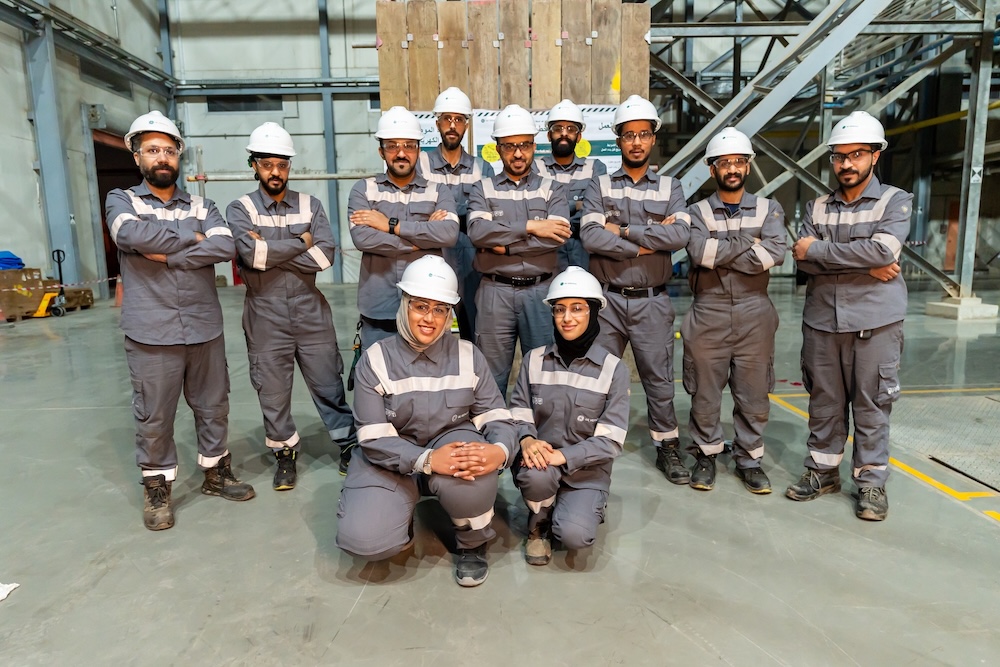
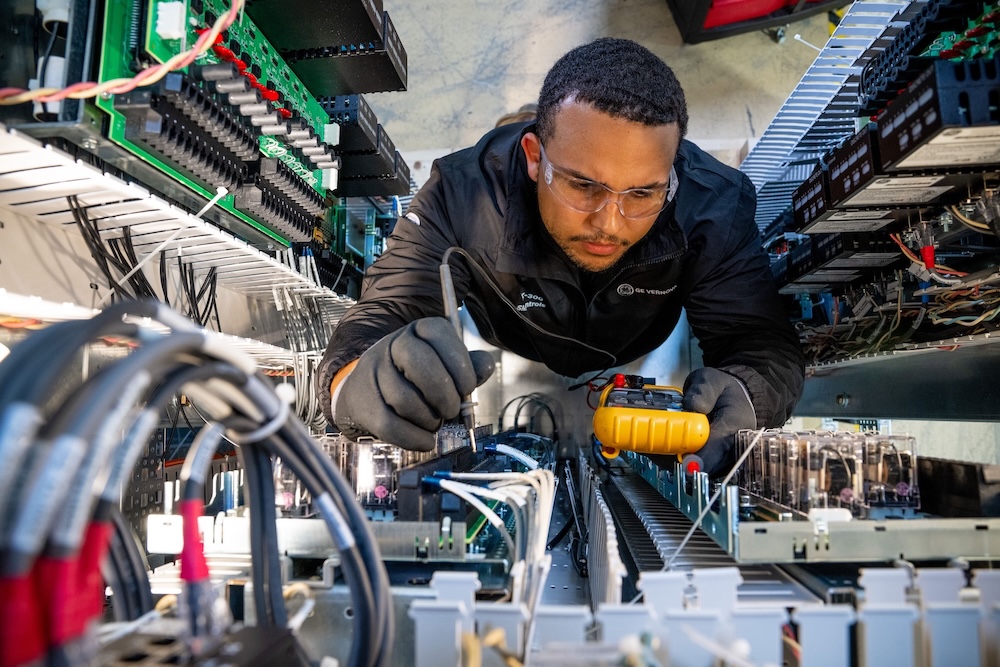
People will also help us turn concepts into reality. As we continue to innovate and deploy the technologies that the world needs, there is a growing need for a workforce that can help meet this surging global demand for electricity. This workforce will have opportunities across the spectrum, from electricians and welders to nuclear engineers. That’s why the GE Vernova Foundation is investing in energy scholarships and workforce development programs, with a goal of reaching 30,000 students and learners by 2030, and why GE Vernova is laser-focused on the next generation of energy leaders.
In your foreword, you say that GE Vernova “became a purpose‑built electrification company again” for the first time in 132 years. What do you mean by that?
There’s a sense of renewed identity at GE Vernova. We are proud of our more than 130-year history providing the power the world needs, but today our teams are entirely focused on building tomorrow’s infrastructure. The world’s growing energy needs are changing, and we have to find new ways to execute and scale to meet the moment.
How is the company choosing a future-driven path over a legacy way of doing things?
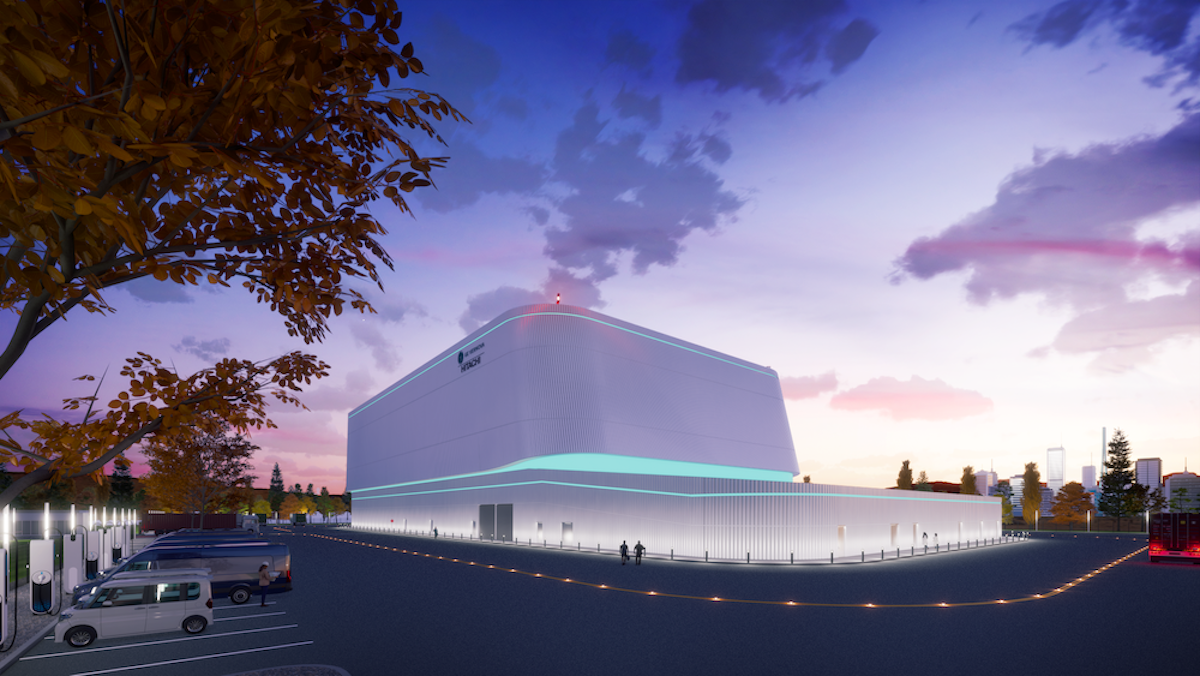
Let me give you an example. On the next generation of nuclear technologies, construction unfolded within days of approval on the first commercial small modular reactor in the Western Hemisphere. By focusing on execution, we have been able to invest and advance these technologies that will play a role in the future of energy.
An Integrated Strategy
How do the four pillars — Electrify, Decarbonize, Conserve, and Thrive — fit together as one integrated sustainability strategy?
GE Vernova’s Sustainability Framework comprises four pillars, each with leading goals that progress our objectives to help electrify and decarbonize the planet, conserve natural resources, and support communities where everyone can thrive. These leading goals are core to our sustainability programs, and the framework helps ensure that our commercial success directly supports environmental progress and local communities.
The report also emphasizes that sustainability is embedded in the operating model rather than a single function. How does that work in practice?
When you put any function in a silo, it’s hard for it to be seen as a priority across the company. That’s why we’ve launched the Control Room, our sustainability management system. It guides how we operate each day, measures impact and performance, and sets out the 5 Charges underpinning everything we do to achieve our mission to electrify the world, help people thrive, decarbonize emissions, innovate more and use less, and operate fatality-free. The 5 Charges are the bold ambitions driving how we innovate, operate, and deliver impact to achieve our mission. Now we are putting them in big, bold letters as our North Star.
A Concrete Impact, Today
Many sustainability-related goals are focused on 2050, but how is GE Vernova having a concrete impact on the power grid right now?
In 2025, GE Vernova brought online 26 gigawatts (GW) of new power-generating capacity, which has a carbon intensity 31% below that of the existing global grid. This new capacity helps prevent an estimated 22 million metric tons of CO2 emissions annually, as compared with the existing grid. This demonstrates that electrification with GE Vernova’s equipment is having an impact on reducing the carbon intensity of the grid.
To show this progress in real time, we’ve launched an online Electrification Impact Tracker that maps new power-generating capacity and regional technology deployments, demonstrating how our global expansion affects local communities and advances our broader goal of universal electricity access.
Where do you see the most significant near-term growth potential for low-emissions technologies?
We are excited for the opportunities across the breakthrough technologies we are investing in — small modular nuclear reactors, carbon capture and storage, direct air capture, and hydrogen and ammonia as fuels — over the next five to ten years.
SMRs are a good example of how we’re already executing on next-generation technologies. They were originally a late-2030s proposition. Now, due to our focus on bringing these technologies to life, the first BWRX-300 is projected to come online at the end of this decade in Clarington, Ontario. We have had conversations with more than 50 countries about SMRs, have announced plans for $40 billion in SMR investments through the U.S.–Japan trade deal, and are seeing a boom of interest across Central and Eastern Europe. The focus of our team signals to the rest of the world that we are ready to keep building momentum.
Different Tactics, Same Goal
You note that progress “will not be linear” and that the mix of gas, nuclear, wind, storage, and grid will shift year to year. Why?
Let’s be clear: The world needs more electricity than current sources can provide. As we ramp up that capacity, each country and region has different strengths and weaknesses, be it infrastructure, geography, or some other factor. So, each year, as different parts of the world invest and grow their energy systems, the mix of fuels for that growth will be different. We are still moving toward the goal of decarbonization, but how we get there varies year to year as different regions bring more electricity online.
Culture, Governance, and Innovation
How are strategic global partnerships accelerating these aggressive technology timelines?
One example that really shaped my thinking this past year is the work we supported through the MIT–GE Vernova Energy and Climate Alliance. Over the past year, we funded 13 research projects with professors from the Massachusetts Institute of Technology, exploring everything from modernizing the grid to developing low‑carbon fuels, supported 11 student fellows who brought fresh perspectives, and welcomed nearly 70 interns from MIT.
What stands out to me is how much industry can learn from academia. The curiosity of students, paired with the depth of MIT faculty expertise, constantly challenges us to rethink what’s possible. In return, industry grounds this research by bringing real-world data and operational constraints to the table. That two-way exchange is what turns a collaboration into a true partnership. Spending time with the students and professors has been incredibly energizing. Their rigor and optimism make it clear that the future of energy isn't far off — it’s being built right now. These partnerships accelerate both the technology and our optimism that we can achieve more than we imagined.
Additionally, the first Mendoza Collective Action Summit embodies our commitment to partnerships. Over three days in Mendoza, Argentina, in April 2025, leaders from across the public, private, and academic sectors came together to share insights on how to grow access to affordable, reliable, and sustainable energy for all. What emerged was a shared sense of urgency that we need new ways of working together. This led to the development of a set of shared foundational values to guide this work, known as the Mendoza Principles.
When you look ahead to 2030, what will serve as the ultimate proof that this year’s report marked a genuine turning point?
This year’s report puts a clear marker down. We are bringing these new technologies forward: SMRs are scheduled to be up and running, carbon capture and storage and direct air capture are advancing, and much more. These are the tangible milestones that will show we are meeting our mission to electrify to thrive and decarbonize.