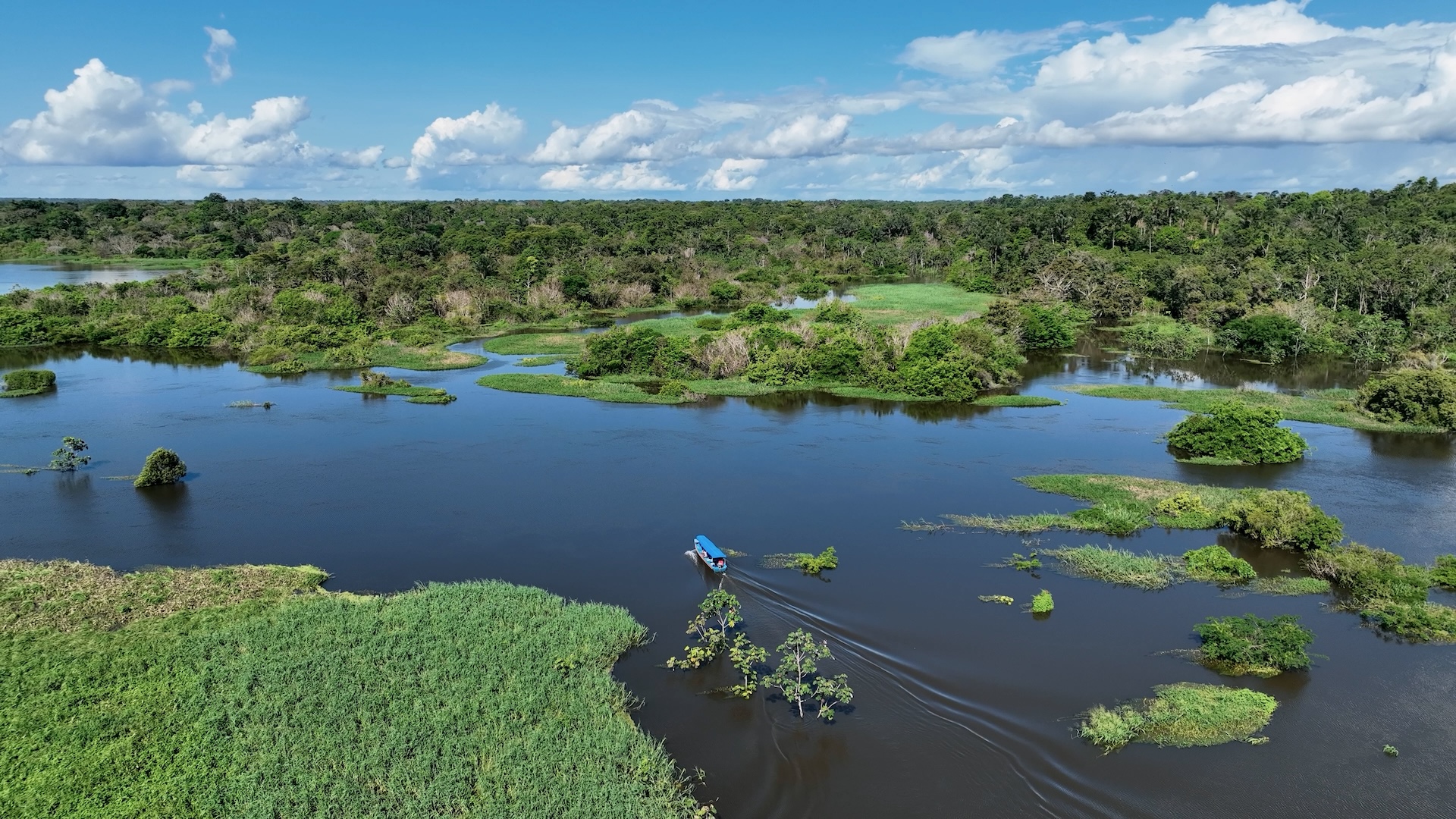
Building reliable power in the Amazon rainforest, one of the world’s most remote locations, takes more than just erecting towers and panels. Wind and solar don’t produce electricity 24/7, so grid operators are constantly juggling to maintain a steady, stable flow of energy. Overcoming those challenges is exactly what the new Azulão I thermal power plant in Brazil was built to do. It uses GE Vernova’s 7HA.02 gas turbine technology and state-of-the-art blocking filter technology to quickly compensate for fluctuations in wind and solar power — and that flexibility will help Brazil to continue increasing its supply of renewable power.
According to the government’s Ten-Year Energy Expansion Plan, by 2035, renewable sources are expected to account for more than 85% of Brazil’s electricity generation. That growth will be driven primarily by the expansion of wind and solar power. As more weather-dependent production enters the system, grid operators need sources that can respond as output rises or falls and supply firm power during peak demand when renewables aren’t available.
Azulão I, a 295-megawatt gas power plant developed by Eneva, Brazil’s largest thermoelectric power generator, is built to provide reliable energy to Brazil’s National Interconnected System whenever the grid needs it, regardless of whether the wind is blowing or the sun is shining.
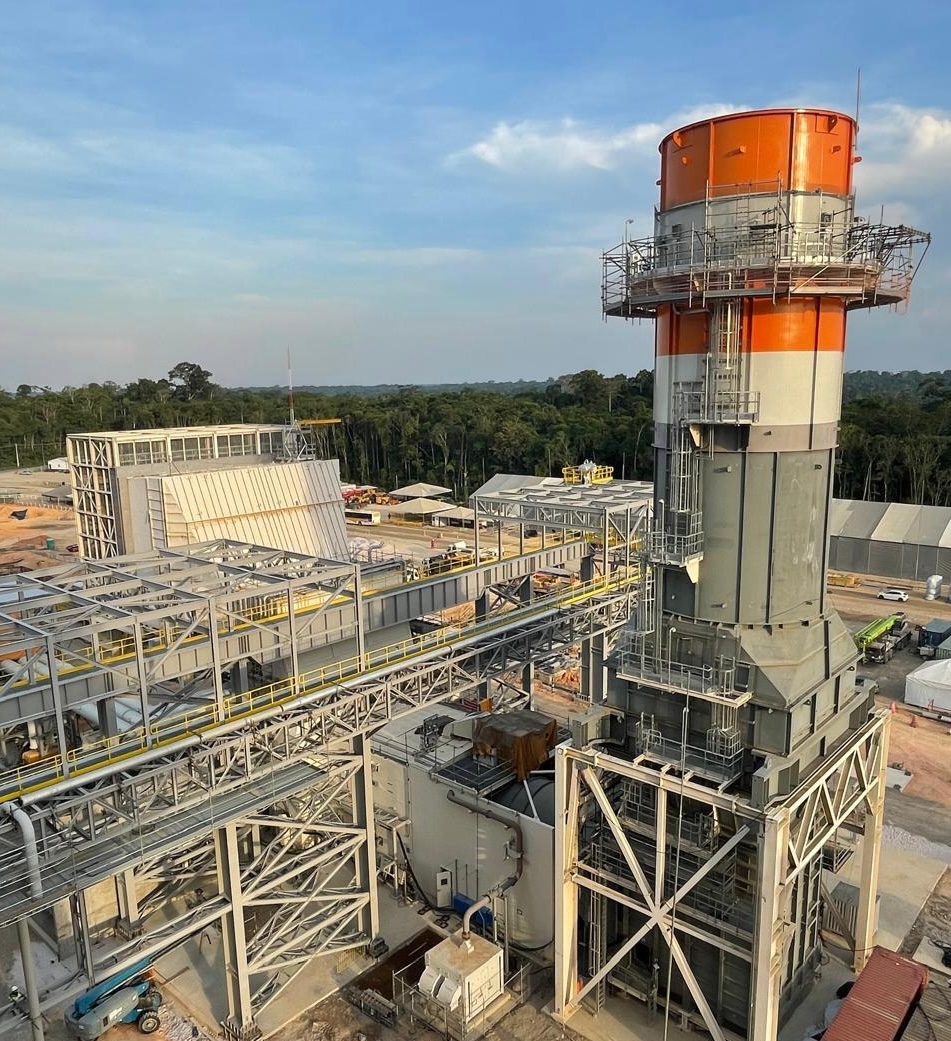
Azulão I’s location, however, presented an unusual engineering challenge. Electricity from the plant feeds into the Tucuruí–Macapá–Manaus transmission corridor, a route stretching nearly 1,200 miles through the country’s most demanding grid environment. Teams from three GE Vernova businesses — Gas Power, Electrification, and Consulting Services — worked together, combining the turbine-generator technology, grid stability expertise, and detailed system studies to identify and address risks at the interface. This allowed the plant and the surrounding grid to operate as an integrated whole.
Engineering for a Thousand-Mile Grid
Moving electricity efficiently across such long distances requires special devices called series capacitors, which increase the amount of power a transmission line can carry. But series capacitors also can negatively affect how electricity moves through the grid, creating potentially damaging oscillations that can cause large-scale power outages, damage machinery, and break transmission lines. They also can be extraordinarily dangerous to the generator, capable of snapping its massive shaft in half.
The possibility of those oscillations — known as sub-synchronous resonance (SSR) — had been evaluated before Azulão I entered operation. During early discussions with Eneva, GE Vernova identified SSR as a risk requiring expert analysis. Power system engineers then modeled the transmission system in detail, examining capacitor configurations, changes caused by maintenance or outages, and the frequencies at which the network and turbine-generator could interact.
The findings confirmed that a standard capacitor could not provide the necessary protection against SSR events. Because the precise frequencies involved depend on characteristics specific to both the local network and the turbine generator, the team engineered a bespoke blocking filter for Azulão I. Installed in the generator’s output path, the device acts as a barrier to the particular frequencies that cause problems, blocking harmful energy oscillations from reaching the generator.
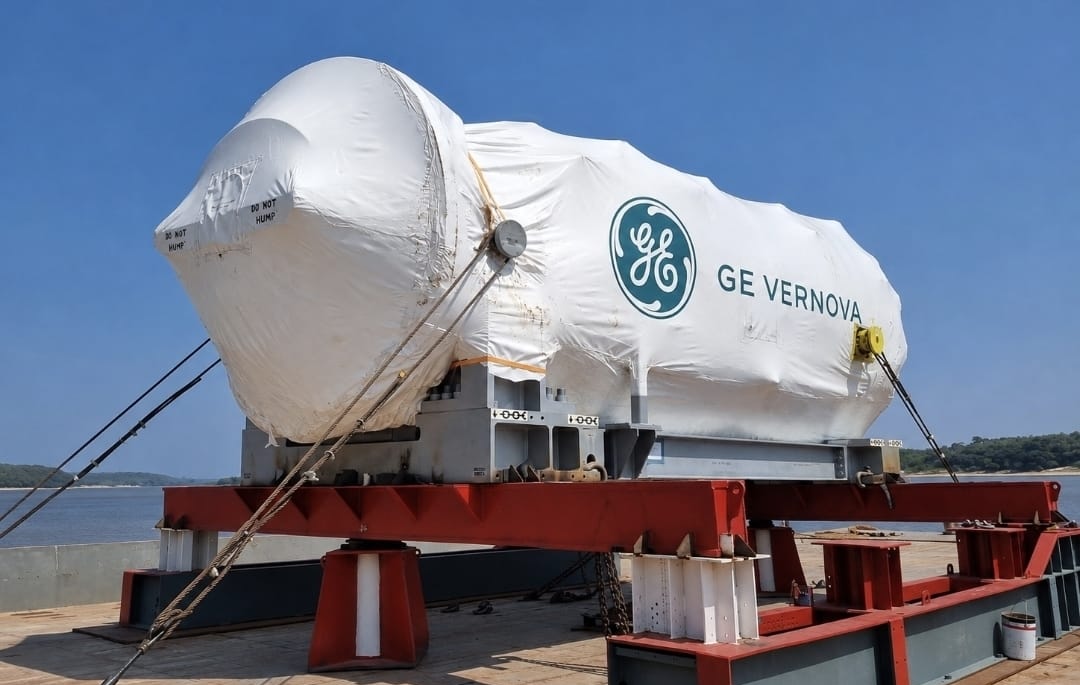
“An off-the-shelf component would not account for these site-specific resonances,” explains José Geraldo Barreto Monteiro de Andrade, managing director for Latin America at GE Vernova’s Consulting Services. “A tailored solution was necessary to ensure the filter was ‘in tune’ with the risk profile of the turbine generator units.” Blocking filters are generally installed after commercial operation begins, once an SSR problem has surfaced. At Azulão I, engineers incorporated the protection during the engineering process, before the turbine generator had been exposed to the risk.
Engineering the Plant and Grid as One System
With the SSR risk identified, GE Vernova carried the findings into the plant’s grid connection design. The project team refined how the turbine-generator, protective equipment, and surrounding transmission network would operate as one coordinated system.
“Azulão I demonstrates what becomes possible when generation technology, grid-power stability technology, and system-level engineering are considered together from the outset,” says Ivette Castillo, general manager of Grid Systems Integration for GE Vernova in Latin America. “By treating the power plant and transmission network as one system, we were able to identify critical interactions early, engineer the right protections and solutions into the project, and, most important, protect the system.”
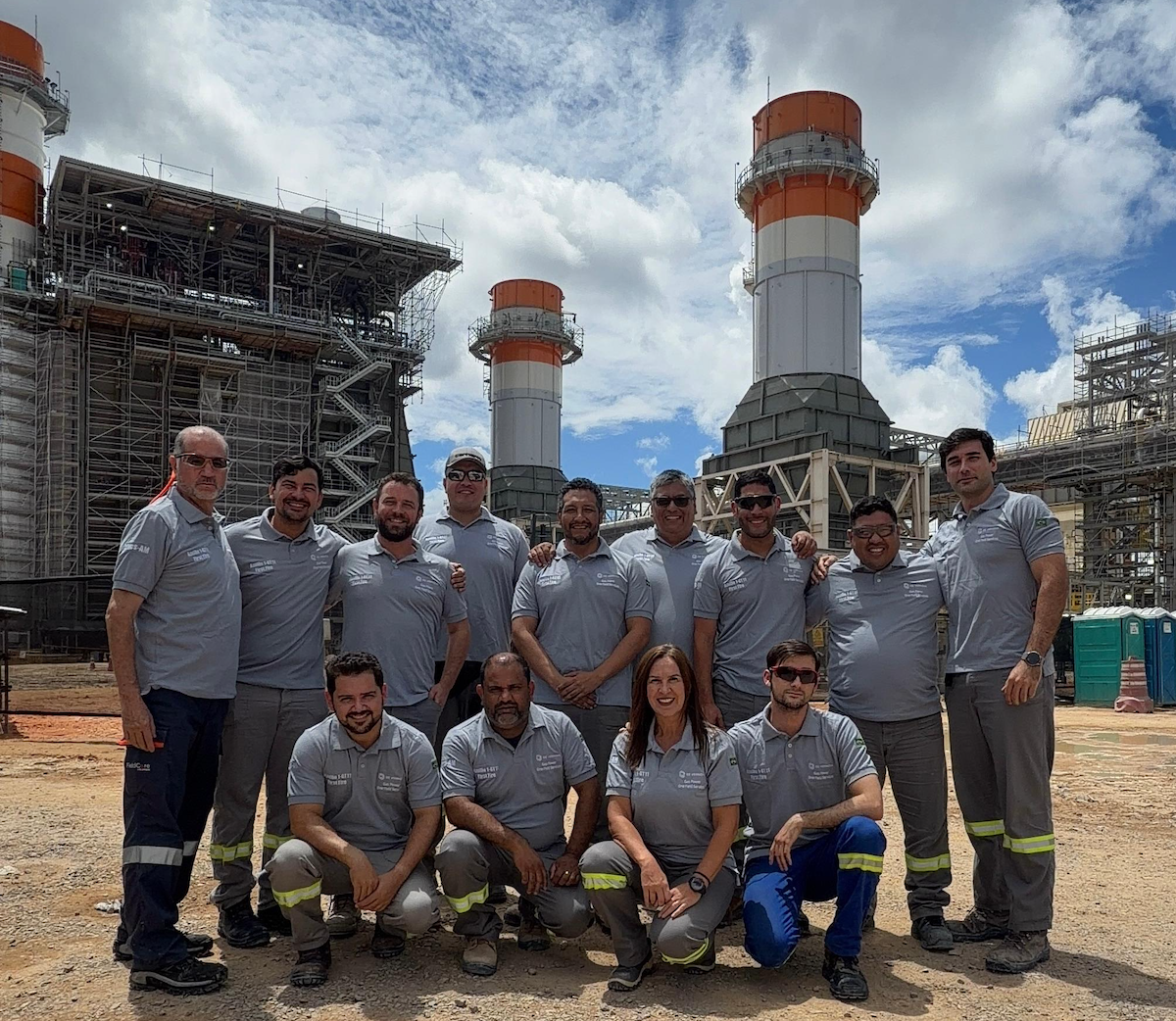
GE Vernova’s local team brought deep regional knowledge, working closely with Eneva to bring the project together from early discussions onward. “Instead of reacting to an SSR problem after the plant entered service, the team addressed it while the system was still being engineered — an outcome enabled by Eneva’s trust in GE Vernova’s expertise,” explains Castillo.
The grid studies also led to modifications in how the plant operates day-to-day. Because the potential for SSR changes according to the configuration of the surrounding transmission system, the project team developed special operating procedures to protect the turbine generator when nearby equipment is offline or being serviced.
Those procedures were applied during commissioning and testing of the first turbine-generators. The same assessment process is now being carried out for two subsequent units, incorporating lessons learned from the initial build. That knowledge will continue to be applied over the next 15 years while GE Vernova maintains Azulão I under a long-term services agreement extending from engineering and installation through long-term operation and care of the plant.
Supporting a More Flexible Power System
Azulão I’s contribution to Brazil’s energy grid reaches beyond the engineering required to connect a single plant. The 7HA.02 turbine is engineered to adjust output as grid conditions change, giving operators a dispatchable source of electricity to help balance supply. That capability has particular relevance in Brazil as wind and solar take on a growing share of the country’s electricity mix.
“Providing dependable power when renewables fluctuate makes flexible gas generation a critical complement to lower-carbon technologies,” says Marco Vera, general director and VP of new units for GE Vernova’s Gas Power business in Latin America and the Caribbean. “This project demonstrates how combining flexible power with modern grid solutions creates a more resilient, balanced energy ecosystem.”
Azulão I is also the first phase of a larger development. Together with the adjacent Azulão II plant, the complex is expected to provide as much as 950 MW of installed capacity — enough to power the equivalent of four million homes in Brazil — with full commercial operation scheduled for the first quarter of 2027.
For Andrade, a central lesson concerns how power projects in remote regions are planned from the outset. Long transmission networks do more than carry electricity from one location to another — they can interact directly with the machinery producing that electricity.
At Azulão I, identifying that interaction before the plant entered operation allowed engineers to build in safeguards during the engineering phase, adapt operating procedures to different grid configurations, and connect a major new power source to one of Brazil’s longest high-voltage links.