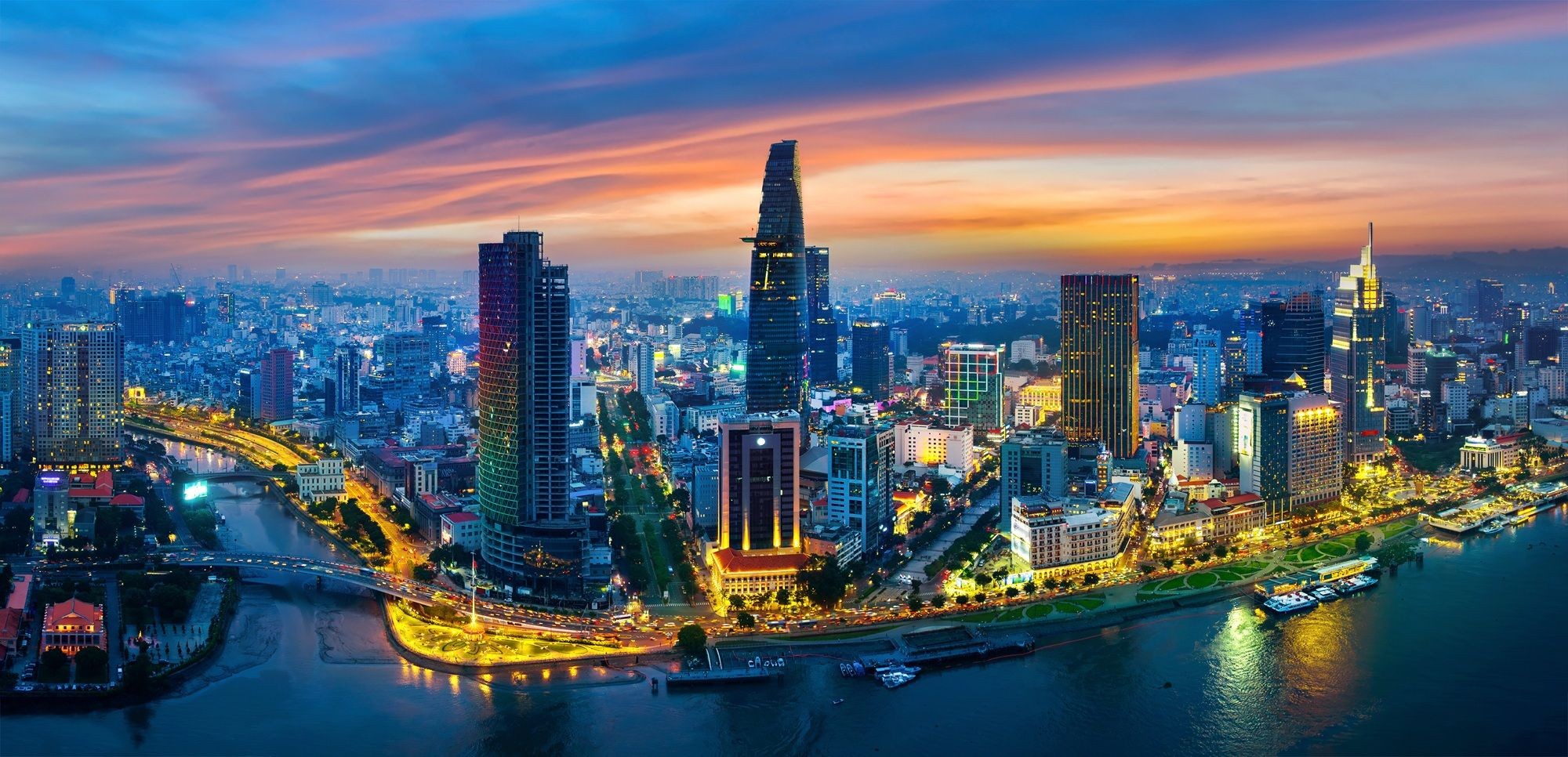
How does one of the world’s fastest-growing economies keep the lights on while rewiring its future to meet the needs and goals of a net-zero world? This is the question being asked today in Vietnam, a nation at an exciting crossroads, balancing rapid economic growth with the imperative to build a cleaner, more resilient energy system.
The complex power challenge at hand stretches far beyond the country’s borders. Predictive models show Southeast Asia accounting for 25% of global energy demand growth by 2035. As for Vietnam itself, ambitious industries and a rising standard of living have seen annual electricity consumption increase by more than 9% in recent years.
How the country meets this increased demand — and how that power is to be delivered reliably and affordably — is going to set the standard for the 11 other states that make up the Association of Southeast Asian Nations (ASEAN). It will also serve as a model for other countries around the globe as they grapple with growth.
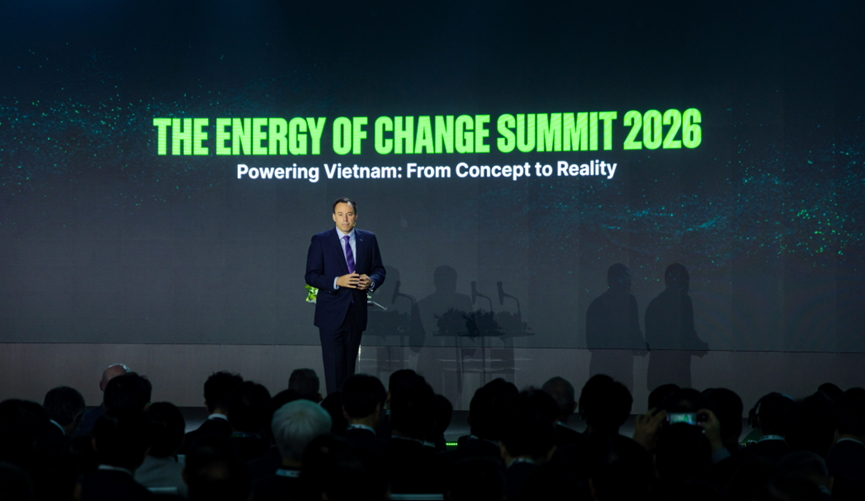
“The world is shifting — rapidly, irreversibly — from molecules to electrons,” said GE Vernova CEO Scott Strazik during his keynote address at the Energy of Change Summit 2026, in Hanoi on March 10, where GE Vernova hosted more than 400 leaders from around the world. “Electrification is prosperity: GDP rises, healthcare and education improve, and living standards increase. The world needs more energy, and a larger portion must be electric power for people and communities to thrive.”
A Nation in Transformation
Vietnam is rising to this challenge with smart policy, namely the Revised Power Development Plan VIII. The PDP8R, as it’s called, is a dynamic blueprint for hitting net-zero emissions by 2050 — by phasing out coal responsibly, using more renewable sources like wind and solar, and harnessing liquefied natural gas (LNG), a critical transition fuel and flexible power source.
In the intervening quarter century, the PDP8R is designed to better balance energy security, affordability, and sustainability as Vietnam aims to meet or beat its emissions goals. But going from big idea to revolutionary reality requires a synergistic dance as the nation upgrades its infrastructure backbone to deliver the diverse generation mix laid out in the plan.
“Vietnam’s energy landscape is expected to grow from 90 gigawatts to 200 gigawatts within this decade, which is a very significant journey,” said Shailesh Mishra, Grid Systems Integration leader for the APAC region. “We want to be part of that journey by providing the right solutions.”
A Three-Decade Partnership
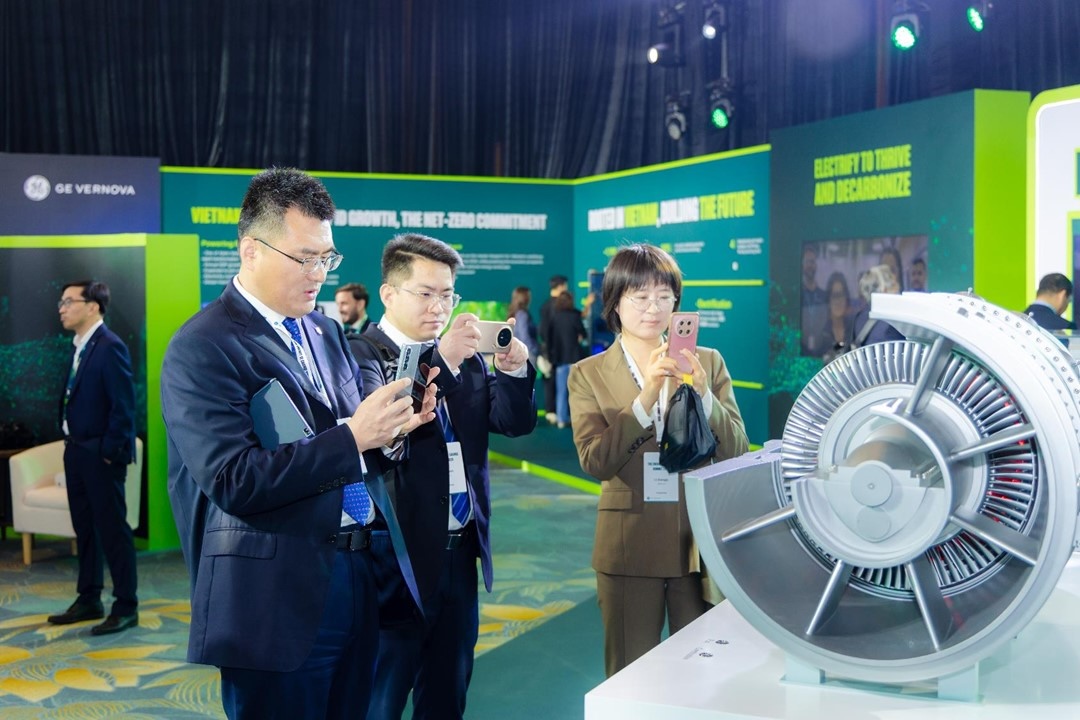
GE Vernova has long been a partner in Vietnam’s emergence as an energy power player. Since 1993, the company has been working within the country to collaborate on its ambitious growth strategy. Thirty-three years later, its technology provides roughly 30% of Vietnam’s electricity.
The company has also put down strong roots in the country. In the city of Haiphong, a factory christened in 2009 is now producing 80% of GE Vernova’s global renewable electrical components, and in Dung Quat you’ll find one of only two global facilities dedicated to manufacturing heat-recovery steam generators (HRSGs) for power plants, serving customers in 15 countries.
As Strazik said, “Vietnam is a cornerstone of our regional growth strategy. What we build in Vietnam is a contribution to Asia’s energy future and the world’s — from providing our HA technology [for highly efficient gas turbines] for landmark projects to expanding our manufacturing presence for HVDC [high-voltage direct current] technology.” In fact, GE Vernova has announced a $200 million investment in a new factory in Haiphong that will focus on building the HVDC transformers needed to move electricity efficiently over long distances.
The Human Engine
Part and parcel of the country’s massive sustainable power transition is its people power. “If you look at the future of Vietnam, I love the way it’s linked to our mission statement: electrifying to thrive and decarbonize,” said Asia Decarbonization Leader Kazunari Fukui. “That is precisely what Vietnam needs — the technologies required to electrify — and in order to thrive, we need to invest in people.”
With that in mind, the GE Vernova Foundation partnered with the nonprofit Asia Society for Social Improvement and Sustainable Transformation (ASSIST) and Hanoi’s Electric Power University to create the RENEW Skills Development Program, a three-year, $750,000 initiative that will train more than 4,000 students and technical workers.
“Building the infrastructure of the energy transition also means investing in the people and communities that make it possible.”
Milestones That Matter
The summit also shone a spotlight on a number of milestones, showing how policy, investment, and technology can converge to great success. The Nhon Trach 3 and 4 power plant is a historic first, finally bringing LNG to Vietnam. Its success has spurred three more LNG projects slated for construction up and down the coast of Vietnam this decade: the Quynh Lap LNG project with PV Power, the VinEnergo Hai Phong LNG-fired power plant being developed by the Vingroup–VinEnergo joint venture, and the Quang Trach II project with Vietnam Electricity, which will convert a planned coal facility to LNG — newly outfitted with GE Vernova gas turbines and generators — significantly shrinking the nation’s carbon footprint.
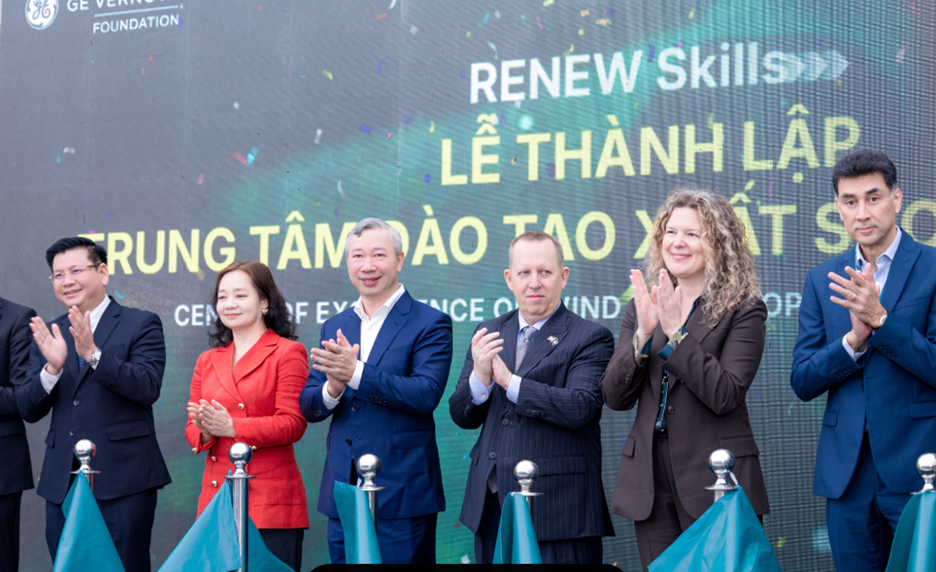
By building up people, not just the grid, RENEW is opening the door to well-paying, meaningful careers in the power sector for decades to come. Pablo Koziner, GE Vernova’s chief commercial and operations officer, made it clear:
“Vietnam has moved well beyond the planning phase,” says Ramesh Singaram, president and CEO of Asia at GE Vernova’s Gas Power business. “Vietnam isn't just fueling its own industrial surge — it is building the renewable foundation for the entire ASEAN power grid.”
In his closing remarks, Koziner summed up the collective vision, saying the country “stands at a pivotal moment. The decisions made in the next few years — on grid infrastructure, on financing frameworks, on how this country integrates renewables at scale while maintaining reliability — will shape not just Vietnam’s energy future but the trajectory of Southeast Asia’s transition.”