
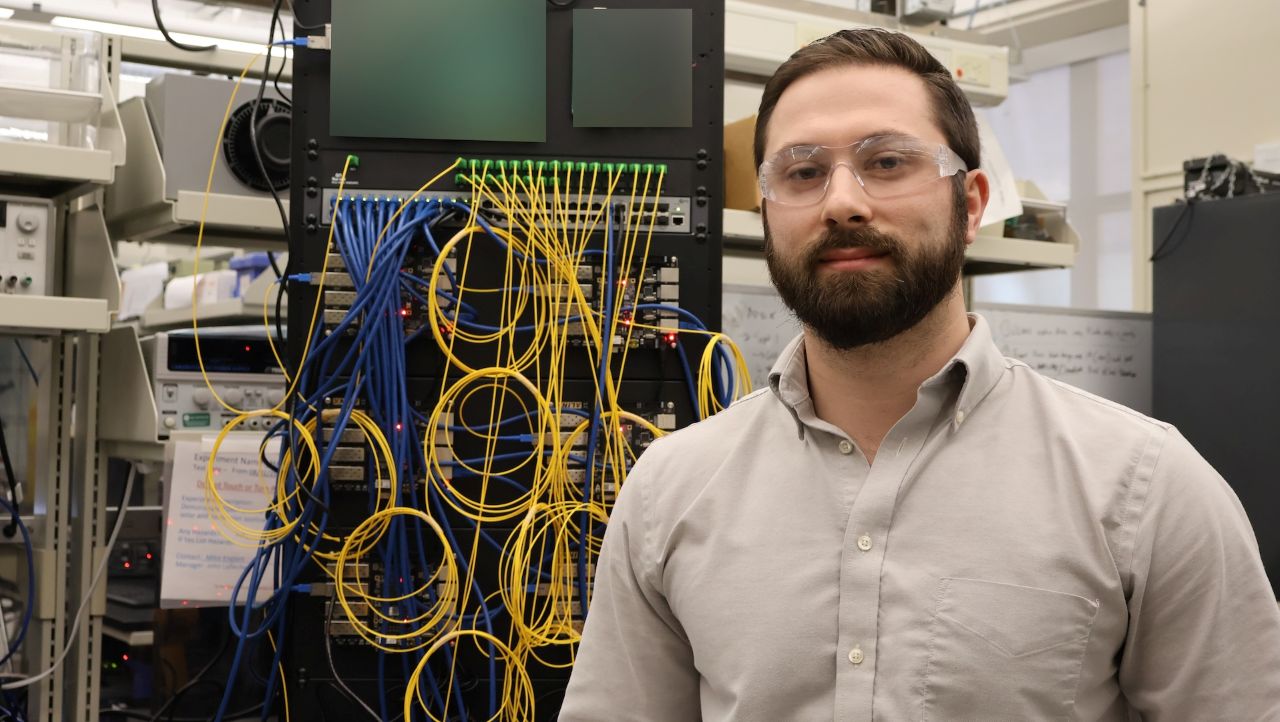
As artificial intelligence scales, so does the challenge of powering it. New data centers demand more advanced power and control systems that reliably deliver massive quantities of energy. Researchers are developing flexible, efficient infrastructure designed for the next generation of computing.
Related News
Two Years In, GE Vernova Is Reshaping the Energy Future

The world’s demand for energy is growing at a pace that’s increasingly difficult to match — and two years into its journey as a standalone company, GE Vernova is meeting the challenge head-on. The company is helping energy customers find reliable, cost-effective solutions for today that can be quickly scaled to meet the needs of tomorrow. Here are just a few of them.
Electrifying the Future of Data Centers and AI
Related News
Out of Thin Air: Meet the Engineer Working to Remove CO2 from the Atmosphere
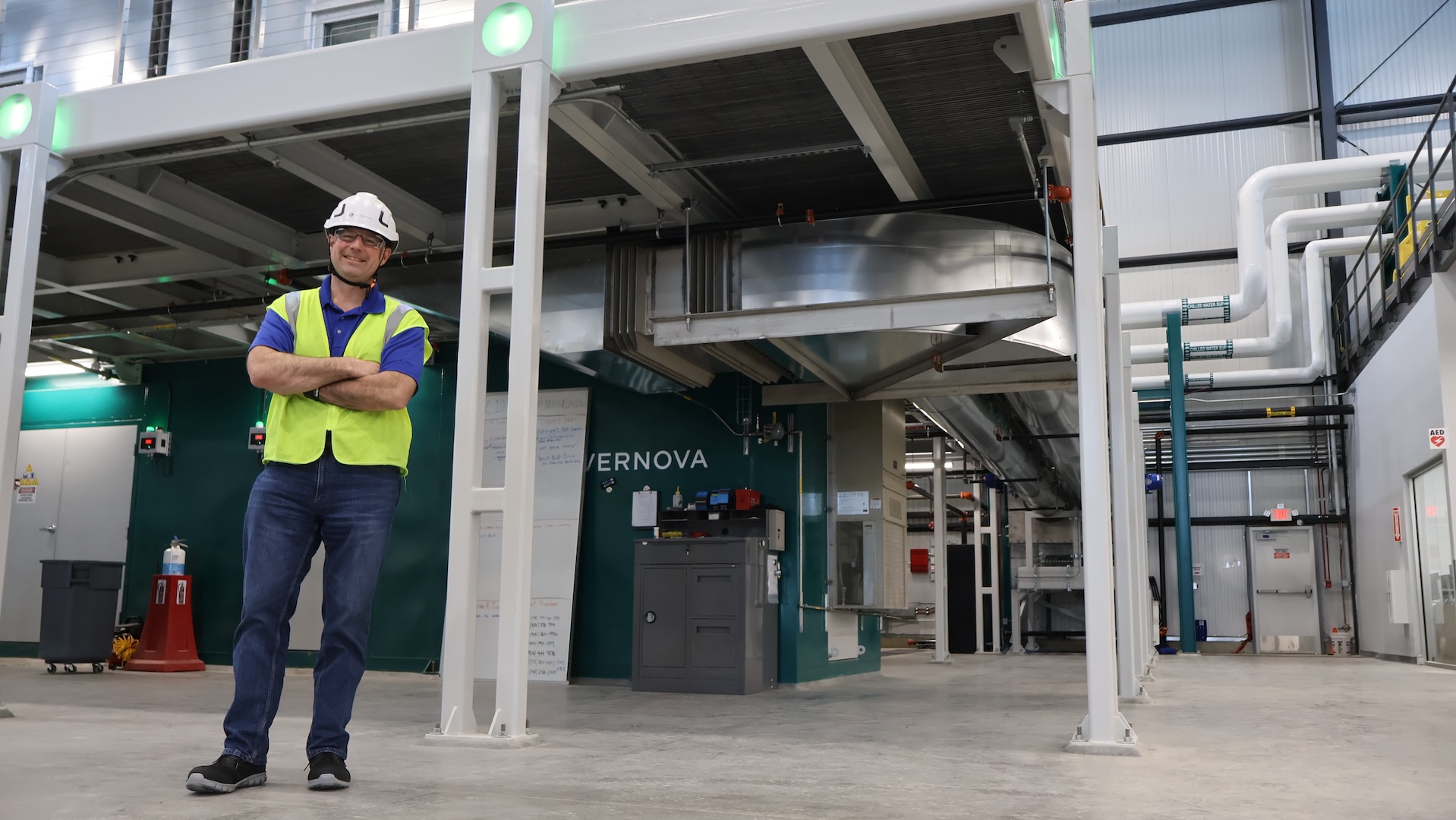
There isn’t one single remedy to solve climate change. It’s going to take a full toolbox of strategies to reduce the amount of carbon dioxide currently being pumped into the air and to maintain lower levels in the future. Companies are pivoting to renewable energy and more efficient processes, but ensuring a resilient grid requires a broad mix of technologies. This means not just using lower-carbon fuels and capturing emissions during before they enter the atmosphere, but removing them where they already exist.
Related News
Power Couple: How GE Vernova and ANYbotics Are Transforming Energy Industry Asset Inspections
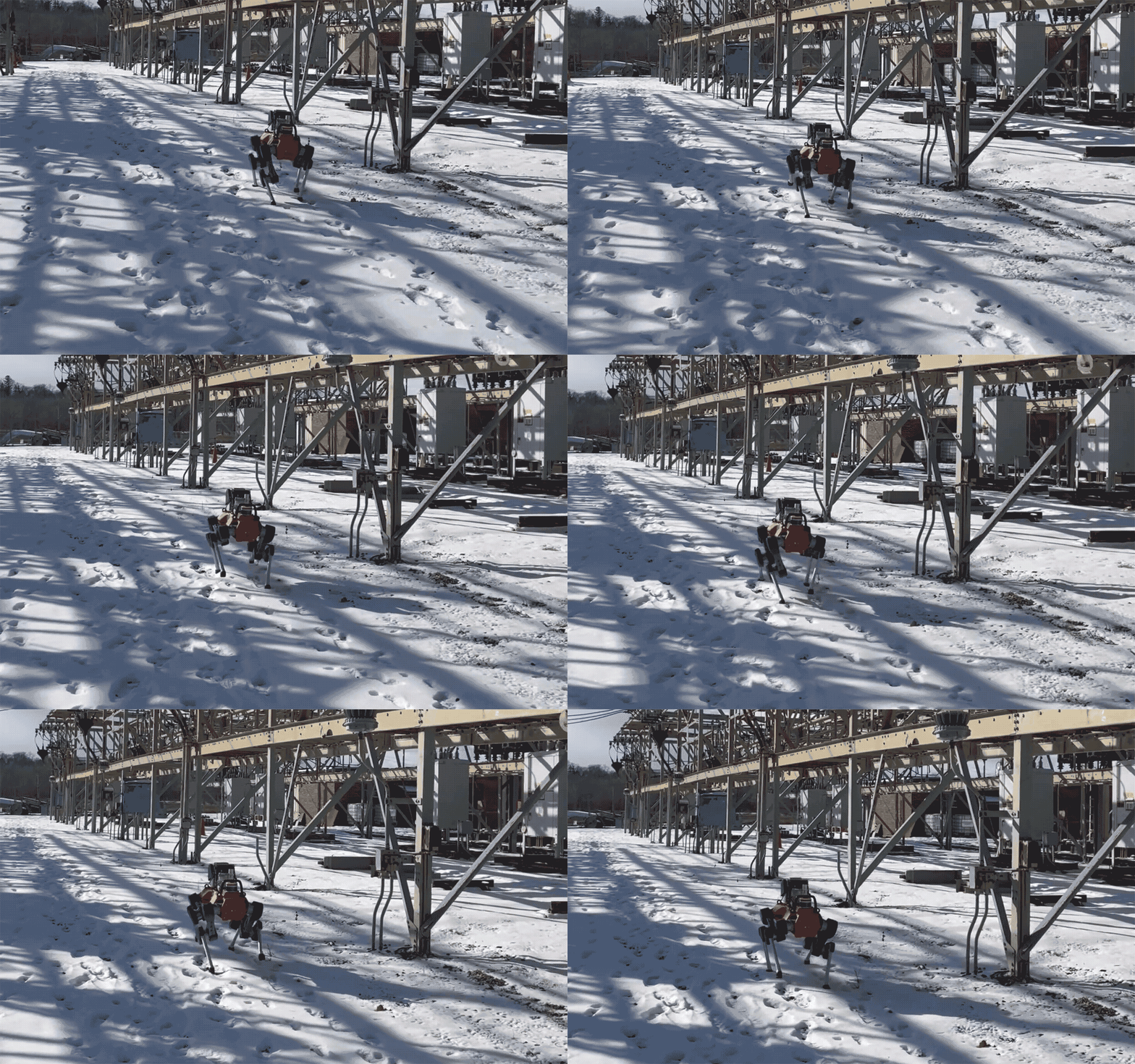
Neha Joshi first heard of ANYbotics in 2024, from a colleague who’d just deployed one of the Swiss company’s four-legged robots at a power site in Israel. Little did she realize that the next few weeks of her work life would involve taking data recorded in Israel, testing it in Schenectady, New York, where Joshi is based, and deploying a robot to another site in Ireland to confirm the findings.
Related News
Sparking Innovation: How One Engineer Secured 30 Patent Applications That Are Shaping the Future of Energy
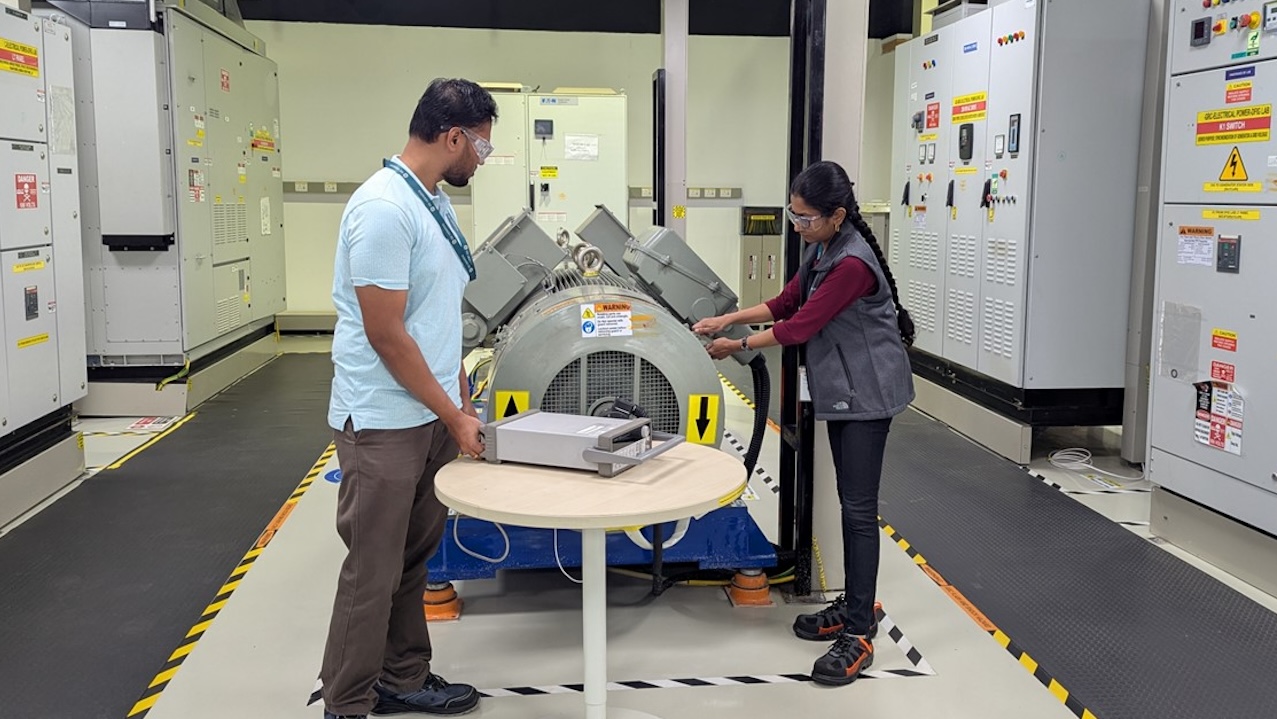
Veena P. has learned in her 14 years at GE Vernova that earning patent recognition for her inventions isn’t a matter of waiting for lightning to strike. Instead, the technology manager in electrical systems at GE Vernova’s Advanced Research Center in Bengaluru, India, has developed a systematic process that has helped her successfully register 30 patent applications so far, with more in the works all the time. Her innovations support GE Vernova’s mission to accelerate the energy transition, making power systems more efficient and reliable.
Related News
The Energy Transition Calls for Tailor-Made Decarbonization Solutions
Let’s say you’re a developing country whose power grid is saddled with inefficient oil-fired power generation and you need to electrify quickly to meet the needs of a fast-growing economy. You might build out your solar, wind, battery storage, natural gas, or all of the above — but who can you call for help and advice?
Related News
Tunnel Vision: This Brilliant Engineer Is Making Robots That Can Be Trusted to Work Remotely

Like many science-obsessed kids in the 1990s, William Tan wanted to be an astronaut when he grew up. Then came a reality check. “I realized I wasn’t a citizen of a country that sent people to space,” says Malaysian-born-and-raised Tan, who is now senior robotics and autonomous systems engineer at GE Vernova’s Advanced Research Center in Niskayuna, New York.
A Library of Power Grids: How a Team of Power System Experts Curates Intelligence on Global Electricity Systems
Foundational repositories like the ArcGIS Living Atlas of the World and the NOAA’s World Weather Records serve as libraries rich with the critical data used to analyze trends and forecast possible futures by multiple industries across the world. As we head into electricity’s expansive golden age, our knowledge base requires a similar specialized collection: intelligence and fine detail on global power systems.