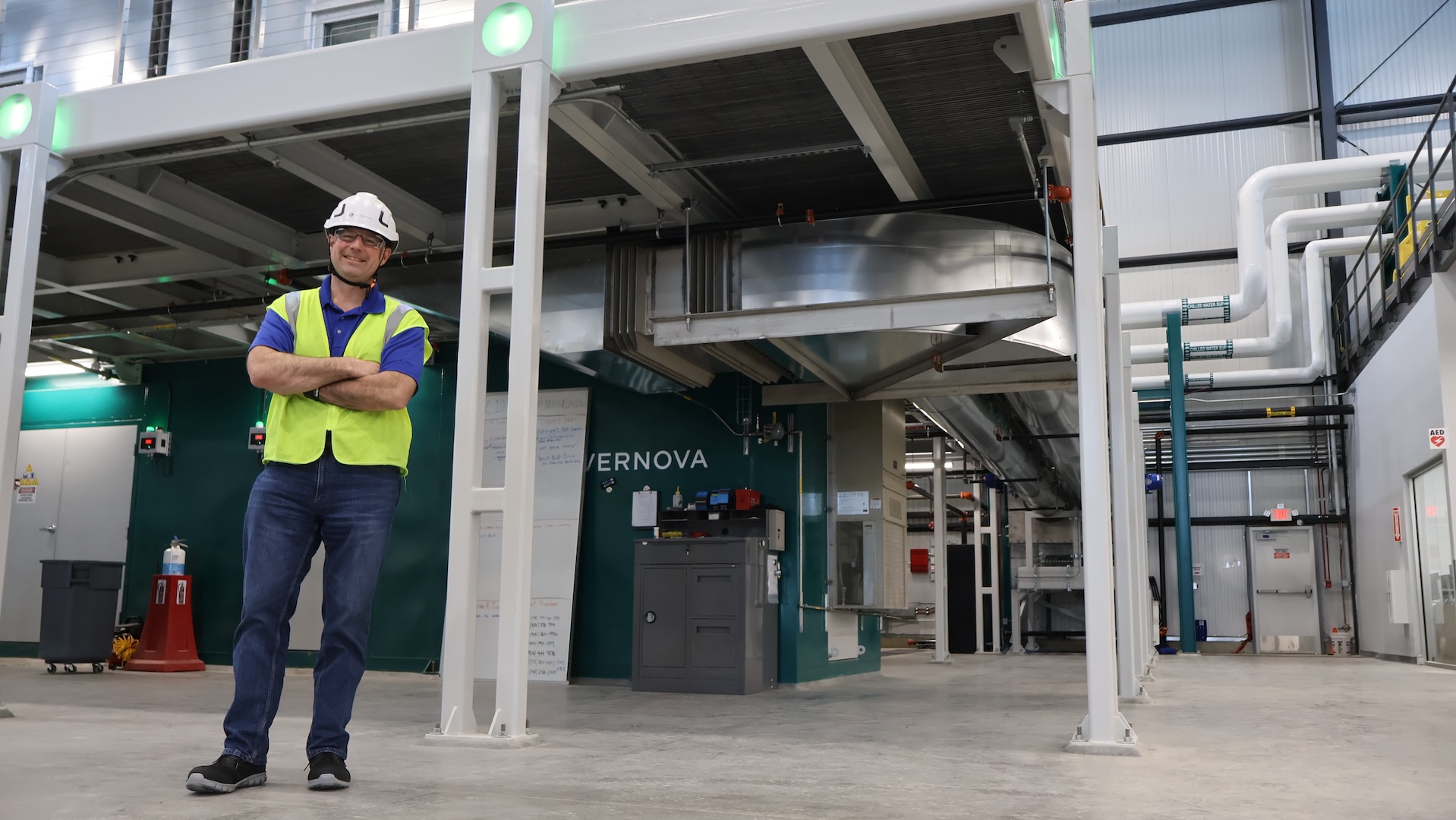
There isn’t one single remedy to solve climate change. It’s going to take a full toolbox of strategies to reduce the amount of carbon dioxide currently being pumped into the air and to maintain lower levels in the future. Companies are pivoting to renewable energy and more efficient processes, but ensuring a resilient grid requires a broad mix of technologies. This means not just using lower-carbon fuels and capturing emissions during before they enter the atmosphere, but removing them where they already exist.
At GE Vernova, the challenge lies in both inventing new climate technologies and then engineering them so they can operate reliably, affordably, and at scale. Bill Gerstler, senior principal engineer at GE Vernova Advanced Research in Niskayuna, New York, helps lead a team shaping how emerging carbon removal technologies could function within real-world energy systems. Their design for one of these innovations, direct air capture (DAC), uses a sorbent-based technology — a solid chemical that acts like a sponge — to soak up carbon dioxide from the air. Heating the sorbent and reducing the pressure around it then helps the CO2 molecules detach so they can be concentrated, collected, and stored.
Gerstler specializes in thermal management, the science of controlling heat so that complex machines like gas turbines and generators can run efficiently and reliably. Thermal management, he says, is often the factor that determines whether a promising technology can be made viable at industrial scale, balancing performance, cost, and reliability. As one of his former managers liked to say, “Every problem is a thermal problem.”
Taking the Heat
Gerstler relishes solving those thermal problems so technologies can achieve better performance. From an early age, he enjoyed learning about how machines work by taking apart toy trains to study their assembly and helping his father fix the family car.
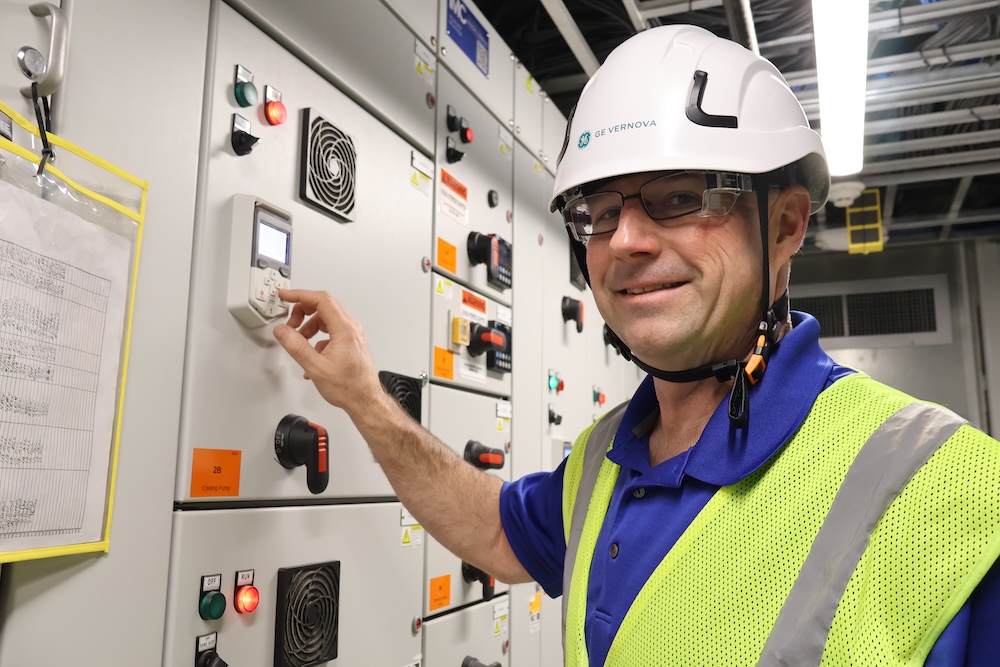
After he earned his Ph.D. in mechanical engineering from the University of Minnesota, Gerstler was drawn to GE Research, as the business was then known, because of the prestige of its labs and the diversity of research questions he could explore. In his 25 years with the company, he’s had the chance to work on an array of complex projects, from improving the cooling and ventilation of generators used around the world to building a prototype 5-megawatt superconducting generator with the U.S. Air Force.
But it’s his current mission — transforming the potential of direct air capture into reality — that holds the opportunity for the greatest impact. Carbon dioxide exists in the earth’s atmosphere at 400 parts per million, a concentration that is making the planet hotter. Direct air capture seeks to take as much CO2 out of the air as possible.
“Carbon capture — this fundamental technology that pulls CO2 out of the air and releases it in a much more concentrated form — is chemistry,” Gerstler explains. But making it economically feasible and scalable requires thermal management. “A lot of it has to do with being able to remove heat and add heat in certain places, at certain times, to make this chemistry work.”
Fueling the Future
Gerstler and his team know direct air capture is just beginning, and when it reaches a larger scale its impact could be dramatic. To help make it economically viable, they’re refining ways to move heat more efficiently through the process, reusing energy within the system to reduce electricity demand. In Niskayuna, they’re working with a new test rig, a small industrial pilot module capable of removing 10 metric tons of CO2 from the air per year, and they’ve already come up with a more powerful sorbent that can soak up 30 to 40 metric tons per year in the same rig. They’re also advancing a joint project at Deep Sky Alpha, in Innisfail, Alberta, Canada, where a test facility using GE Vernova’s technology is designed to capture up to 1,500 metric tons of carbon per year.
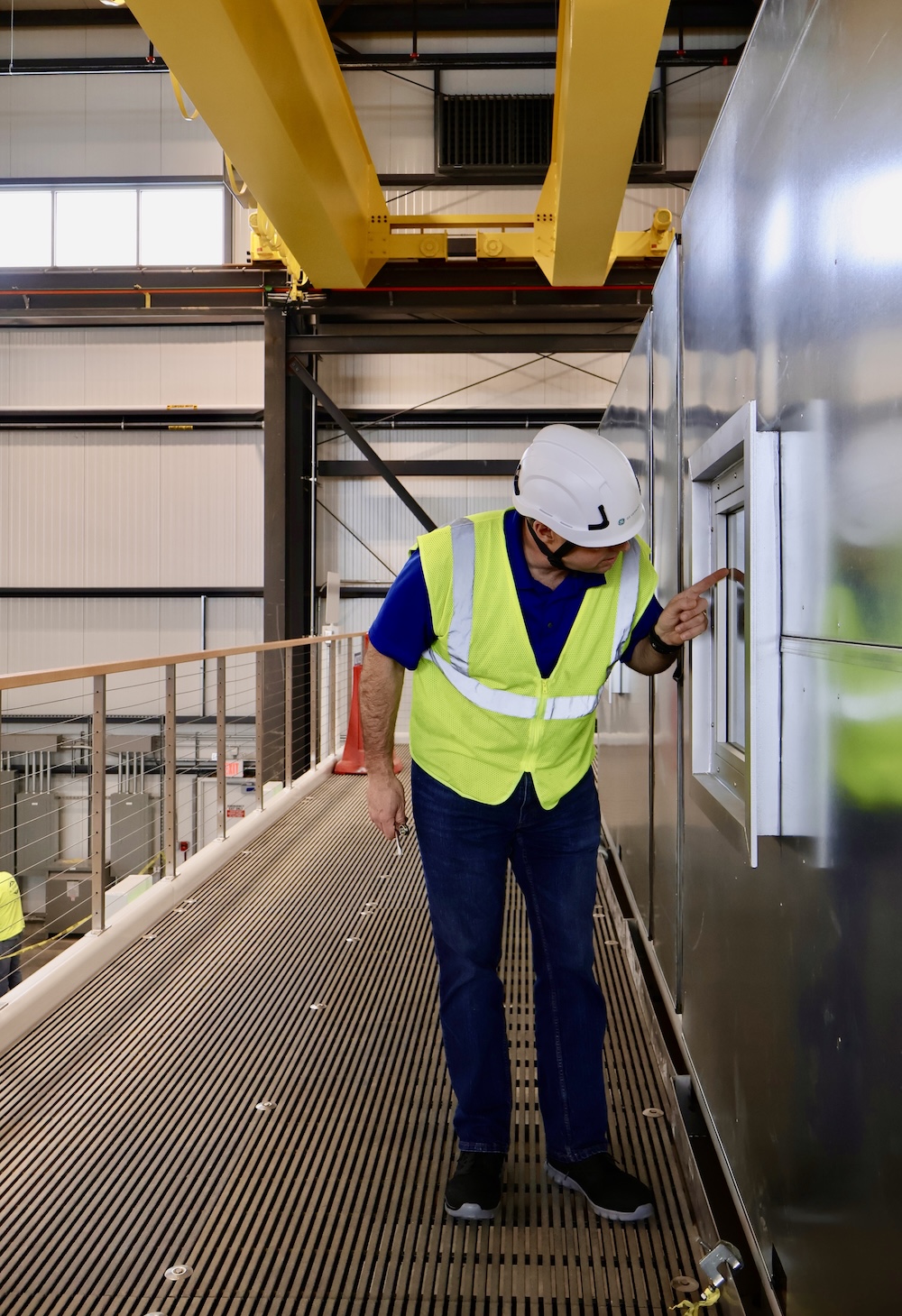
With enough government investment and further technological breakthroughs, Gerstler sees a path to scaling direct air capture from pilot facilities to industrial operations, where sites could remove between 250,000 and 1 million metric tons of carbon dioxide each year. “If you have plants all over the world, and each of these facilities takes 1 million metric tons per year out of the atmosphere, then you start to make a dent” in reducing CO2 in the air, he says.
He also envisions pairing carbon capture with sustainable liquid fuel production powered by nuclear, wind, or solar energy, which would multiply the climate benefits. “This technology has the chance to assist in all of those different ways, and we’re on target to do that.”
The team’s work holds promise for helping businesses solve some of their trickiest emissions challenges, safeguarding the well-being of people and the planet at a scale that would be difficult to accomplish today. Removing 1 million metric tons of CO2 from the atmosphere would require the equivalent of about 1 million acres of forest — an area the size of Anchorage, Alaska.
“There’s always a challenge, and I’m never bored,” Gerstler says. “I especially enjoy working with younger engineers and scientists — they’re very enthusiastic, and they like to make an impact. I want to see this move all the way from concept to operation, and eventually be deployed at scale where it can make a real difference.”