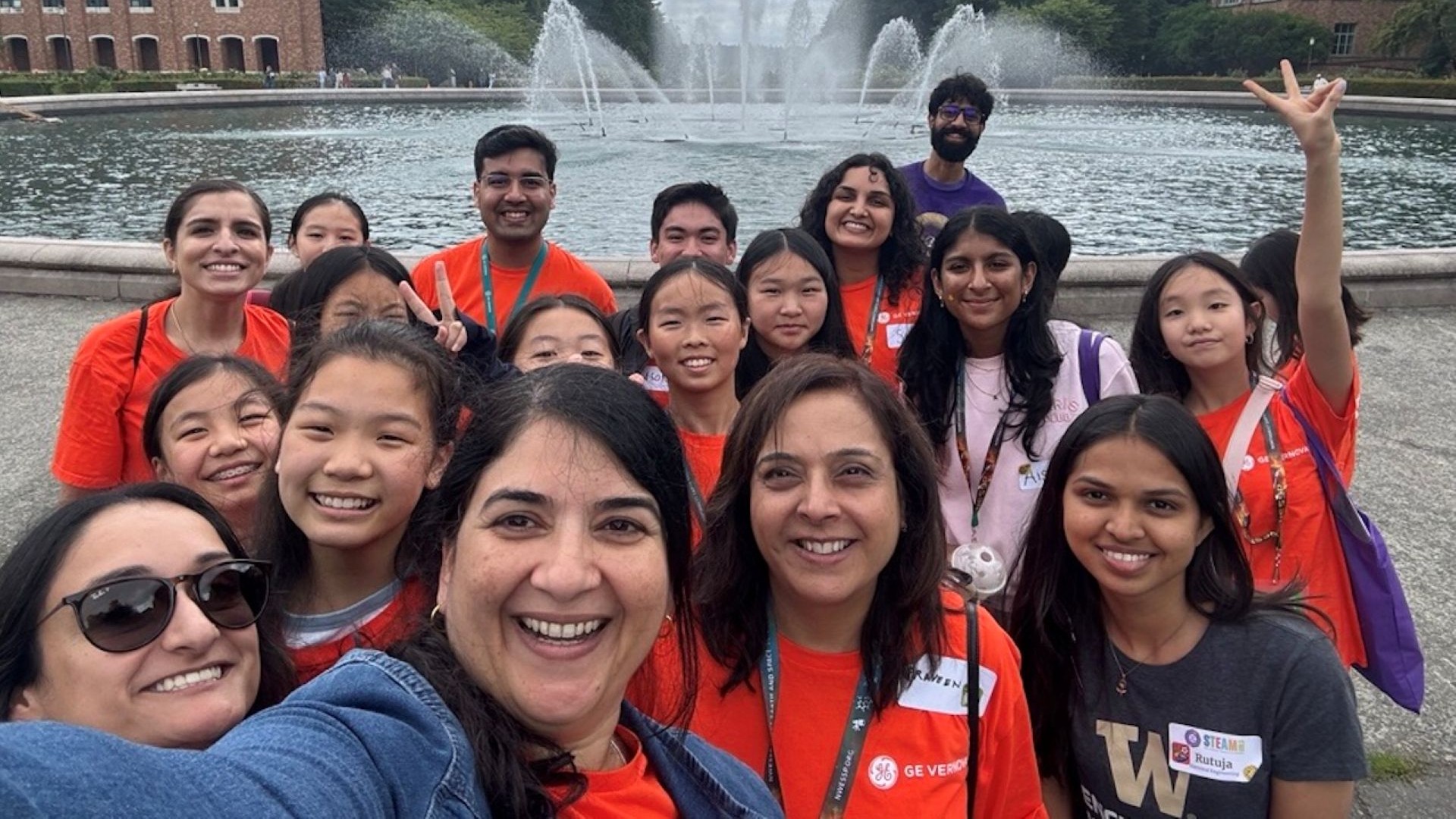
Statistics reflect what leaders like Yogini Parkhi know from experience. At a key moment in many girls’ lives, they’re nudged away from interests like math and science. “I know it happened to me growing up in India,” says Parkhi, the engineering leader for GE Vernova’s Grid OS Data Fabric and Connect business. She saw the same thing happen with her daughter years later in the States. “When she was 10 she could solve a Rubik’s Cube in 50 seconds,” Parkhi recalls.
Related News
The Buck Stops Nowhere: The Relentless Energy of Jordan Buck

This past May, 12 U.S. military veterans joined forces to carry an American flag 3,000 miles from San Diego to Washington, D.C. Team Red, White & Blue completed the Old Glory Ultra Relay in a record time of less than 17 days, raising more than $1 million for the cause of veterans’ health and wellness. One of those dozen men and women was Jordan Buck, an Army vet and steelworker in lean operations at GE Vernova’s manufacturing facility in Schenectady, New York.
Related News
GE Vernova to provide grid-stabilizing technology for Transgrid to support renewables rollout in Australia
SYDNEY, Australia – November 06, 2025 –
- GE Vernova Inc. (NYSE: GEV) has signed a contract with Transgrid for the supply of synchronous condensers, highly-sought-after equipment that will assist in stabilising the New South Wales (NSW) grid as it transitions from coal to renewables.
- Synchronous condensers and associated systems to be supplied across five strategic sites on the NSW transmission network
- These machines play a critical role in stabilizing modern electricity networks by providing inertia, voltage control, and fault current — functions traditionally supplied by large coal-fired generators. By replicating this stabilizing effect, these machines enable higher penetration of renewable energy sources such as wind and solar, improving overall system performance and reducing costs for consumers.
Forward Looking Statements
This document contains forward-looking statements – that is, statements related to future events that by their nature address matters that are, to different degrees, uncertain. These forward-looking statements address GE Vernova's expected future business and financial performance, and the expected performance of its products, the impact of its services and the results they may generate or produce, and often contain words such as “expect,” “anticipate,” “intend,” “plan,” “believe,” “seek,” “see,” “will,” “would,” “estimate,” “forecast,” “target,” “preliminary,” or “range.” Forward-looking statements by their nature address matters that are, to different degrees, uncertain, such as statements about planned and potential transactions, investments or projects and their expected results and the impacts of macroeconomic and market conditions and volatility on business operations, financial results and financial position and on the global supply chain and world economy.
end
About GE Vernova
GE Vernova Inc. (NYSE: GEV) is a purpose-built global energy company that includes Power, Electrification and Wind segments and is supported by its accelerator businesses. Building on over 130 years of experience tackling the world’s challenges, GE Vernova is uniquely positioned to help lead the energy transition by continuing to electrify the world while simultaneously working to decarbonize it. GE Vernova helps customers power economies and deliver electricity that is vital to health, safety, security, and improved quality of life. GE Vernova is headquartered in Cambridge, Massachusetts, U.S., with approximately 85,000 employees across approximately 100 countries around the world. Supported by the Company’s purpose, The Energy to Change the World, GE Vernova technology helps deliver a more affordable, reliable, sustainable, and secure energy future.
GE Vernova’s Power Conversion & Storage business combines advanced energy conversion and storage systems to meet the electrification needs of utilities and industries. With a focus on power stability, energy storage and industrial electrification solutions, Power Conversion & Storage empowers customers by addressing their most complex electrification challenges and accelerating their transition to a sustainable, decarbonized future.
© 2025 GE Vernova and/or its affiliates. All rights reserved.
GE and the GE Monogram are trademarks of General Electric Company used under trademark license.
Investor inquiries
Michael Lapides
GE Vernova | Vice President of Investor Relations
Media inquiries
Anshul Madaan
GE Vernova | Media Relations, Electrification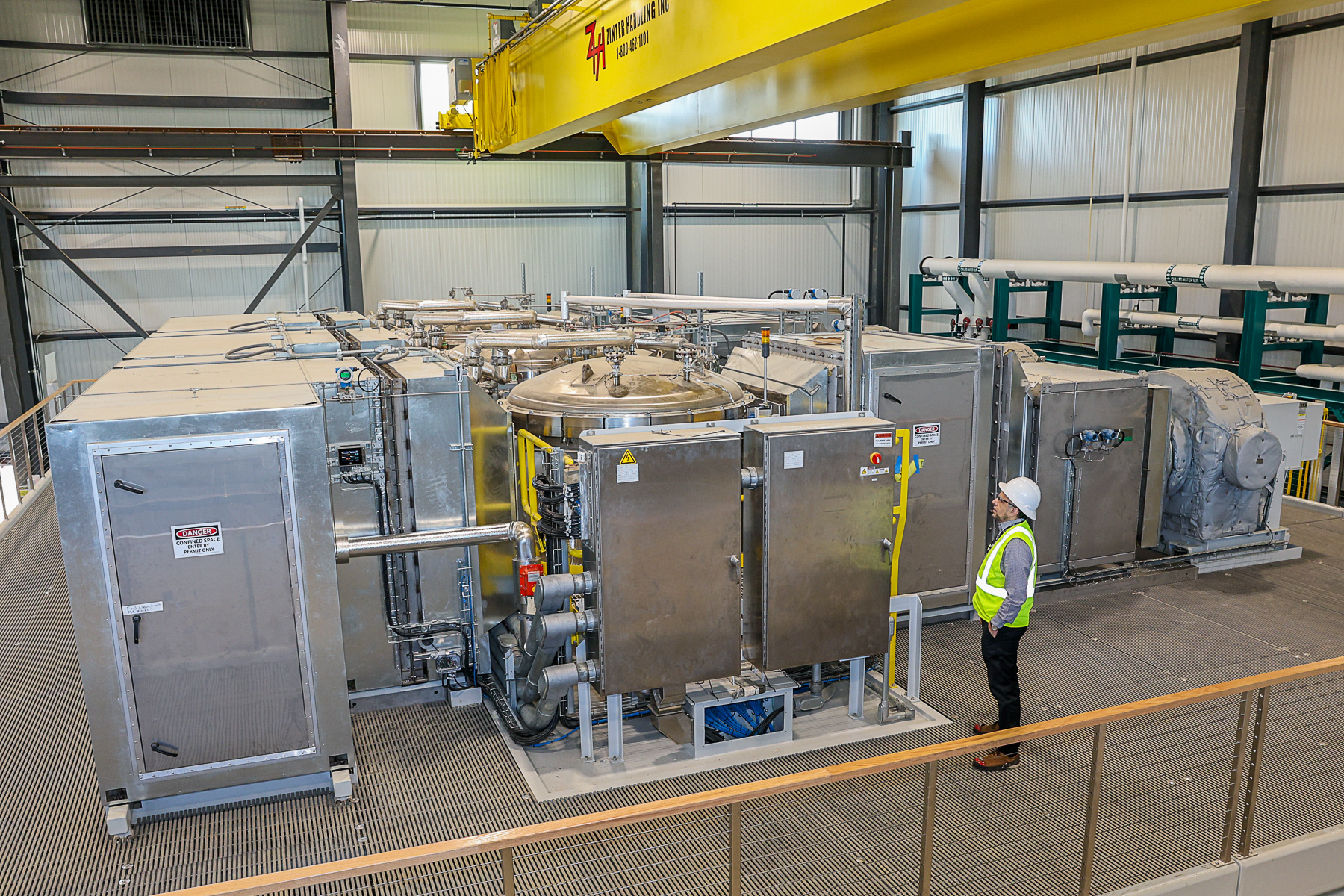
Emission Impossible: How GE Vernova Is Writing the Blueprint for Capturing CO2 Directly from the Air
Every industry is aspiring to minimize their CO₂ emissions and achieve net zero. But in some industries, reducing CO₂ emissions is not as straightforward as in others, due to constraints such as mobility, footprint, or inherent process steps that make it hard to decarbonize these sectors. That’s where an innovative solution and a scalable technology called direct air capture (DAC) comes in.
Related News

Building the low-carbon global energy system of the future
The world’s energy system has changed dramatically over the past 50 years, and it is set to transform even more radically in the decades to come. For policymakers, producers, consumers and other stakeholders in developed and developing economies alike, building a low-carbon global energy system will take time and will happen in multiple stages. Extensive collaboration and cooperation - every step of the way – are needed to address the gaps between today’s systems and the one we aspire to create.

The Power of Collective Action in the Energy Transition
Her Highness Sheikha Shamma bint Sultan bin Khalifa Al Nahyan is an entrepreneur, thought leader, and researcher who has dedicated her career to advancing sustainability, climate action, and gender equity. In this interview, she shares her insights on the energy transition, the critical role of youth in sustainability, and the importance of collective action in solving the global climate crisis.
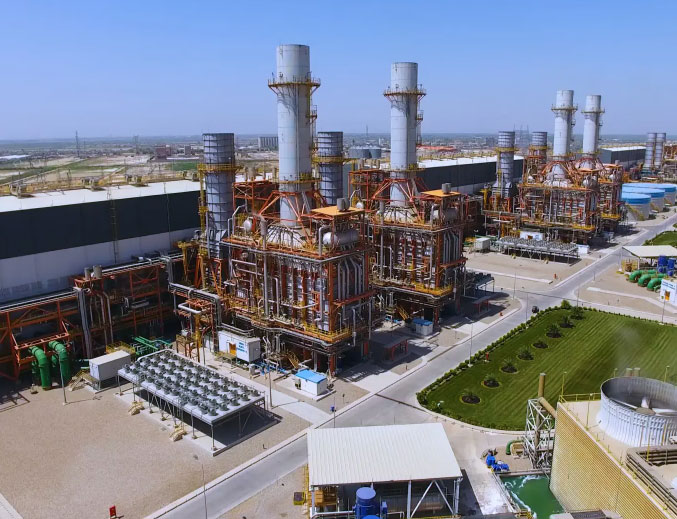
Modernizing Iraq’s energy system while reducing carbon intensity
The Besmaya power plant is the largest in Iraq. Recent upgrades there have resulted in greater fuel efficiency, increasing output while reducing emissions for the same level of power generation. In a country with a high carbon intensity for electricity, and where access to reliable electricity remains a priority, the project is a significant contribution to the modernization of Iraq’s energy system. We take a look at how it was delivered and the bigger implications for the energy transition in Iraq.
Building bridges and taking a whole-of-society approach
At the heart of the climate challenge is the reality that countries have different starting points, with different resources, capabilities and priorities. The solution, says Nigar Arpadarai, UN Climate Change High-Level Champion for COP29, is to increase global cooperation with a “whole-of-society” approach.