


Power isn’t a product. It’s a system.

The challenge isn’t simply securing power. It’s designing the power system that delivers it.


Large-load developers face growing pressure to bring reliable power online while meeting ambitious deployment schedules and sustainability objectives.

But today’s projects depend on far more than securing generation.

Every decision, from siting to generation and transmission, from power conversion and storage to controls and software, from financing to interconnection options, influences how the entire power system performs. 


New demands. Greater complexity.

AI infrastructure is reshaping power system design

Power systems have always required careful planning and coordination. AI infrastructure is amplifying the challenge by compressing deployment timelines while raising expectations for power system performance. Dynamic load profiles, mission-critical reliability, grid constraints, and sustainability objectives must now be balanced simultaneously.

Some projects rely on increasingly constrained grid connections. Others are developing behind-the-meter power systems to accelerate deployment or bridge the gap until grid power becomes available.

Regardless of the path, project success depends on designing a power system that performs reliably under increasingly demanding conditions.

Developers are balancing multiple infrastructure challenges simultaneously:
Deployment pressure
Speed to deployment is accelerating
2–3 years

Estimated development timeframe for many AI data center projects, increasing pressure on power infrastructure that can require longer lead times.

Dynamic load profiles
AI workloads change power demand instantly
10 MW/min

Representative ramp-rate limit being evaluated for large transmission-connected AI data centers because of rapid load swings and fast-changing compute demand.

Grid constraints
Power demand is outpacing infrastructure
1,500 GW

Additional grid infrastructure capacity needed globally by 2035 to keep pace with rising electricity demand, including growth from AI and data centers. 

Keeping projects moving

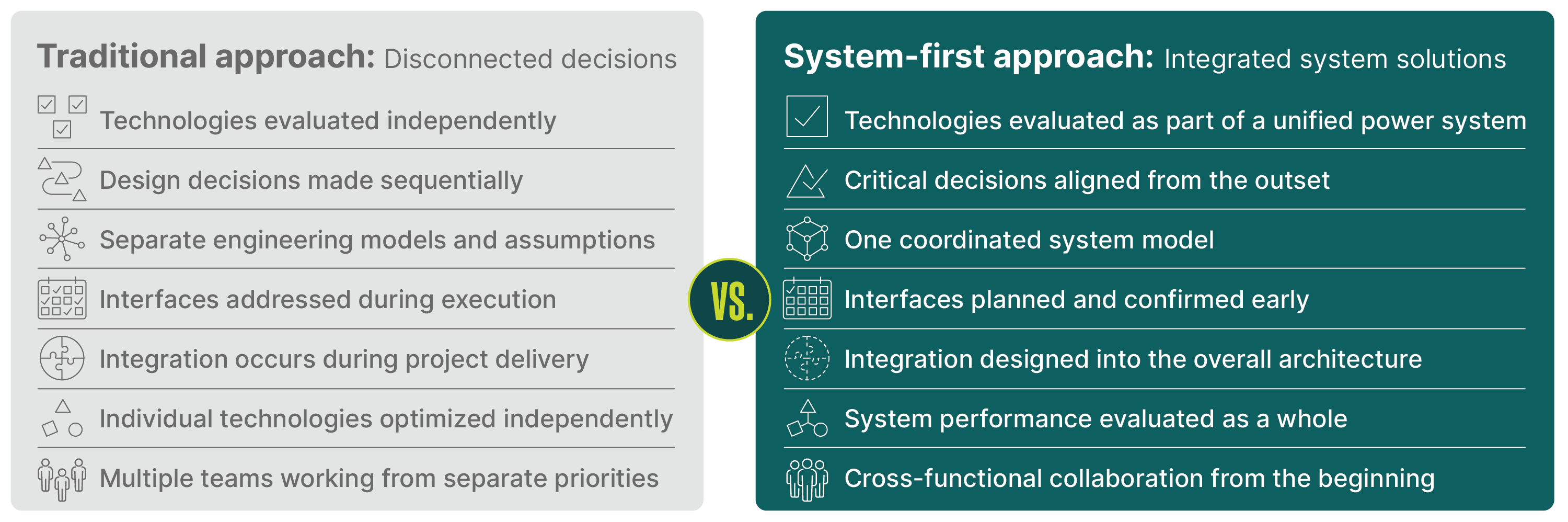
Resolve critical decisions through a system-first approach

AI data centers introduce operating characteristics unlike traditional large-load facilities. Highly dynamic load profiles and mission-critical uptime requirements mean success depends not only on selecting the right technologies, but on how those technologies work together.

A system-first approach evaluates how technologies interact, including technical interfaces, controls, and overall system performance before major technology and procurement decisions are made. By understanding how the complete power system will perform early in the design process, developers can identify tradeoffs sooner, reduce downstream redesign, and maintain project momentum.

odc00707-02-integrated-solutions-comparison-chart_desktop.png

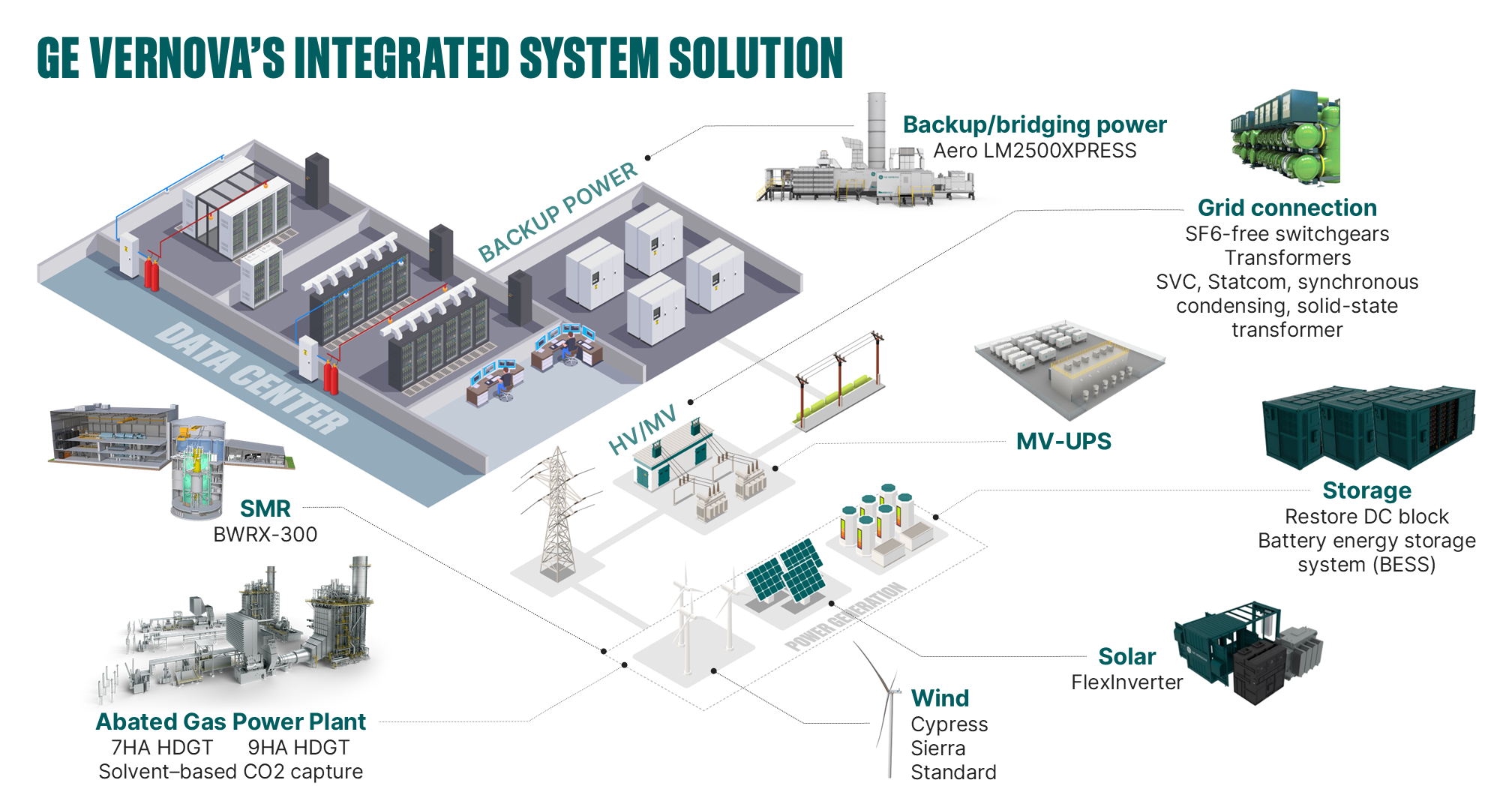
The integrated energy solution

One coordinated power system

odc00707-04-integrated-system-solution.png

Behind every integrated power system is a coordinated team working across engineering, technology, commercial, and project disciplines.

GE Vernova brings together capabilities across engineering, technology, commercial, and project disciplines to support coordinated project planning and delivery.

Explore the technologies, engineering expertise, and supporting capabilities behind GE Vernova’s integrated power systems. 

Contact us

Have more questions on integrated energy solutions?

 
Talk to us

Tell us about your project and how we can help. Someone from our team will be in touch soon.