Power at hyperscale

When power demand reaches hyperscale, architecture matters

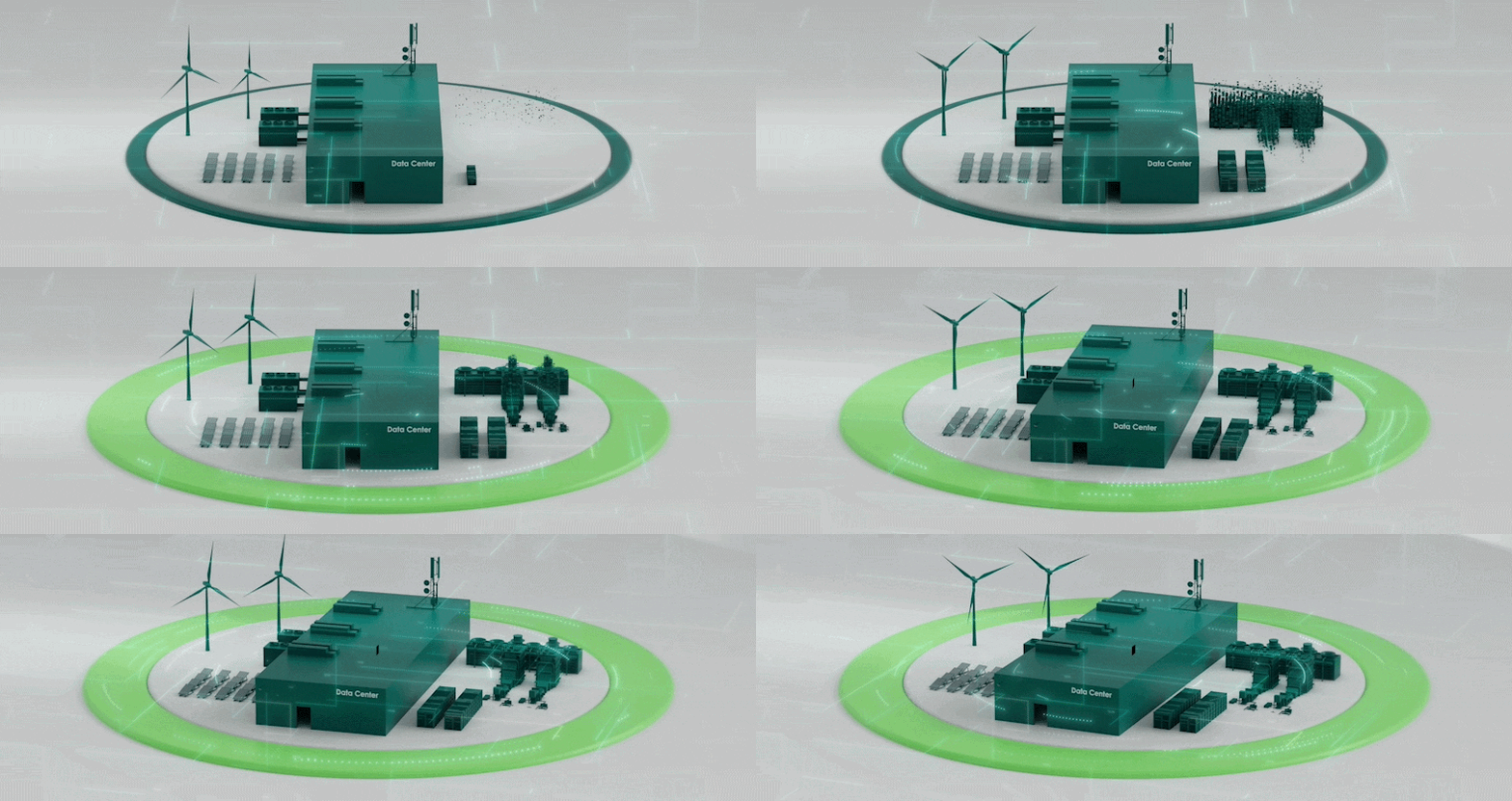
AI is changing the scale of data center power. Campuses requiring hundreds of megawatts (and in some cases multiple gigawatts) are creating an urgent need for reliable behind-the-meter generation to support mission-critical operations around the clock.

power-demand-reaches-hyperscale.gif

Technology selected to solve an immediate power constraint may operate for decades. That means developers need to evaluate two timelines:

✓  How quickly capacity can come online.
✓  How effectively it can perform over its operating life.

At hyperscale, that requires looking beyond equipment availability and initial cost to the complete generation architecture—its scale, reliability, operations, footprint, integration requirements, dynamic response and flexibility, long-term operating costs, and ability to evolve with the campus.

Beyond the megawatts

500 MW is 500 MW. Until you have to operate it.

On paper, reaching a 500 MW power target can look like a straightforward capacity calculation. In practice, the technology behind those megawatts determines how many generating assets must be installed, integrated, controlled, maintained, and supported throughout the life of the project.

A representative hyperscale architecture using 1–2 MW class high-speed reciprocating engines (HSRE) could require hundreds of individual generating units once capacity, redundancy, and availability requirements are considered.

Aeroderivative gas turbines consolidate that capacity into substantially larger generating blocks, while heavy-duty gas turbines can provide even larger power blocks where their unit size aligns with the site's architecture and redundancy requirement.

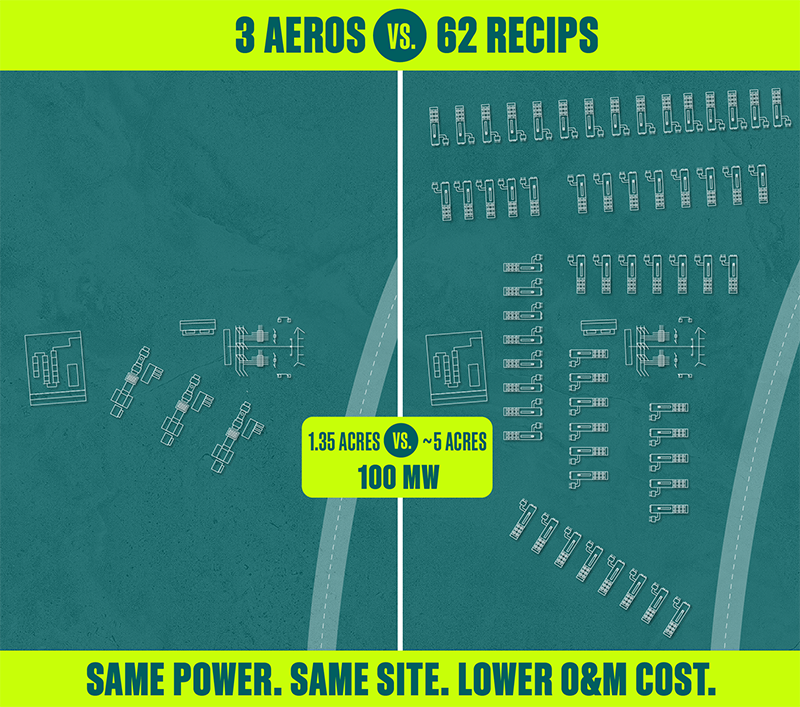
odc00765-01-gt-v-recips-footprint_illustrated-texture.png
A representative comparison of the number of aeroderivative gas turbines (left) and HSREs (right) needed to meet the same power requirement of 100 MW at the same site.

The emissions picture

Look beyond conventional emissions

Every combustion technology introduces emissions and permitting considerations. For large-scale data center power systems, understanding the emissions profile means looking at both regulated pollutants and the greenhouse gases associated with each generation technology.

Accounting for methane slip

NOx and CO are important considerations for air permitting and compliance, but they don't tell the whole emissions story. In spark-ignited reciprocating engines, some natural gas can pass through combustion unburned and be released as methane, while gas turbines typically have significantly lower methane slip.

Because methane has a much greater near-term climate impact than CO₂, these differences can add up across a large generating fleet and significantly affect total greenhouse gas emissions—even when both technologies operate on natural gas.

82.5×

Methane's global warming potential vs. CO₂ over 20 years*

~145×

Higher methane emission factor for spark-ignited reciprocating engines vs. aeroderivative gas turbines*

~42%

Lower estimated total GHG emissions for a representative 500 MW facility using simple cycle aeroderivative gas turbines vs. high-speed reciprocating engines*

*Based on the assumptions and emission factors used in GE Vernova's analysis, including a representative 500 MW facility operating at 90% capacity factor and IPCC AR6 GWP20 for methane. Actual emissions vary by technology, configuration, efficiency, operating conditions, fuel, and other project-specific factors.

A systems approach

The gas turbine advantage at scale

When hundreds of megawatts of islanded generation need to operate as one coordinated power system, the advantages of gas turbine architecture extend well beyond unit size. Fewer, higher-capacity generating assets can help simplify operations, increase power density, and create a more manageable architecture for responding to the dynamic loads of AI data centers. 

Power density

Aeroderivative gas turbines can provide high power output within a compact footprint—an important consideration on hyperscale campuses where generation competes with revenue-producing data infrastructure for available land.

Large reciprocating fleets can require extensive foundations, electrical connections, exhaust systems, fuel infrastructure, cooling and auxiliary equipment, as well as access for recurring maintenance. As capacity grows, those requirements can consume valuable acreage and add civil, electrical, and construction complexity.

Aeroderivative gas turbines concentrate significantly more generating capacity into each unit, while heavy-duty gas turbines provide another option for concentrating very large amounts of generation into fewer power blocks.

The result is a higher-power-density architecture that can help preserve space for data infrastructure and future campus expansion.

Operational and maintenance simplicity

Higher-capacity gas turbines can deliver the required power with significantly fewer generating assets than high-speed reciprocating architectures.

Fewer units can mean fewer controls, electrical interfaces, auxiliary systems, and individual assets for operators to coordinate.

Aeroderivative gas turbines also draw on aviation-derived design and maintenance principles, including fast, modular component exchanges that allow repair and overhaul work to take place off-site. Compared with fleets containing hundreds of engines with recurring service requirements, fewer generating units can simplify maintenance planning, spare-parts management, workforce requirements, and site logistics.

Heavy-duty gas turbines similarly consolidate generation into fewer major assets, reducing the number of individual machines that must be managed across a large site.

Torsional stress and system response

Rapid changes in AI computing loads can introduce electrical disturbances and controls interactions in a power system.

Depending on the power generation source, shaft train, controls, and network characteristics, these disturbances can interact with electromechanical and torsional modes.

Managing these dynamics requires a system-level approach. High-fidelity studies, including electromagnetic transient (EMT) modeling, can help identify potential interactions and inform an integrated power architecture with appropriate damping, torsional stress protection, and monitoring to support stable, reliable operation.

AI workloads can create rapid changes in the load profile, and different generation technologies respond to those changes in different ways. At hyperscale, those differences become part of a larger system consideration.

In an architecture containing hundreds of independent generators, each unit introduces its own dynamic response, electrical interfaces, protection requirements, and controls. As unit count increases, so does the implementation complexity and the number of interfaces that must be coordinated across the power system.

Gas turbine architectures consolidate generation into fewer, higher-capacity nodes. Combined with appropriate controls, battery energy storage, and other technologies designed to address transient response and torsional dynamics, this can create a more manageable architecture for supporting stable, reliable islanded operation under changing AI loads.

Hyperscale data centers need more than megawatts. They need megawatts designed to work together as a system.

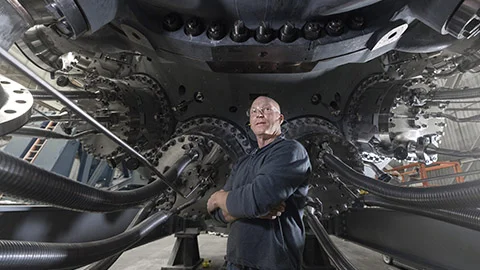
Fuel and decarbonization flexibility

GE Vernova gas turbine technologies can support a range of fuel and energy strategies, including integration with battery energy storage and renewable generation.

Select configurations also offer online fuel transfer between natural gas and liquid fuels such as diesel, providing added operational flexibility without requiring a shutdown.

Gas turbines offer lower emissions compared with reciprocating-engine architectures, including significantly lower methane slip, helping reduce greenhouse gas emissions even when operating on the same natural gas fuel. Select gas turbine combustion configurations also provide hydrogen-blending capability, creating additional options as customers’ fuel and decarbonization strategies evolve over the life of the asset.

Proven technology at scale

Our aeroderivative and heavy-duty gas turbine portfolios build on decades of operating experience across power generation applications worldwide.

For developers, lenders, insurers, EPCs, and operators evaluating large-scale data center infrastructure, that experience provides an established foundation for generation architectures that can adapt as power needs evolve—including the potential to transition from dedicated onsite generation to grid-supporting roles over time.

At hyperscale, the advantage goes beyond the amount of power each unit provides. Fewer generating assets can simplify how generation, controls, electrical infrastructure, and energy storage work together across the site.

Contact us

Ready to rethink your data center power architecture?