
Search Gas Power
Recommended resources
Upgrades
Your outcomes—delivered
These days, we're all trying to do more with less, but GE Vernova can help. Our upgrades and modernizations can help you get more from your existing assets. Discover the possibilities with our interactive upgrades selector.

Controls
Control Lifecare Services
Whether you need 24/7 technical support, live remote diagnostics, onsite field engineering, or parts management, we have you covered with GE Vernova's Controls Lifecare Services (CLS).

Podcast
Cutting Carbon - Season 9
Join Dr. Jeff Goldmeer, Brian Gutknecht, and special guests for the final season of our 3-part series as they discuss the roles digital and electrification will play in the energy transition.

Decarbonization in action
Explore the future of energy
See how GE Vernova's Gas Power business is helping to build a world that works.
Prefer to listen?
Stream our audio version
The world is entering a period of unprecedented electricity demand growth. Rapid industrial expansion, transportation electrification, the retirement of coal-fired generation, and the rise of AI-driven data centers are reshaping the power landscape faster than ever before.
By 2030, data centers alone could consume as much as 800 TWh of electricity annually—equivalent to roughly the consumption of all of PJM, or the whole country of Brazil or Japan. Meeting this demand requires more than just generation, it requires speed to power and greater commercial confidence.
The backbone of the modern grid
Nuclear and gas are the twin pillars of a reliable, resilient energy network. While gas provides the immediate agility to stabilize a volatile grid, nuclear provides the carbon-free, baseload foundation required for long-term industrial health. GE Vernova occupies a unique position in this landscape. GE Vernova has deep expertise in both world-class SMR technology and the full spectrum of gas turbine fleets, so we’re capable of integrating these assets to help customers accelerate deployment while managing project costs.
The Small Modular Reactor (SMR) advantage
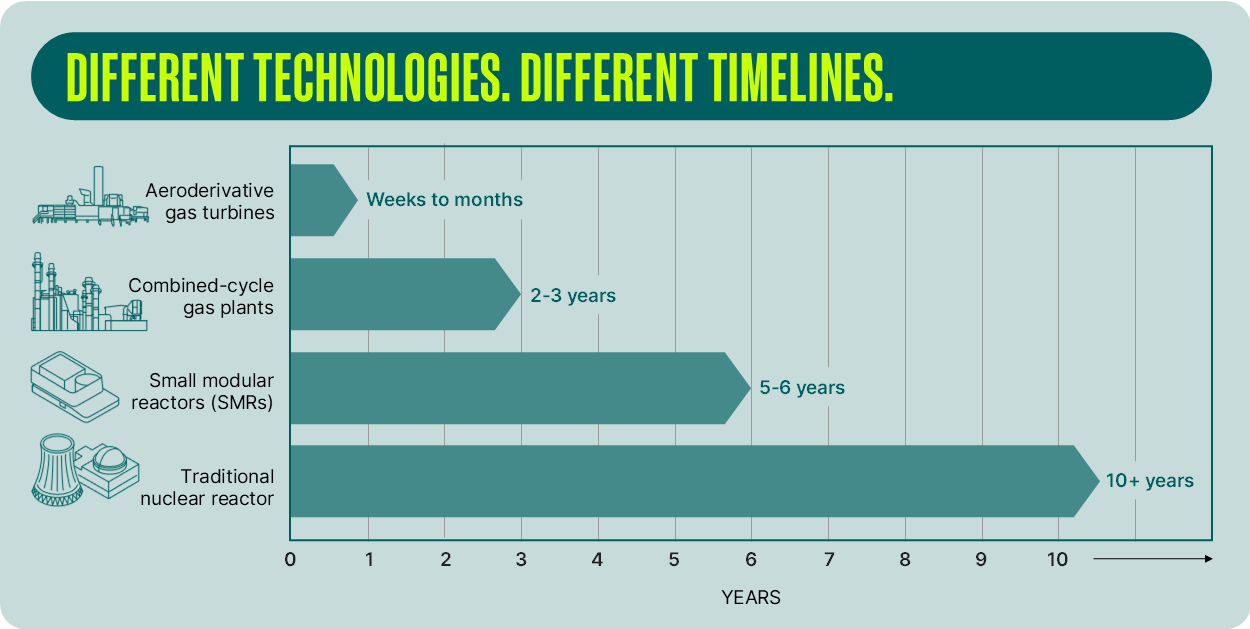
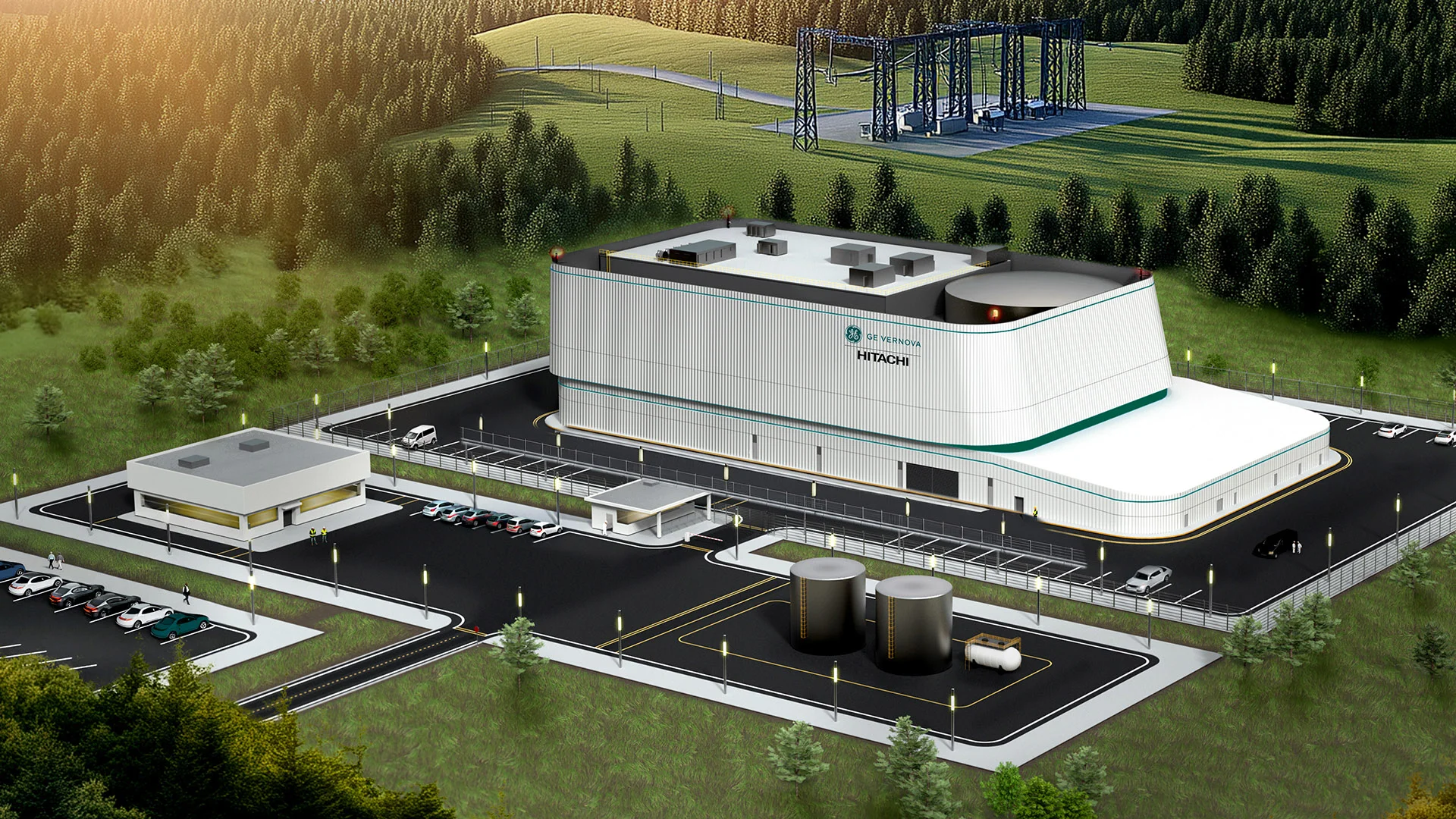
Modern SMRs, such as GE Vernova Hitachi’s BWRX-300, offer a more scalable and flexible approach to nuclear generation. At approximately 300 MW per unit, they are better aligned with the needs of growing communities, industrial hubs, and large energy users. Their modular design, enhanced safety features, and simplified construction processes are expected to support development timelines of approximately five to six years.
The BWRX-300 by GE Vernova exemplifies this maturity. Rather than developing a totally new concept, GE Vernova has relied on over 80 years of experience in nuclear power to develop a modular boiling water reactor based on proven, traditional technology—eschewing exotic molten-metal cooling systems or experimental fuel types. The logistics of enriched uranium fuel are already established globally, which can help reduce supply chain risk. Furthermore, the adoption of passive cooling systems allows the reactor to cool down naturally in the event of a power loss, inherently increasing operational safety. Because the modular nature of the reactor allows most components to be built in a factory environment before being assembled on-site, we are also helping reduce traditional project execution risks, cost overruns, and schedule delays.
The speed of gas: Bridging the gap
When a five-year timeline is not fast enough, GE Vernona’s gas turbine fleet provides the immediate capacity needed to keep our partners competitive. Data centers, manufacturers, and utilities are facing immediate capacity needs today. This is where gas turbines can play a critical role.
Aeroderivative gas turbines can be deployed rapidly, in some cases becoming operational within only a few weeks. Larger simple cycle and combined cycle plants can often be developed in as little as two to three years. This speed creates an opportunity to bring generation online well before an SMR is fully licensed and operational.
Rather than viewing gas and nuclear as competing technologies, organizations can use them together as part of a phased power strategy.
A staged approach to reducing risk
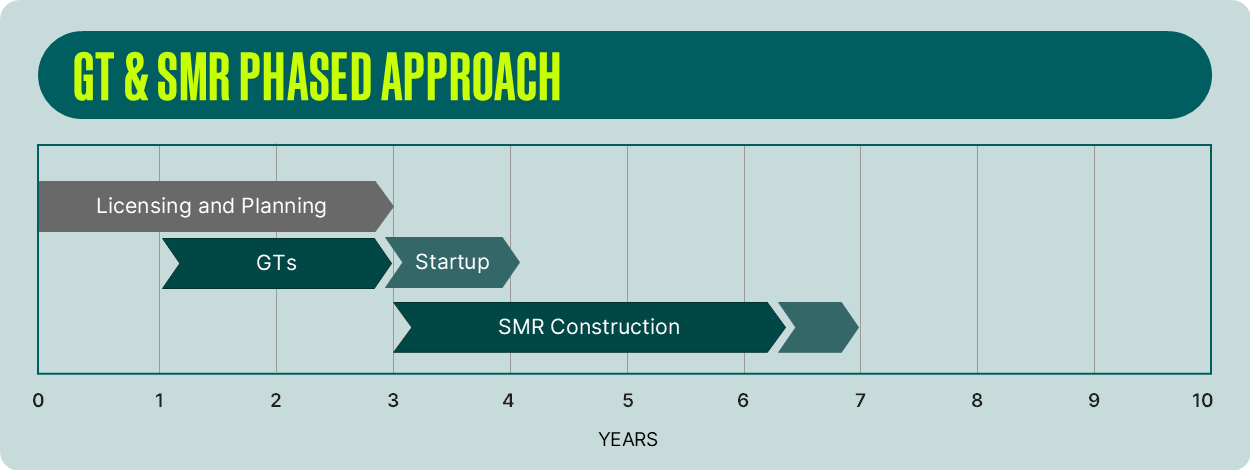
Combining gas turbines and SMRs offers a pathway to additional generation capacity with the added benefit of helping reduce project execution and financing risk. Instead of waiting years before any electricity can be generated, projects can begin producing power and creating the opportunity to produce revenue earlier in the development cycle. Financing can be structured around phased milestones, with gas generation supporting near-term energy needs while nuclear construction progresses toward long-term baseload operation.
The "Holy Grail" of performance
The true power of this hybrid strategy becomes evident in its combined operational profile. By pairing 300 MW of aeroderivative gas turbines with 300 MW of SMR capacity, we create a 600 MW "Integrated Energy Center" with dispatchability that neither technology could achieve alone. While the SMR provides a stable, emissions-free foundation, the aeroderivatives provide the high-speed agility the modern grid craves. This hybrid plant is capable of a 75% turndown at the total system level but can achieve 100% turndown by cycling the aeroderivative units—which can be brought back online in less than five minutes.
This vision is already moving toward reality. Blue Energy is leading the way by adopting an innovative approach to these projects that prioritizes early-stage execution. By streamlining the integration of these assets, Blue Energy is reducing project risk and capital intensity, creating a more attractive risk-adjusted return profile that is successfully drawing new interest from investors and accelerating project timelines.
Better together: Gas and nuclear
When an SMR enters service, gas turbines continue to provide value. They can operate as peaking resources, backup generation, renewable balancing assets, or flexible capacity to support changing grid conditions. Aeroderivative units can also be relocated to support future developments in other locations, creating additional long-term value beyond the initial project.
Together, these technologies create a complementary energy strategy that combines the speed and flexibility of gas with the long-term carbon-free benefits of nuclear power.
Bringing the strategy together
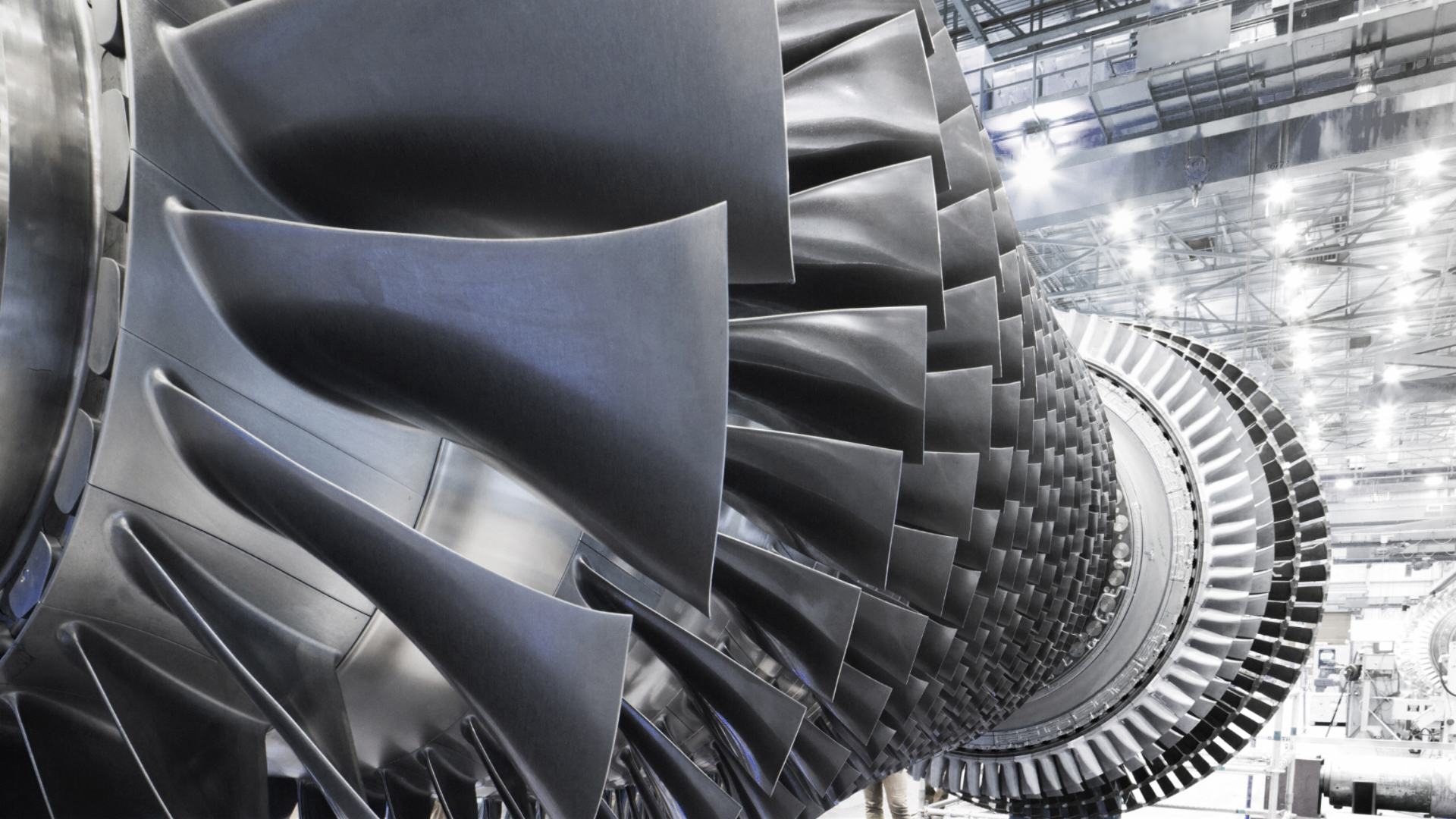
Few organizations are positioned to execute this type of integrated approach at scale. GE Vernova combines more than 80 years of nuclear expertise, one of the world's most advanced SMR technologies, and a broad portfolio of gas turbine platforms, including the LM2500 and LM6000 aeroderivative families as well as the 7F and 7H heavy-duty fleets.
Beyond supplying equipment, GE Vernova can support the full lifecycle of these projects, from supplying the new units to long-term service agreements, operational support, and nuclear fuel services.
The future of power is both
The combination of rapid-deployment gas power and scalable nuclear energy represents more than a technology solution. It provides a practical and commercially viable pathway to deliver reliable, resilient, and lower-carbon electricity at the speed required by today's rapidly evolving economy.
The future of power isn't gas or nuclear, it’s gas and nuclear, integrated by GE Vernova, working together to build a world that works.
John Ingham
Regional Product Director, Aero Gas Turbines, GE Vernova
John has extensive experience in the energy sector, specializing in gas turbines, distributed power systems, and grid operations. As a technology spokesperson for GE Vernova's Gas Power business, he helps communicate complex technical topics to customers, industry organizations, and policymakers while contributing to thought leadership through technical publications and industry events.
About Blue Energy
Building a scalable path to nuclear power
Blue Energy is developing a new model for deploying nuclear power, combining innovative financing with off-site prefabrication and modular assembly to help make new nuclear projects faster, more predictable, and scalable. Its phased gas-to-nuclear approach pairs near-term gas generation with small modular reactors to meet growing demand for reliable power.
Customer stories
Hear from our customers

Contact Us