
Search Gas Power
Recommended resources
Upgrades
Your outcomes—delivered
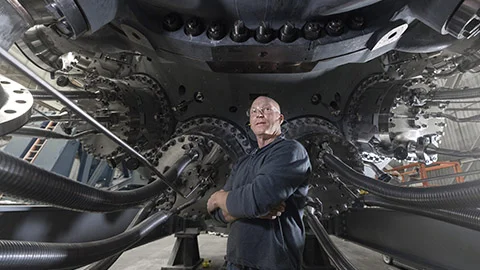
These days, we're all trying to do more with less, but GE Vernova can help. Our upgrades and modernizations can help you get more from your existing assets. Discover the possibilities with our interactive upgrades selector.

Controls
Control Lifecare Services
Whether you need 24/7 technical support, live remote diagnostics, onsite field engineering, or parts management, we have you covered with GE Vernova's Controls Lifecare Services (CLS).

Podcast
Cutting Carbon - Season 9
Join Dr. Jeff Goldmeer, Brian Gutknecht, and special guests for the final season of our 3-part series as they discuss the roles digital and electrification will play in the energy transition.

Decarbonization in action
Explore the future of energy
See how GE Vernova's Gas Power business is helping to build a world that works.
Prefer to listen?
Stream our audio version
June 21–24, 2026, South Australia experienced four consecutive days of near-zero wind output. In a state that generates the majority of its electricity from wind and solar, the consequences were immediate.
Spot electricity prices hit the legal ceiling of $20,300 per megawatt hour on two consecutive days. Batteries discharged and couldn’t respond when prices peaked. South Australia gained essential knowledge from this, though not without cost.* For other countries planning rapid expansions of variable renewable energy in the years ahead, South Australia's experience shows how gas generation is needed when it comes to having flexible long duration dispatchable power generation.
According to Nelson et al. (2026), who led an independent review into Australia’s National Electricity Market (NEM), as variable renewable energy penetration increases, the physical requirements become more important. These requirements include "shaping" (short-duration energy movement) and "firming" (dispatchable capacity to bridge supply gaps).** Other regions can learn how relying solely on renewable targets without a corresponding framework to support dispatchable backup leaves the system vulnerable to price volatility during a renewable energy drought like the recent four days of near zero wind generation in South Australia.
Why gas is the structural answer
Gas power has three characteristics that few other technologies currently replicate at grid scale.
Speed. Aeroderivative gas turbines can come online in as little as five minutes. When solar generation drops at the evening peak, fast-response gas can play a key role in supporting frequency stability.
Scalability. Heavy-duty gas turbines can provide output in the hundreds of megawatts per unit, matching the capacity blocks these regions need to replace retiring coal and close growing demand gaps.
Decarbonization pathway. The flexibility of gas generation provides firming to deploy increased renewable energy penetration. Gas generation built today may be converted to run on hydrogen blends in the future. For archipelago regions, where transporting fuel by sea is already the operational norm, the same logistics that provide fuel oil or LNG to an island today can supply hydrogen when supply chains mature.
Four regions that can learn from this event
South Australia’s experience is a preview. Here are four Asia-Pacific regions facing the same structural challenge, each at a different point on the transition curve.
Vietnam
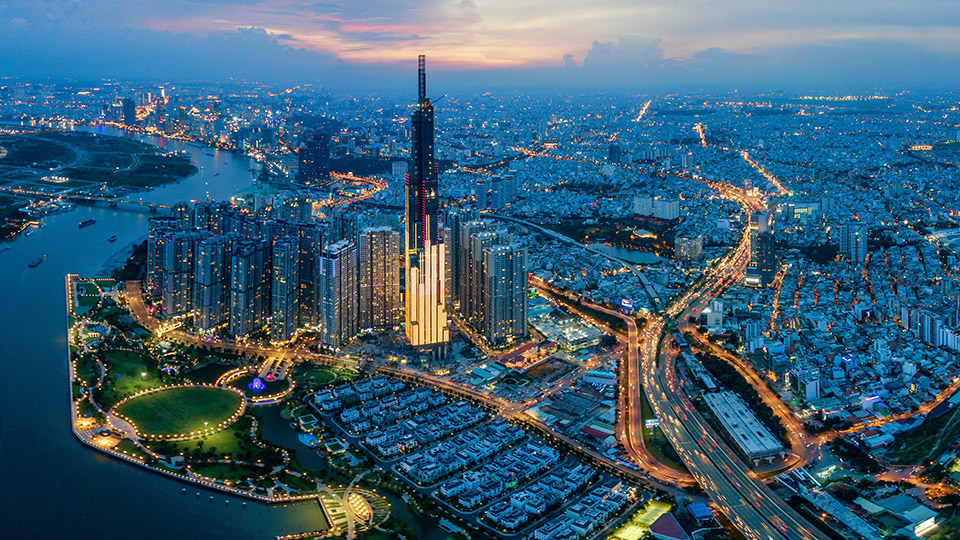
Vietnam's electricity demand is projected to reach approximately 500 TWh by 2030 and significantly higher by 2050. Vietnam's grid already carries a structural North-South transmission imbalance that leaves the northern region exposed to supply shortfalls during peak dry season, compounded by seasonal hydro dependency. Flexible gas-fired generation, co-developed with transmission investment including planned HVDC lines, will help to support reliability during this current period of high demand growth and rapid deployment of renewable generation.
Philippines
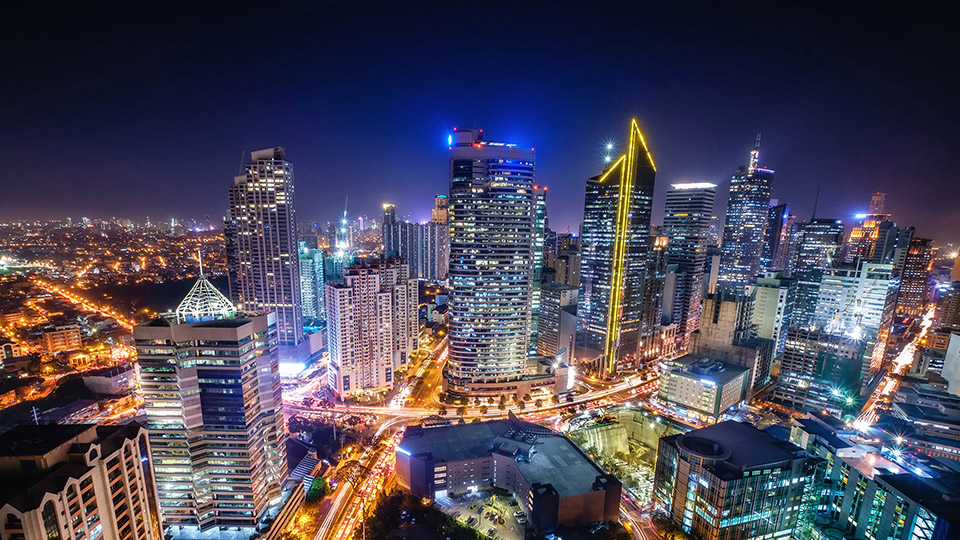
The Philippines has rapidly growing electricity demand driven by industrialization, and a grid fragmented across islands that cannot easily share capacity. In an isolated island grid, there is no neighboring region to call on when variable generation falls short. The country already experienced rotational brownouts during peak demand periods before domestic gas from the Malampaya field began declining.
Indonesia
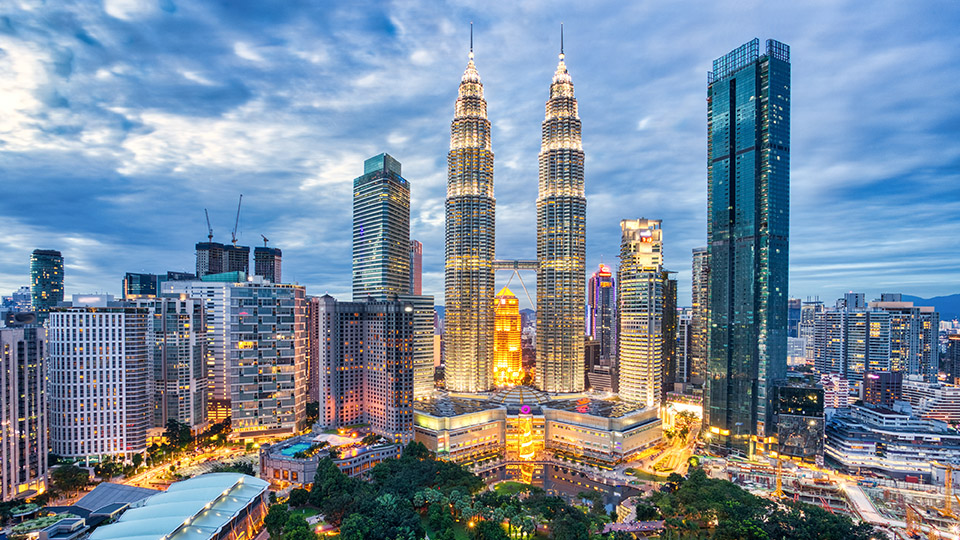
Indonesia is among the largest economies in Southeast Asia with a large, recently built coal fleet. Despite their significant natural advantages, including some of the world's most significant geothermal resources, non-hydro renewables account for approximately 3.8% of total installed capacity, reflecting slow development relative to neighboring regions. Underdeveloped liquified natural gas logistics infrastructure and high fuel costs for captive power users in central and eastern regions compound the challenge.
Bangladesh
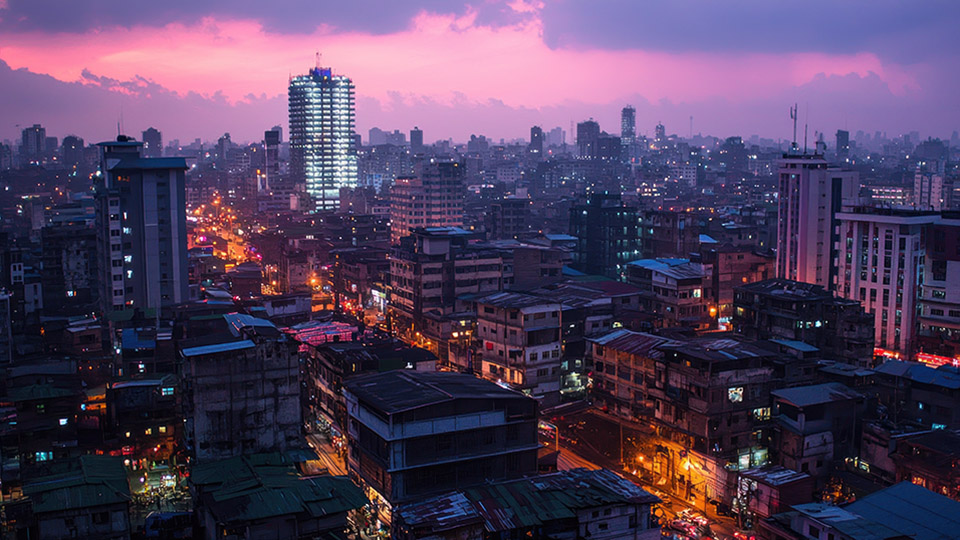
Bangladesh faces a particularly significant version of the flexibility problem in the region. Electricity demand is growing at a pace driven by garment manufacturing, urbanization, and a rapidly expanding middle class. The grid suffers from chronic supply shortfalls that constrain industrial output daily. LNG import infrastructure and gas fired generation could be a possible path to bridge the supply gap.
Transmission where it's needed when it's needed
South Australia's stress test also produced a second lesson. During the wind lull, network constraints meant the state was simultaneously exporting electricity to Victoria while its own spot prices hit the legal ceiling. Too much capacity in the wrong place left it unable to move where it was needed.*
Vietnam faces a similar dilemma, with its power supply tightening during increased incidents of heatwaves and droughts at the peak of dry season in the hydro-rich north. To enhance grid infrastructure resilience, its national power plan calls for the development of 500kV and 220kV backbone transmission and HVDC transmission lines connecting the central coast, south central coast, and the northern region. It is also looking to develop 26 to 36 GW of new HVDC converter stations, as well as expanded regional interconnections with the Laos PDR, Cambodia, and the broader ASEAN grid.
The same architecture for transmission challenges applies across the region. The Philippines lacks inter-island, Indonesia requires inter-island HVDC under its Super Grid plan, and Bangladesh needs grid modernization to reduce the technical losses that currently absorb a significant share of generated power. Currently, however, Malaysia and Singapore are planning cross-border capacity and the Lao PDR-Thailand-Malaysia-Singapore Power Integration Project is already moving power across borders. Transmission investment must run with generation investment. That locational flexibility is another reason gas power belongs at the center of any credible transition plan for distributed-grid markets across Asia-Pacific.
The integrated answer
The South Australian episode showed that even one of the world's most advanced renewable grids, built over years and supported by substantial policy investment, can be vulnerable when it lacks sufficient dispatchable backup. Australia is among the first regions globally to confront the challenges of high renewable penetration at scale, and the solutions it is developing offer a template other countries can follow. Those solutions center on dispatchable capacity that can start quickly and run for as long as the system needs it.
Gas turbines carry the longest-duration part of this role, and they can be built to run on lower-carbon fuels over time. That is why gas power is a central part of the answer: it provides the firm, flexible capacity that lets renewables expand without putting reliability at risk.
Decarbonization as used in this article is intended to mean the reduction of carbon emissions on a kilogram per megawatt hour basis.
Sources:
* Electricity price spikes and batteries drain as wind drought tests green flag-bearer - ABC News

Mark Benjamin
Aero Global Sales Director at GE Vernova
Based in Sydney, Australia, Mark has over two decades of experience in the power generation industry. He specialises in aeroderivative gas turbines across applications including grid stability, renewables firming, cogeneration for industrial applications, and data centre power. Mark holds a Bachelor of Engineering (Mechanical) with Honours from Monash University. Since joining GE in 2013, first at GE Power and then GE Vernova, he has focused on driving global growth with grid firming and decarbonisation solutions.

David Day
Gas Power New Units Sales Leader - Australia & New Zealand
David has more than 25 years of experience in the power generation industry, with deep expertise in Asian energy industry segments. He is a seasoned power generation specialist with a strong focus on continuous improvement of gas turbine power plant specification, particularly in developing sustainable solutions that strengthen grid stability, and support the deployment of cleaner energy. His experience spans design, research, project development, project engineering, and power plant construction. David currently leads gas power sales for Australia and New Zealand.

Andrea De Simone
Aeroderivative Data Centers and Hydrogen Commercialization Leader
Andrea is a global leader in the power generation and energy sector with over 27 years of experience at GE and its affiliates. Currently, he focuses on strategic solutions for data centers and commercialization initiatives in hydrogen. His extensive career includes roles in engineering, innovation, program leadership, and business development, with expertise in gas turbines, power plants, and energy systems. De Simone has held leadership positions in Italy, Switzerland, and the U.S., and holds a Master’s in Aeronautical Engineering from Sapienza University of Rome.
Discover more
You might also be interested in


Contact us