


Enhancing performance—even through the unexpected
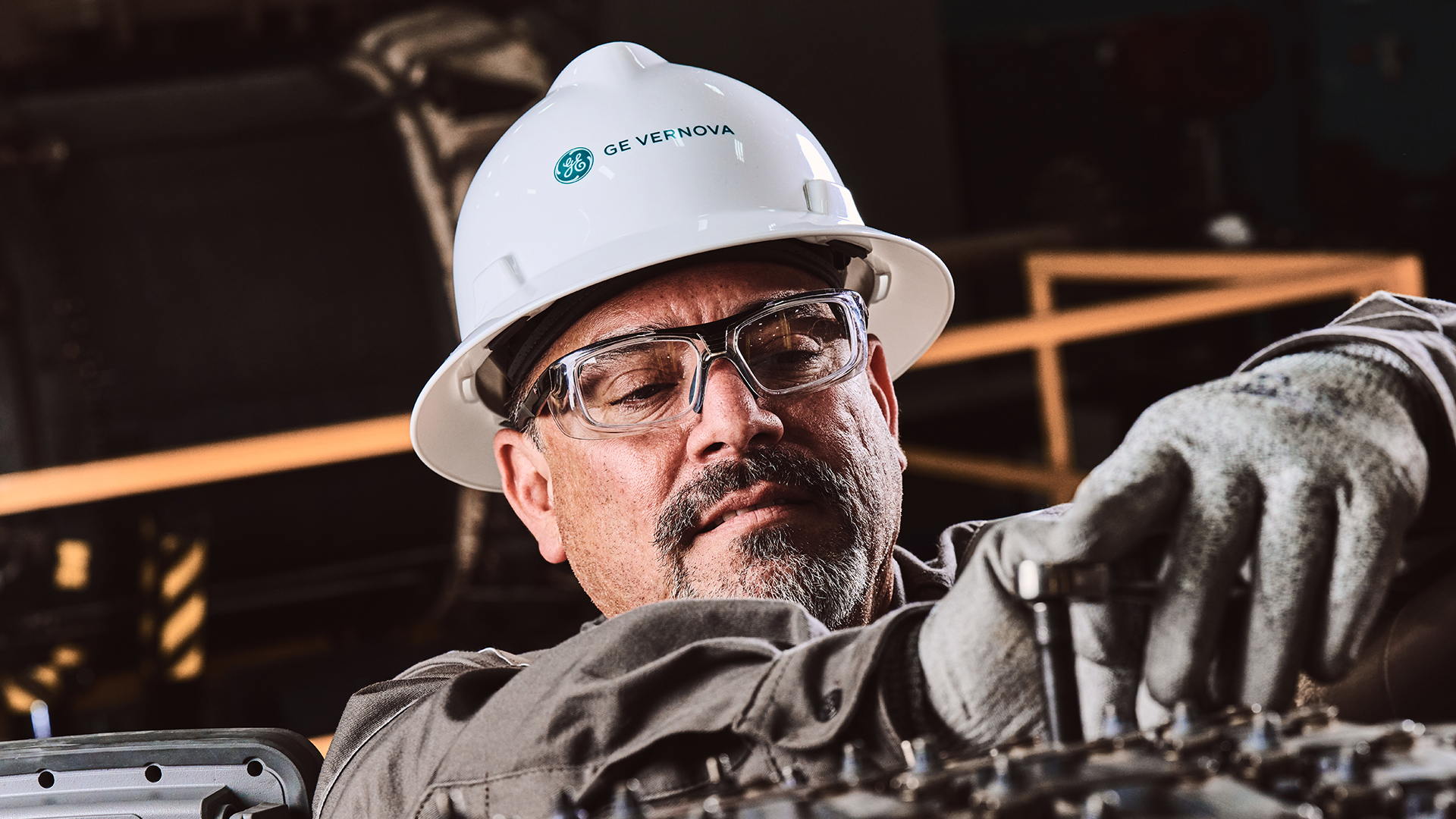
Working quickly (and safely!), GE Vernova was able to help this refinery do more with less.

Search Gas Power
Upgrades
Your outcomes—delivered
These days, we're all trying to do more with less, but GE Vernova can help. Our upgrades and modernizations can help you get more from your existing assets. Discover the possibilities with our interactive upgrades selector.
Controls
Control Lifecare Services
Whether you need 24/7 technical support, live remote diagnostics, onsite field engineering, or parts management, we have you covered with GE Vernova's Controls Lifecare Services (CLS).
Podcast
Cutting Carbon - Season 9
Join Dr. Jeff Goldmeer, Brian Gutknecht, and special guests for the final season of our 3-part series as they discuss the roles digital and electrification will play in the energy transition.
Decarbonization in action
Explore the future of energy
See how GE Vernova's Gas Power business is helping to build a world that works.
Overview
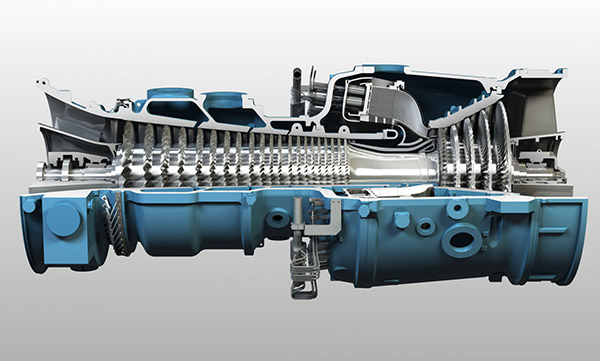
With the goal of enhancing the efficiency and performance of the Ruwais plant, GE Vernova committed to an MXL2 upgrade on a GT13E2 gas turbine. Planning and executing this upgrade typically takes up to 18 months.
The project was completed within six months, despite significant challenges posed by the outbreak of coronavirus. The technology upgrade has increased the total output of the turbine by 10.7 MW, using the same amount of fuel.
Outcomes
NYPA is leading the way by piloting new approaches to accelerate New York State’s energy transition. Decarbonizing the power sector will require a collaborative, multi-pronged approach, including the use of renewable power. Today, NYPA is pleased to share the results of our joint hydrogen study with the industry, so that our key findings might illuminate the future of decarbonization.
New York Power Authority, Interim President & CEO
Justin E. Driscoll
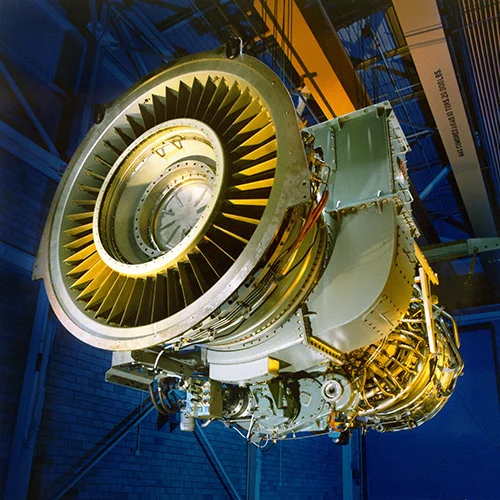
NYPA has announced the results of a first-of-its-kind green hydrogen demonstration project. NYPA and GE Vernova jointly conducted a hydrogen blending test at NYPA’s Brentwood Power Station in Long Island. The effort aligned with NYPA’s strategic VISION2030, but primarily studied the parallels of efficiency and sustainability under these conditions.
GE Vernova assisted in building a state-of-the art hydrogen/natural gas blending system for the demonstration. And, with the site using an LM6000, GE Vernova was enthusiastic to contribute decades of innovation in using H2 and low-BTU fuels. In further collaboration with EPRI, and Airgas (an Air Liquide company), it was one of the first retrofits of a U.S. natural gas powered plant that saw green hydrogen blended with natural gas to generate electricity—to specifically look at impacts to operability and emissions.
At 45 MW, the Brentwood plant consists of a GE Vernova LM6000 aeroderivative gas turbine, equipped with single annular combustion (SAC) technology which uses water injection and a SCR for NOx control. While NYPA and many power companies use hydrogen for cooling, firing blends of 5% – 44% (by volume) green hydrogen and natural gas helped identify and document the impacts on the LM6000’s outlet emissions (specifically CO2, NOx, CO). Ultimately, the demonstration saw that carbon emissions decreased as the fraction of hydrogen in the fuel increased.
But what do these results mean for the modern power industry? With minor modification, an LM6000 could operate on blends of H2 and natural gas for some 20% CO2 emission reduction. Hydrogen cofiring could allow turbines to operate across a wider load range with fewer CO oxidation catalysts—lowering CapEx, OpEx, and allowing cleaner energy to be produced at lower costs.
Services
Contact us