
Search Gas Power
Recommended resources
Upgrades
Your outcomes—delivered
These days, we're all trying to do more with less, but GE Vernova can help. Our upgrades and modernizations can help you get more from your existing assets. Discover the possibilities with our interactive upgrades selector.

Controls
Control Lifecare Services
Whether you need 24/7 technical support, live remote diagnostics, onsite field engineering, or parts management, we have you covered with GE Vernova's Controls Lifecare Services (CLS).
Podcast
Cutting Carbon - Season 9
Join Dr. Jeff Goldmeer, Brian Gutknecht, and special guests for the final season of our 3-part series as they discuss the roles digital and electrification will play in the energy transition.
Decarbonization in action
Explore the future of energy
See how GE Vernova's Gas Power business is helping to build a world that works.
The power generation world can be high-stakes, and the transition from design intent to real-world performance is often the most critical phase of a project.
Historically, engineering meets reality in the commissioning phase, a period of intense pressure, potential risk, and high costs. At GE Vernova, we are fundamentally changing this narrative through high-fidelity, cloud-based plant control simulations.
By creating a "digital precursor" to the physical plant, we are enabling teams to test and improve on scenarios to mitigate future risk before a single piece of equipment is switched on in the field.
In a recent on-demand webinar, GE Vernova experts explored why simulation matters and how Software Witness Demonstration (SWD) showcases customer-specific software in action, from startup and shutdown procedures to protective actions and operator station functionality.
The architecture of confidence
A scalable cloud ecosystem for concurrent virtual commissioning
One of the strengths of GE Vernova’s simulation strategy is its scalability. We have moved beyond the limitation of single-project simulators to a robust cloud-based simulation platform. This infrastructure is architected to manage multiple simultaneous simulations across different projects, using pre-configured templates and advanced configuration management tools.
This is not a static repository. It is a dynamic, multi-tenant environment where we maintain over 1,000 active virtual machines. Whether we are supporting a new unit commissioning or an existing plant's performance improvement, our infrastructure is designed to scale our engineering throughput to help meet global demand, providing rapid deployment without sacrificing the integrity of the individual plant model.
The "Unity" of systems: Orchestrating the virtual plant
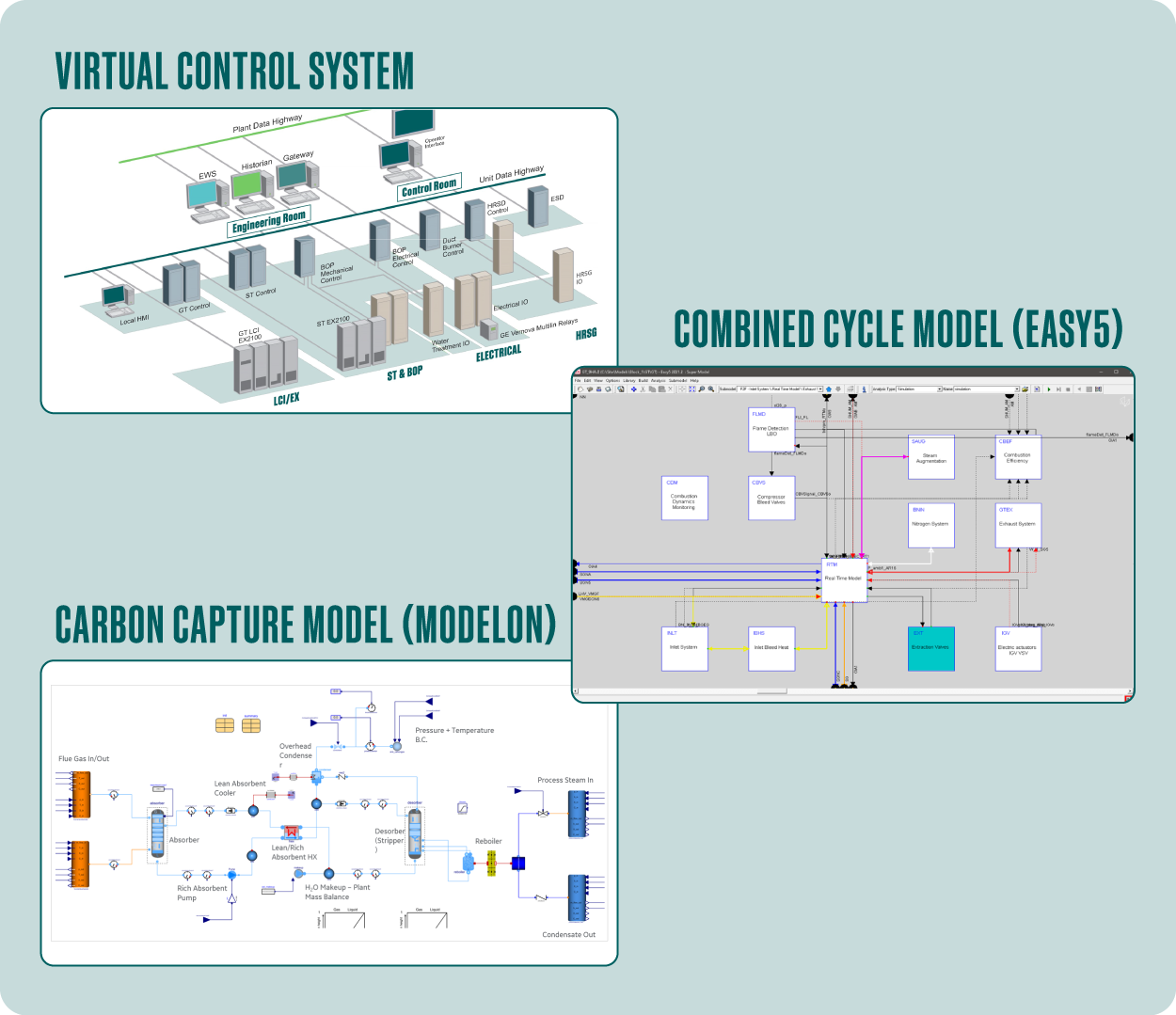
The heart of the system’s capability is Unity, our simulation executive. Unity acts as the central conductor for this vast digital ecosystem. It manages performance monitoring, I/O mapping, and time-series data collection across many simulation environments that are occurring simultaneously.
Crucially, Unity is designed for an integrated world. Through industry-standard Functional Mock-up Interface (FMI) protocols, it bridges our proprietary Mark* VIe Distributed Control System (DCS) with specialized modelling tools like Modelon Impact, MathWorks Simulink, APROS, and PSLF. This architectural fluidity transforms a fragmented landscape of modelling tools into a cohesive, interoperable ecosystem, serving as the orchestration layer for your most complex engineering challenges.
Engineering fidelity: A bespoke approach to simulation
We recognize that model depth should reflect system-architecture and operational necessity rather than a subjective choice. At GE Vernova, we employ a rigorous, system-driven fidelity framework. We map the complexity of your plant to the appropriate mathematical representation, aiming to ensure that computational resources are allocated where they provide the greatest engineering value. Our fidelity framework is structured around the mission-criticality of the plant’s components.
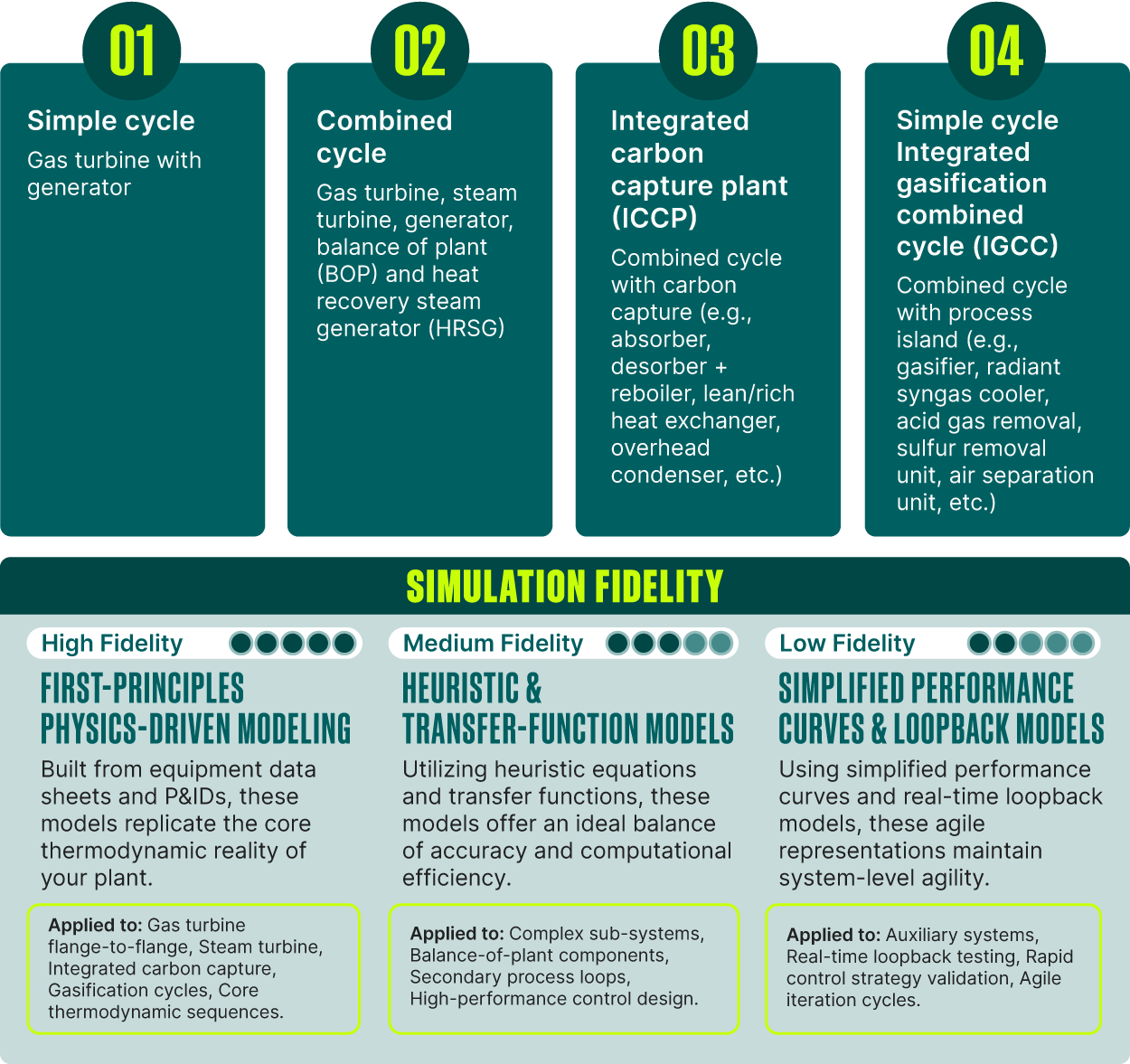
For systems such as gas turbine flange-to-flange, steam turbine, integrated carbon capture, or gasification cycles etc., which define the plant’s performance, we deploy high-fidelity, first-principles, physics-driven modeling for high accuracy and complex, integrated plant dynamics. Heuristic and transfer function-based medium-fidelity models are deployed for systems that possess a secondary impact on the broader plant process, ideally balancing performance and rapid-iteration design. From high-fidelity process replicas to streamlined, agile and near real-time loopback models, we calibrate our systems to be as lean or as comprehensive as required for control strategy testing.
The digital precursor: A new paradigm
A modern power plant is not merely a collection of pipes and turbines; it is an integrated network of thousands of control loops, safety protocols, and complex thermodynamic sequences. To understand how these components interact, we deploy what we call a "digital precursor."
Engineering resilience through virtual extremes
A significant value of simulation lies in its ability to explore the "what ifs" in a digital environment. On a physical plant, testing extreme transient events, protective actions, or complex startup/shutdown sequences under fault conditions can be prohibitively risky or physically impossible.
In our simulated environment, we remove those boundaries. Because our virtual Mark VIe Distributed Control System (DCS) utilizes the same proprietary control engine found in our physical hardware, engineers and operators engage with an environment that behaves very much like the real plant. This allows for:
- Validation of DCS updates prior to site deployment
- Tuning of control loops to relieve commissioning pressure
- Automated stress testing of sequences, including complex cold, warm, and hot starts
Software Witness Demonstration: Anchoring logic in reality
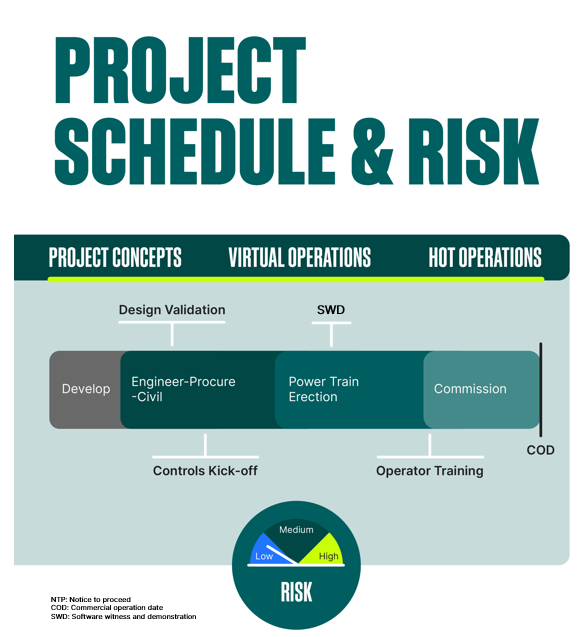
One of the most effective bridges between development and site delivery is the Software Witness Demonstration (SWD). Before commissioning begins, we invite our customers to interact with their actual application software, HMI screens, and I/O configurations, hosted on GE Vernova simulators.
Beyond being a demonstration, it’s also a trial run. By validating protection logic, closed-loop control, and operator station functionality in a virtual environment, we reduce any surprises that have historically plagued site startups. A process that once took months was almost entirely de-risked through thousands of virtual iterations.
Cultivating operational intuition: The operator training simulator
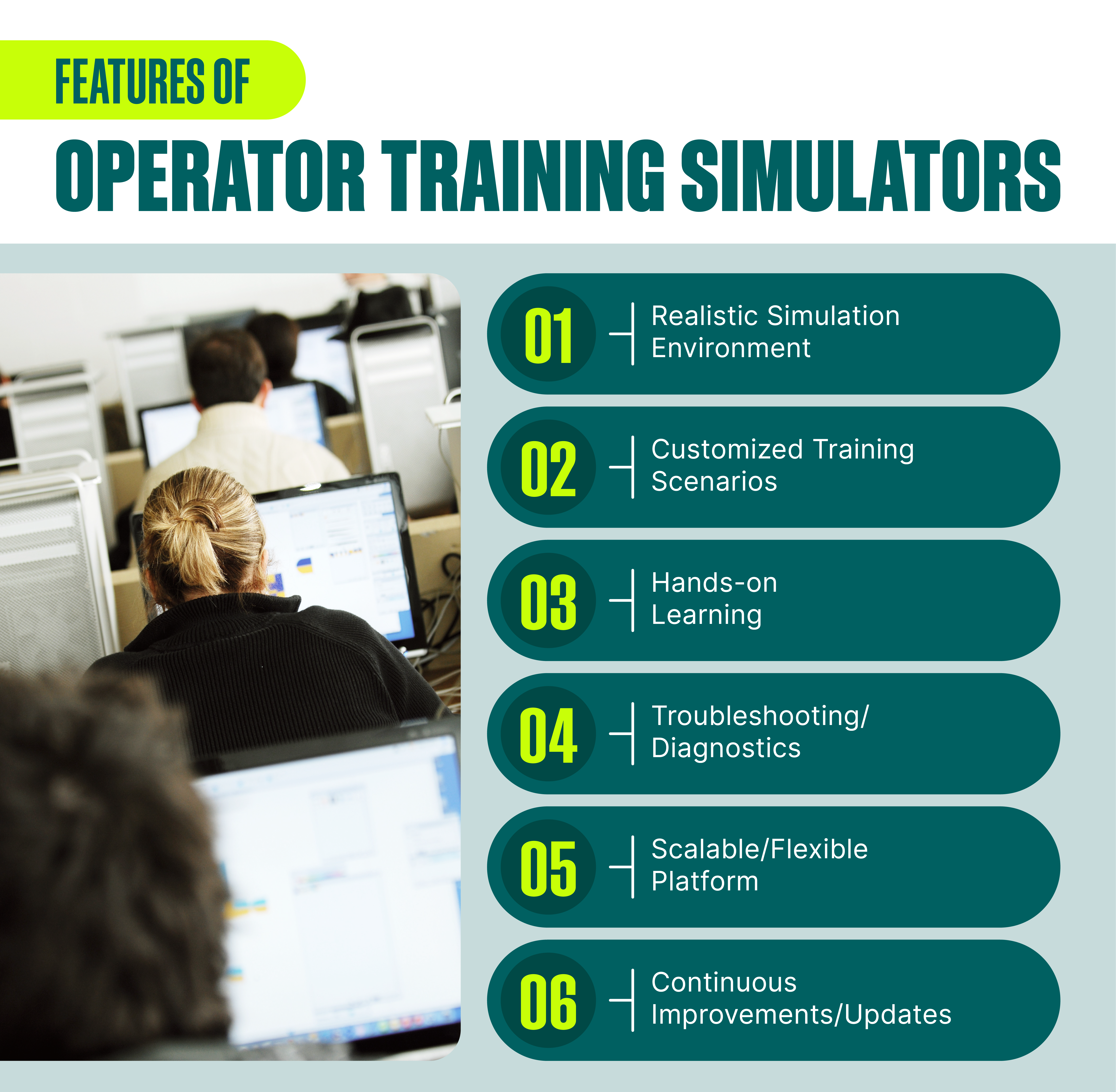
Advanced software is only as effective as the operator managing it. The final, and perhaps most human-centric, piece of the puzzle are our Operator Training Simulators (OTS). They transcend traditional software validation by creating a hyper-realistic, high-stakes sandbox where operators can master the plant’s nuances long before it goes live. Through advanced automation scripting, our simulators accurately execute complex operational sequences, including precision cold, warm, and hot starts, intricate shutdowns, and transient upset conditions. Doing so provides a rigorous environment for diagnostic and emergency training. This is more than training; it is the deliberate cultivation of operational expertise.
By using a "digital twin" of your specific plant, the OTS yields profound operational advantages:
- Elevated safety and reliability: By allowing operators to practice for rare emergency scenarios in a risk-free environment, we aim to ensure that safety becomes an instinct rather than a checklist.
- Operational excellence: The simulator bridges the gap between novice and expert, accelerating the onboarding of new hires and helping to ensure consistent performance across all shifts.
- Enhanced decision-making: By exposing operators to complex, high-pressure upset conditions, we sharpen their diagnostic skills and improve response times when it matters most.
- Reduced downtime: Beyond reduced human error, the OTS facilitates efficient training schedules to help bypass the need for physical plant downtime, helping your facility to run at peak productivity.
By the time the physical plant is commissioned, your operators should have already developed the instinctual "muscle memory" of a seasoned veteran. By transforming the operator station into a hub of substantially greater proficiency, the OTS does more than just mitigate human error as it empowers your workforce to command the plant with a higher degree of confidence and establishes them as a highly reliable safeguard in your operational strategy.
Conclusion: From risk management to asset improvement
With over 25 years of experience in control system validation and a record of 200+ simulations delivered since 2024 alone, GE Vernova is building simulators and engineering greater operational confidence. By developing a proprietary suite of tools and standardized parameterization workflows, our infrastructure has streamlined the generation of high-fidelity gas and steam turbine simulations to as little as 40 hours. This is a gain in speed and a fundamental shift in how we approach project delivery.
By front-loading the engineering effort, we are effectively helping to remove the trial-and-error of traditional commissioning. We’re helping to compress project timelines and deliver assets that start faster, operate more efficiently, and can provide a higher degree of safety.
In an era where grid reliability and operational agility are paramount, simulations and simulators are becoming the prerequisite for performance and industrial excellence. At GE Vernova, we are shifting the paradigm: moving commissioning out of the field and into the realm of a higher degree of operational readiness.

SriHarsha Vedavyasachar
Product Owner, Operator Training Simulator, GE Vernova
SriHarsha brings over 19 years of technical expertise at GE Vernova to power generation controls. An experienced specialist with 15 years dedicated to the complexities of modeling and simulation, he has a reputation for transforming sophisticated engineering concepts into high-impact, real-world solutions. As the Product Owner for the Operator Training Simulator, SriHarsha is closely involved in shaping the product’s techno-commercial strategy, connecting the evolving demands of the global energy market with cutting-edge technology.
An alumnus of IIT Bombay with a Master’s degree in Mechanical Engineering, his career is known for maintaining a consistent history of excellence recognized by both peers and customers alike. Beyond his core responsibilities, he is committed to mentoring the next generation of engineers and advancing the future of energy. SriHarsha is passionate about the connections between advanced technology and sustainable power, specifically focusing on how simulation-driven insights can enhance long-term operational reliability.
Frequently asked questions
Learn more about plant control simulations
What are the differences between the fidelities of the simulations?
Fidelity represents the characteristics of the system being modeled. We apply a system-driven fidelity framework based on operational criticality:
- High-fidelity: Built from equipment data sheets and Piping and Instrumentation Diagrams (P&IDs), these first-principles models replicate the core thermodynamic reality of your plant.
- Medium-fidelity: Utilizing heuristic equations and transfer functions, these models offer a high-performance balance of accuracy and computational efficiency for complex sub-systems.
- Low-fidelity: Using simplified performance curves and loopback models, these are ideal for maintaining agility in auxiliary system representation.
How are plant simulation models validated to accurately represent real dynamics under abnormal or fault conditions?
Plant models are built with different fidelity levels and validated against design data at steady-state points. For fault scenarios, plant upsets can be represented within the simulation platform using malfunctions. These scenarios provide a realistic way to test model response under abnormal conditions and can also serve as a training tool to prepare operators to handle faults effectively. In addition, more than 25 years of experience building these simulations, along with real-world data collected from operating plants, has been used to validate simulator performance. Core components have been refined and tuned over the years to closely match real-world experience.
Can the simulated system identify problems with unit operation?
Yes, mathematical models used to validate software before delivery often uncover operability issues. These findings are reviewed with subject matter experts before software is moved to a live plant. This is referred to as simulation-assisted engineering. From the operator’s perspective, operator training simulators include the infrastructure to build malfunctions and create realistic scenarios, equipping operators to recognize and respond to potential problems during operation.
Can the simulation software assess plant performance?
Operator training simulators are primarily designed to train operators, not to serve as performance assessment tools. However, they are tuned to match steady-state performance at both baseload and part-load conditions, which allows them to reflect realistic plant behavior even though their primary purpose is training.
What is the difference between a digital twin and a simulation?
A digital twin is described as a subset of the broader simulation. The broader simulation is used as an engineering tool during development to validate control software and plant operation. A portion of that simulation can then be refined for real time and assigned as a digital twin for a specific part of the plant, such as a gas turbine, steam turbine, or HRSG. The digital twin runs in real time alongside the actual plant and helps identify anomalies in the real plant that do not match the design basis represented in the digital twin. In that sense, the digital twin supports plant operations and is built from the broader simulation work.
Do external customers need to buy both simulator hardware and software or just the software?
The offerings are flexible. Simulators can be supplied on GE Vernova hardware as a complete package, or the software can be hosted in the cloud, depending on the customer’s operating conditions and restrictions.
Can the simulation be used during commissioning?
Yes, the simulator is often available during commissioning, and if control logic or control structure changes are needed, those can be validated on the simulator before being introduced back into the real plant. Control loops can also be improved in the simulator and then reintroduced to the real plant. This makes simulation an excellent tool during commissioning, as well as before and after commissioning, helping reduce risk and supporting smoother startup.
How long does it take to build a simulation model of a plant?
Initial simulation models are developed in parallel with control software development and are primarily used to validate controls logic. Once control strategy development is complete, the platform is enhanced to include malfunctions, plant upsets, and training scenarios. At that point, the simulator is ready to be shipped to site as an operator training simulator, typically around three months after software delivery for commissioning.
The total time to fully build a simulation model generally ranges from 9 to 15 months, depending on the complexity of the plant configuration and setup.
What is an example of how a plant control simulation reduced commissioning time or prevented errors?
One example involved a very large integrated gasification combined cycle project, where the scope covered everything from unloading rail cars of coal to processing coal into syngas and sending it to a combined cycle plant. The team was able to commission the plant, produce syngas, and transfer the gas turbine onto syngas on the first try. In previous projects of similar scope, that development would have taken several months. Because thousands of startup iterations had already been run in the simulator before the plant ever started up, the startup went extremely smoothly.
Contact us
Interested in seeing how high-fidelity simulation can help to de-risk your next project?
Explore our simulator capabilities or contact our team to learn how we can tailor the environment to your plant’s specific needs.