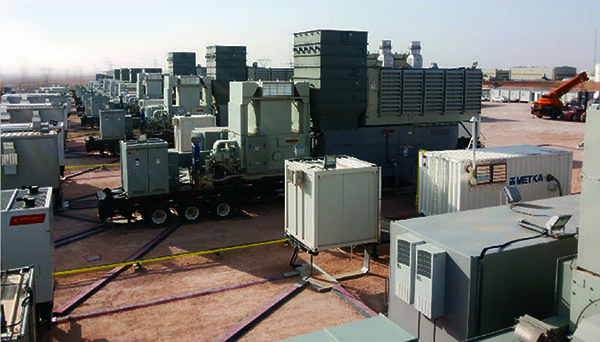


In 2013, Algeria was facing severe electricity shortages, especially during the summer. Rather than waiting years for large-scale power plants to be built, the government decided to address the problem using GE Vernova high-capacity gas turbines in the north and highly mobile TM2500s in the rest of the country.
Today, 38 TM2500 turbines operate at 18 sites in the Sahara Desert region and have a combined production capacity of up to 1.17 gigawatts (GW). They can operate reliably in the Sahara’s harsh, sandstorm-whipped environment and can be moved to different locations to help meet changing needs.
Each TM2500 can deliver up to 36 megawatts (MW) of electricity and can operate efficiently at partial load. This means two TM2500s can be operated at partial load without losing efficiency and can rapidly increase power to help meet any increase in demand or to compensate for the downtime of another turbine.
Algeria is working on building 15 GW of solar energy by 2035, with several solar power plants planned throughout the country. The TM2500s help balance the grid during the energy transition, meaning they can be turned on or off depending on weather and demand. In addition, the aeroderivative can operate using more environmentally sustainable fuels such as hydrogen, which, when blended with other fuels, fits with Algeria’s ambition to produce, use, and export low-carbon hydrogen.