


7F liquid fuel reliability upgrades
Liquid fuel capability is critical to plant flexibility, readiness, and compliance. GE Vernova offers 7F operators liquid fuel reliability solutions to address common issues and reduce system maintenance.

Search Gas Power
Upgrades
Your outcomes—delivered
These days, we're all trying to do more with less, but GE Vernova can help. Our upgrades and modernizations can help you get more from your existing assets. Discover the possibilities with our interactive upgrades selector.
Controls
Control Lifecare Services
Whether you need 24/7 technical support, live remote diagnostics, onsite field engineering, or parts management, we have you covered with GE Vernova's Controls Lifecare Services (CLS).
Podcast
Cutting Carbon - Season 9
Join Dr. Jeff Goldmeer, Brian Gutknecht, and special guests for the final season of our 3-part series as they discuss the roles digital and electrification will play in the energy transition.
Decarbonization in action
Explore the future of energy
See how GE Vernova's Gas Power business is helping to build a world that works.
Why upgrade your liquid fuel system
For dual-fuel gas turbine operators, liquid fuel reliability is critical to meeting capacity commitments. During gas-only operation, residual liquid fuel can remain in parts of the system and lead to a high risk of coking. GE Vernova’s portfolio of 7F liquid fuel reliability solutions helps address this risk across new units, 7F.05 flange-to-flange (F2F) upgrades, and existing 7F.03/04 units operating across a range of missions and run profiles. By helping reduce coking and support more dependable, lower-maintenance operation, our solutions can improve reliability, flexibility, and long-term system performance.
Not every unit has the same needs or faces the same challenges. Duty cycle, shutdown frequency, capability, and capacity requirements can influence the ideal liquid fuel reliability solution. Explore the options below and reach out to discuss the ideal solution for your unit.
.png)
Emulsification Liquid Fuel System (XAA)
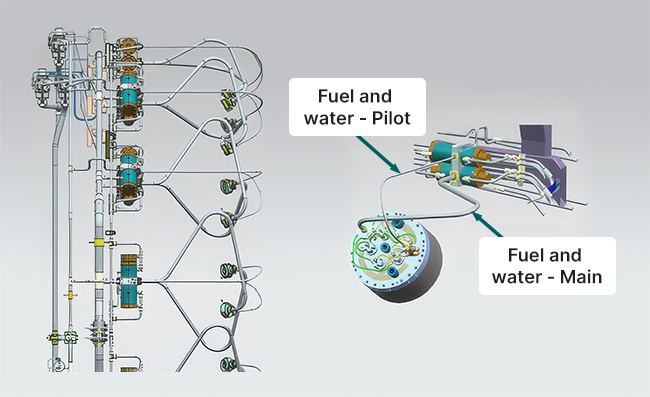
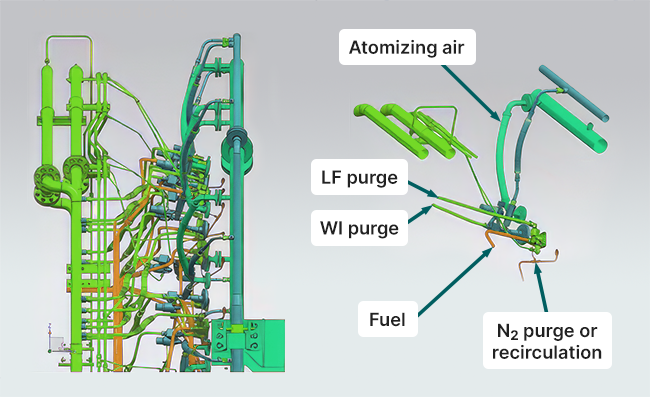
This automated emulsion system is sized for the capability of upgraded 7F.05 F2F flange to flange upgrade or new units and is best for units adding dual fuel or maximizing liquid fuel capacity. It features pre-mixed water and fuel and eliminates the need for atomizing air, additional purge, and recirculation circuits, significantly reducing system complexity and maintenance, and boosting capacity through added flow.
Addresses:
Automated Liquid Fuel Water Flush
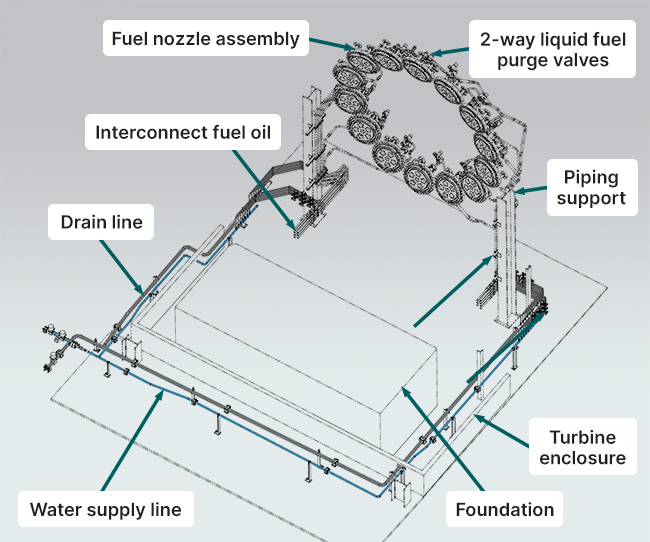
Combined cycle plants that prefer not to shut down for cleaning may benefit most from the Automated Liquid Fuel Water Flush. This solution automatically flushes residual liquid fuel from the system after liquid fuel operation, reducing the amount of fuel left in nozzle circuits, manifolds, and related piping, and reducing dependence on operator action.
The automated liquid fuel water flush system supports high-load transfer capability, allowing fuel transfers from liquid to natural gas across the load range, including at baseload. By automatically flushing residual fuel from nozzle circuits, manifolds, and piping after every transfer or shutdown, the system helps reduce fuel-related coking, lowers dependence on operator action, and simplifies liquid fuel operation and maintenance. It also reduces annual maintenance transfers from weekly (52 per year) to semi-annual (2 per year).
Addresses:
Manual Liquid Fuel Water Flush
For simple cycle and peaking units with regular shutdowns, the manual water flush system may be a good option. This upgrade builds on the liquid fuel valve relocation and introduces manual water flush inlet tubing and valves to clear residual liquid fuel. Control changes are required to support appropriate operation. This option can reduce recommended maintenance transfers from 52 to 2 per year.
Addresses:
Check Valve Relocation
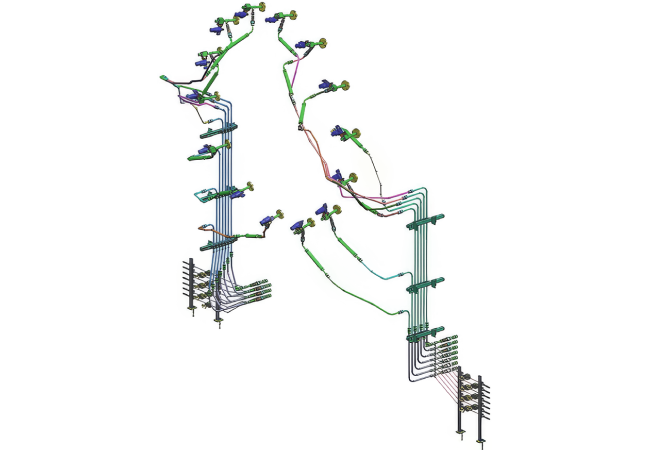
For simple cycle and peaking units with low operational hours, check valve relocation can be suitable. This solution moves liquid fuel check valves away from higher-temperature areas to a lower-temperature location in the gas turbine compartment, helping reduce the thermal conditions that promote coking. A manual drain system reduces pooling and coking.
Addresses:
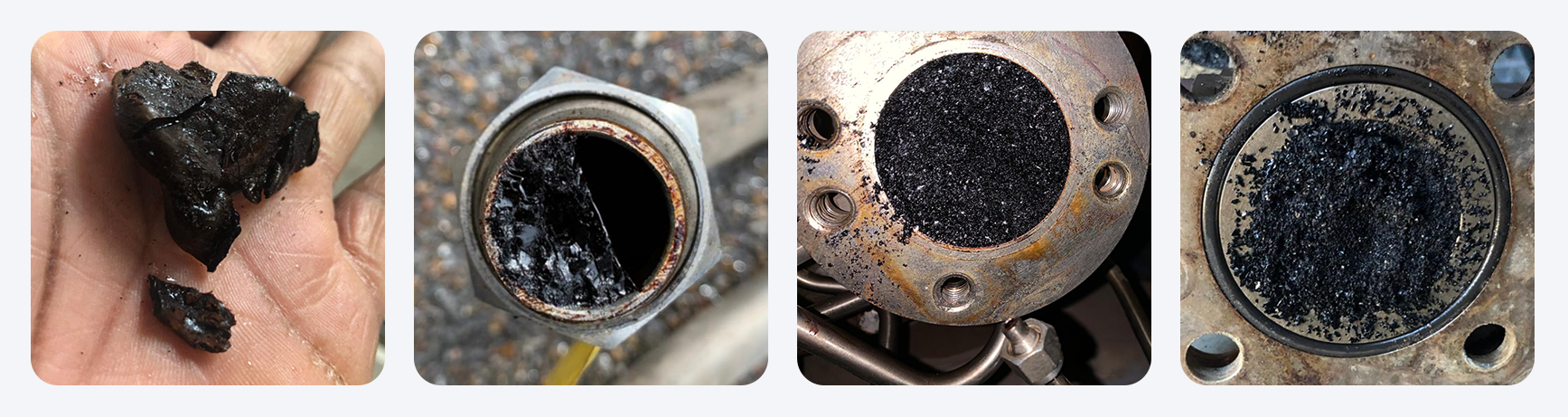
When residual liquid fuel remains in the system during gas-only operation, it can degrade over time and form deposits. As coking builds in nozzle circuits, check valves, and manifolds, it can interfere with fuel delivery leading to failed starts, failed transfers, and operational trips.
Talk to an expert
* Trademark of GE Vernova and/or its affiliates