



Mark* VIe distributed control system (DCS)
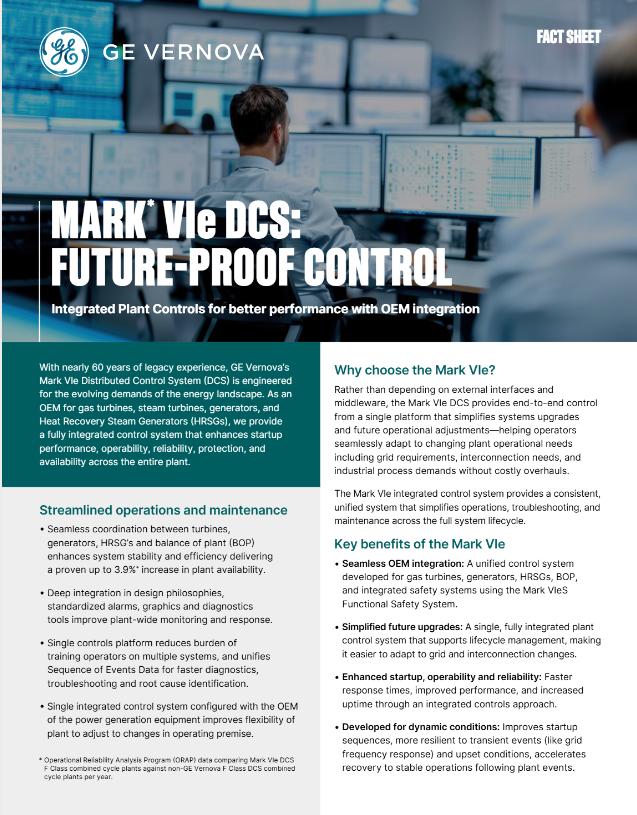
GE Vernova’s flexible, scalable integrated power plant controls solution leverages open architecture and a Mark VIe distributed control system (DCS) for better technology integration and plant operability.

Search Gas Power
Upgrades
Your outcomes—delivered
These days, we're all trying to do more with less, but GE Vernova can help. Our upgrades and modernizations can help you get more from your existing assets. Discover the possibilities with our interactive upgrades selector.
Controls
Control Lifecare Services
Whether you need 24/7 technical support, live remote diagnostics, onsite field engineering, or parts management, we have you covered with GE Vernova's Controls Lifecare Services (CLS).
Podcast
Cutting Carbon - Season 9
Join Dr. Jeff Goldmeer, Brian Gutknecht, and special guests for the final season of our 3-part series as they discuss the roles digital and electrification will play in the energy transition.
Decarbonization in action
Explore the future of energy
See how GE Vernova's Gas Power business is helping to build a world that works.
Benefits
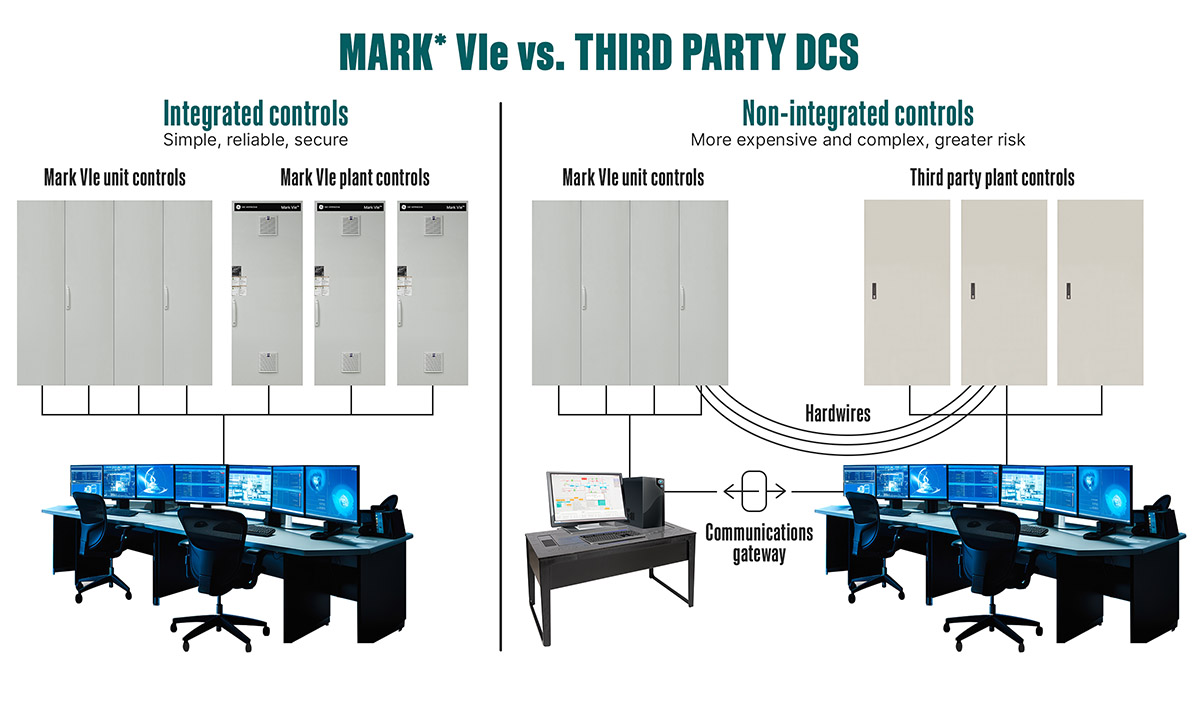
GE Vernova’s integrated plant controls provide a single control system across your entire plant—including the power train equipment, electrical and mechanical distribution, processes, and BOP. The result is simplified operations, with only one system to plan for maintenance, diagnostics, spare parts, logistics, alarms, databases, and training.
GE Vernova's power plant control systems can be implemented on both GE Vernova and non-GE Vernova equipment, as well as other applications outside gas power.
Increased plant performance and operability
More than 99.9% system reliability
Lower lifecycle cost
Common hardware, software, and networks across plant
Up to 80% reduced alarms with alarm and protection rationalization
Reduced commissioning risk with plantwide simulation and validation
OEM expertise
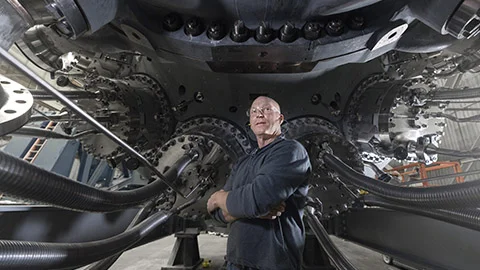
GE Vernova has provided integrated plant controls to customers in critical process and infrastructure sectors for more than 45 years. With installation and support networks around the world, we are one of the world’s largest OEMs for control solutions and DCS. As the OEM, we have fully validated and tested all of our gas turbine and integrated plant controls at our manufacturing and service facilities around the globe.
See the difference
As a leading OEM for rotating equipment, GE Vernova has decades of experience controlling assets both big and small. We have the most advanced controls for primary assets like gas turbines, as well as solutions for a fully integrated DCS/ICS plant—so you can take advantage of future gas turbine upgrades to continue improving plant performance. That’s peace of mind that only an OEM can provide.
With a common operator interface and tools, and linked controllers, GE Vernova’s Mark VIe plant controls help ensure more efficient operations, as well as improved I&C diagnostics and integration across electrical and other smart instruments.
Compared to non-integrated controls, installation is faster and your equipment availability will increase—4% above industry standard when the DCS is combined with engineering.
Why GE Vernova?
While our integrated plant controls represent the most comprehensive level of automated plant control, we offer different levels of services and products. No matter which of the configurations below best fits your needs, we can work with you to develop tailored plant or unit-level controls.
GE Vernova’s scalable model can provide a complete range of solutions, from a fully engineered power plant that delivers improved performance to just the DCS and plant components—or any other configuration in between.
As the gas turbine OEM, we know your power plant better than anyone. We have the experience to upgrade or add a DCS to your existing plant configuration—whether you have a vintage GE Vernova Mark control system or a competitor’s control system—and service options to continue serving your needs for the long term.
Plant control simulations
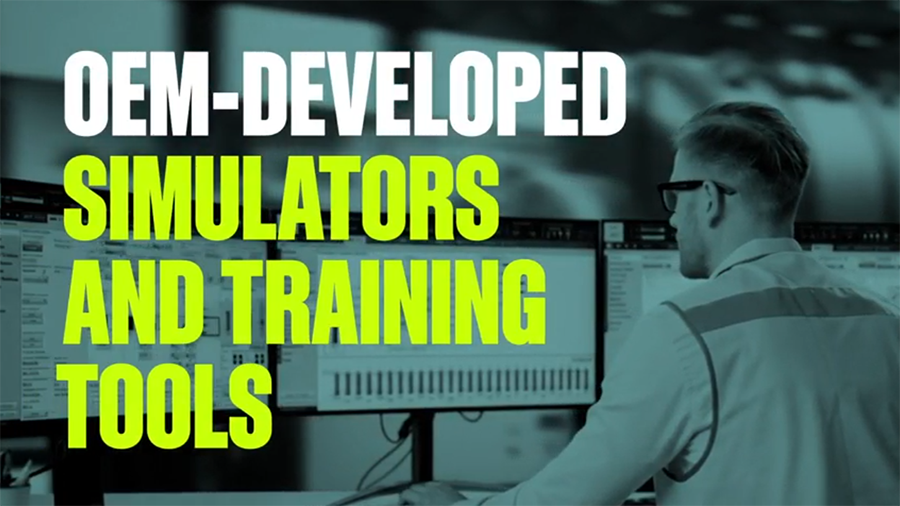
GE Vernova brings 25 years of simulation experience to every plant deployment. The Mark VIe DCS is tested on an integrated simulation platform that combines control logic testing with OEM-developed operator training tools—connecting directly to the same system that runs your plant. Validate critical functions early, build operator confidence, and reduce commissioning risk.
Expert insights
Learn more about how the Mark VIe DCS helps enhance reliability, longevity, and efficiency across your plant operations.
One platform for total plant control
Is the Mark VIe just for turbines? Chad explains how this DCS manages your entire plant from one unified platform—extending far beyond turbine control.
Reliability engineered from experience
How does the Mark VIe DCS boost reliability and availability? Carla explains how GE Vernova’s OEM expertise is built directly into its system architecture.
Why full integration matters
What happens when control systems aren’t integrated? Nate shows how the Mark VIe DCS prevents data gaps and downtime through plantwide communication.
Frequently asked questions
Integrated plant controls enhance flexibility and operational efficiency, which is increasingly important with the rise of renewable energy sources. Combined cycle power plants, for instance, have shifted from base-loaded duty cycles to more frequent start-stop operations and lower load operations several times a day. Additionally, plant controls facilitate fuel-efficient operations while staying within emissions limits, which is crucial as plants adapt to higher renewable penetration.
Integrating generation and BOP equipment into a common system (not necessarily a single controller) is achievable and beneficial. Remote operation feasibility depends on several factors:
An integrated plant control system consolidates data and control mechanisms across various plant assets, providing numerous benefits:
Yes, there are differences in the integration process:
Regardless of the plant type, GE Vernova’s expertise in managing both scenarios helps ensure successful integration.
Webinars
On-demand webinar
Discover the benefits of Integrated Plant Controls for your operations. These systems offer a unified control solution spanning your entire plant, encompassing power train equipment, electrical and mechanical distribution, processes, and BOP.
Nathaniel Martin
Senior Product Manager, GE Vernova
Gautam Chatterji
Plant Controls Customer Solution Architect, GE Vernova
Arthi Vasudevan
Senior Cybersecurity Product Manager, GE Vernova
Hiro Hardwani
EMEA Growth Leader, GE Vernova
On-demand webinar
Join GE Vernova’s webinar and discover how plant control simulations are tested and tailored to your needs—from graphic and logic demonstrations to operator training simulators.
Nathaniel Martin
Senior Product Manager, GE Vernova
Darrin Kirchhof
Principal Engineer, GE Vernova
SriHarsha Vedavyasachar
Senior Engineer, GE Vernova
Additional resources
Get in touch
*Trademark of GE Vernova and/or its affiliates