


Controls Lifecare Services Multi-Year Agreements
Controls Lifecare Services Multi-Year Agreements (CLS MYA) support a structured lifecycle strategy.

Search Gas Power
Upgrades
Your outcomes—delivered
These days, we're all trying to do more with less, but GE Vernova can help. Our upgrades and modernizations can help you get more from your existing assets. Discover the possibilities with our interactive upgrades selector.
Controls
Control Lifecare Services
Whether you need 24/7 technical support, live remote diagnostics, onsite field engineering, or parts management, we have you covered with GE Vernova's Controls Lifecare Services (CLS).
Podcast
Cutting Carbon - Season 9
Join Dr. Jeff Goldmeer, Brian Gutknecht, and special guests for the final season of our 3-part series as they discuss the roles digital and electrification will play in the energy transition.
Decarbonization in action
Explore the future of energy
See how GE Vernova's Gas Power business is helping to build a world that works.
Stop paying the premium for reactive controls maintenance and start investing in a lifetime controls strategy. CLS MYA help you reduce unplanned risk, manage obsolescence, and plan ahead for unforeseen emergencies so you can protect uptime and take control of long-term costs.
As a cost avoidance and risk reduction strategy, CLS MYA can support lower lifecycle costs while protecting operational continuity.
Surprises are expensive. Stop paying for them.
Replace the volatility of emergency fixes, rushed upgrades and unplanned replacements with long-term planning that anticipates upgrades, updates, refreshes, and replacements.
Pricing, escalation rates and service scope are defined, leading to lower lifetime O&M cost, fewer budget shocks, and greater financial control.
Mitigate issues before they become outages.
Unplanned downtime is very costly—including lost production, availability penalties, non-compliance fines and emergency callout fees or overtime labor.
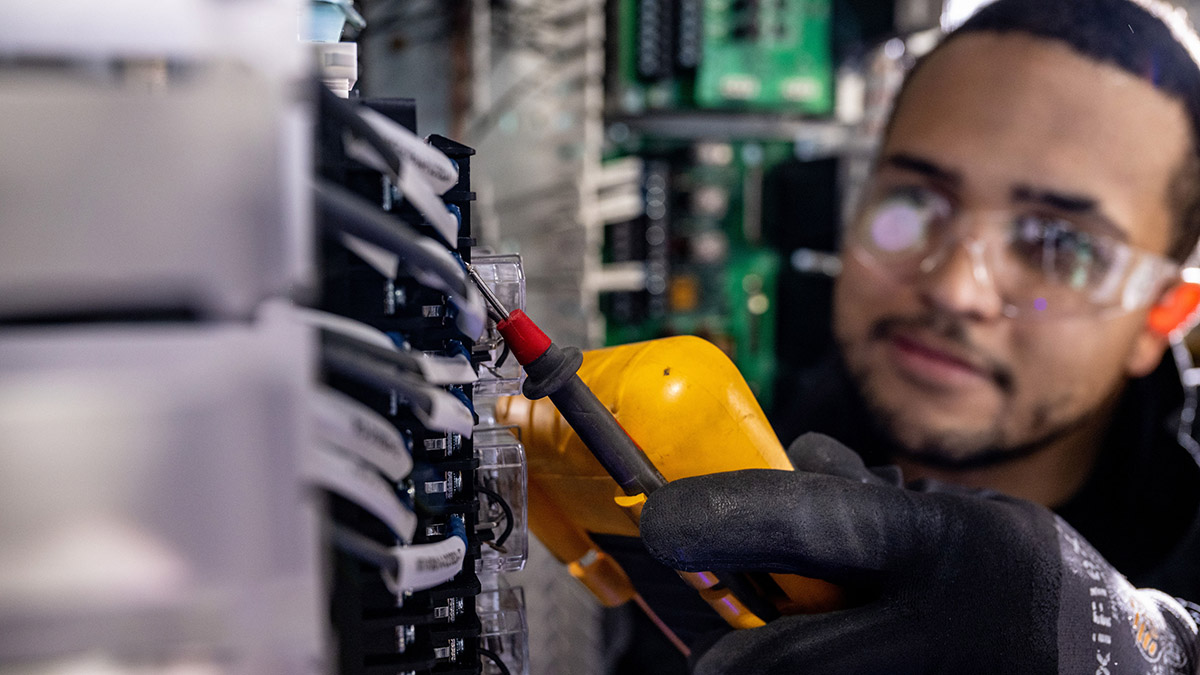
Scheduled interventions, proactive implementation of Technical Information Letters (TIL), and planned parts replacement reduce forced outages and protect availability before disruption causes financial impact.
Make cyber and compliance requirements a reflex instead of a headache.
Sidestep unplanned downtime and ensure compliance to regulatory standards.
Long-term controls agreements apply security patches, validation, software updates and network maintenance regularly, so meeting compliance obligations become a default state rather than a periodic scramble.
On-demand expertise in critical moments.
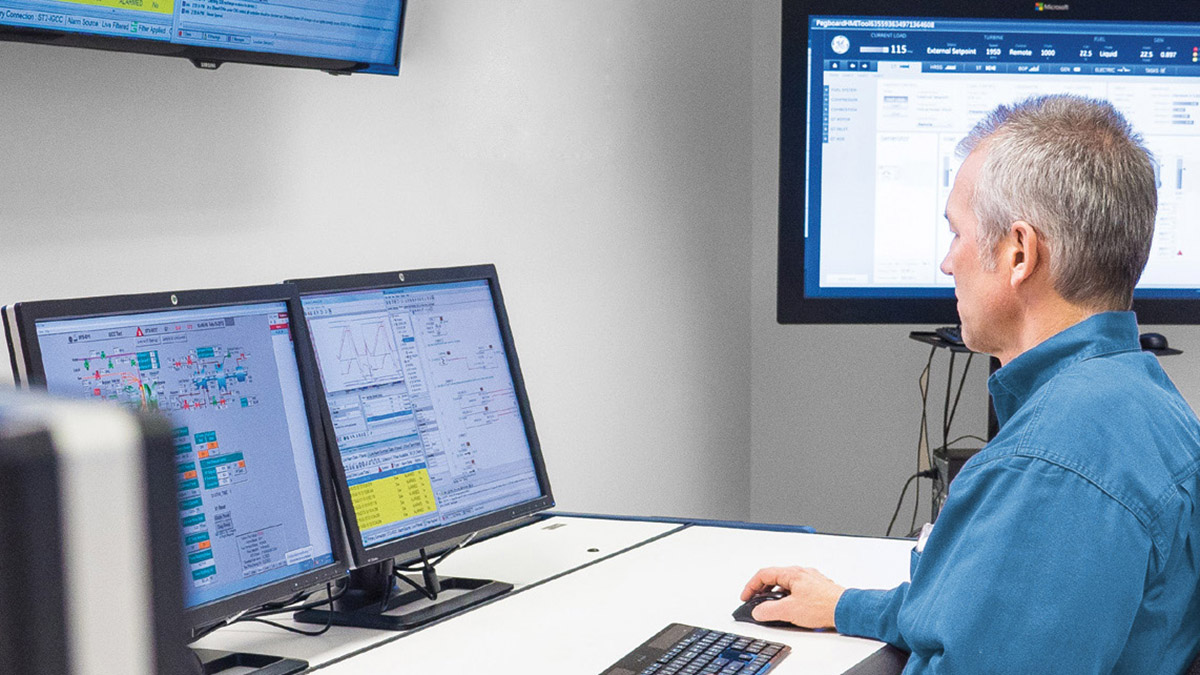
When incidents occur, speed and precision are vital. Multi-year agreements are covered by 24/7 remote diagnostics to provide quick support.
The result is rapid response times from seasoned engineers deeply familiar with your operational requirements—to resolve issues and bring turbines back to the grid quickly.
Eliminate unplanned obsolescence.
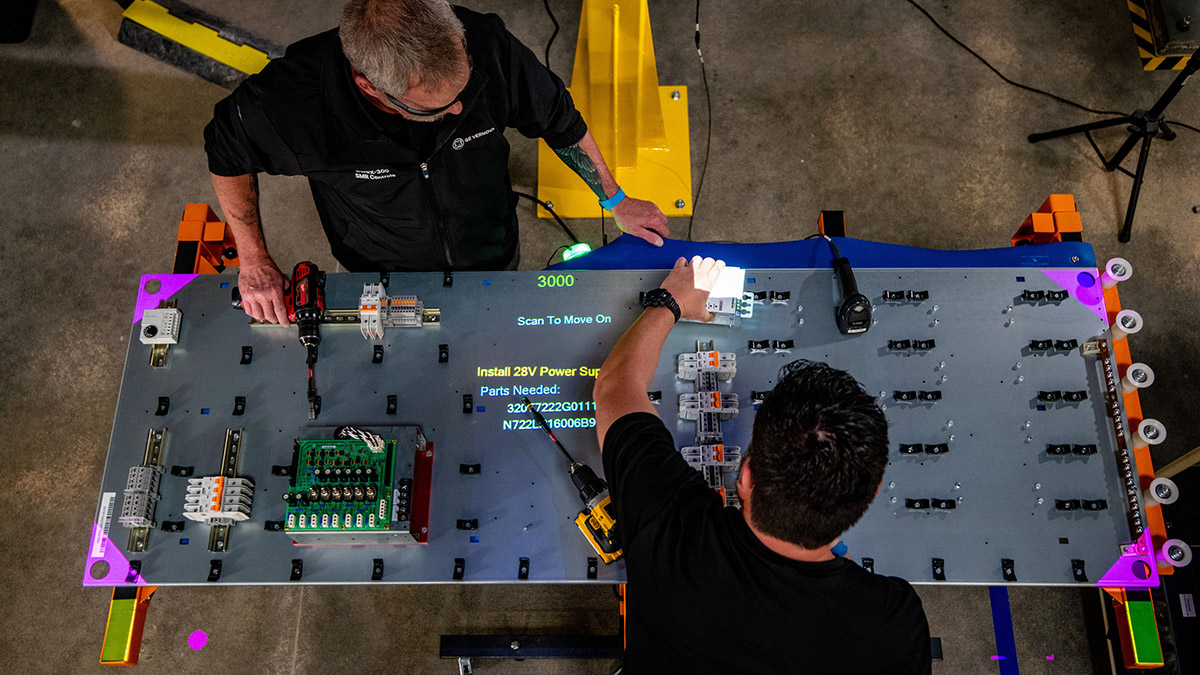
The Mark* VIe is a future-proof controls platform built on modular architecture that enables component-by-component upgrades instead of full system replacements.
Multi-year agreements provide priority parts replacement, scheduled upgrade pathways, and transition management, so you can anticipate software and hardware changes long before they're needed.
Webinar
Many control systems fall behind long before operators notice. Join GE Vernova on August 12 to learn how a proactive lifecycle strategy closes the gap.
Thaha Nazeemudeen
Senior Product Manager, Controls Lifecare Services GE Vernova
David Smith
Senior Technical Sales Manager, Software and Controls Solutions GE Vernova
Lijaz Odakkal
Service Director for Middle East, South Asia and Africa, Software and Controls Solutions GE Vernova
Ben Plouff
Senior Manager, Remote Diagnostic Services GE Vernova
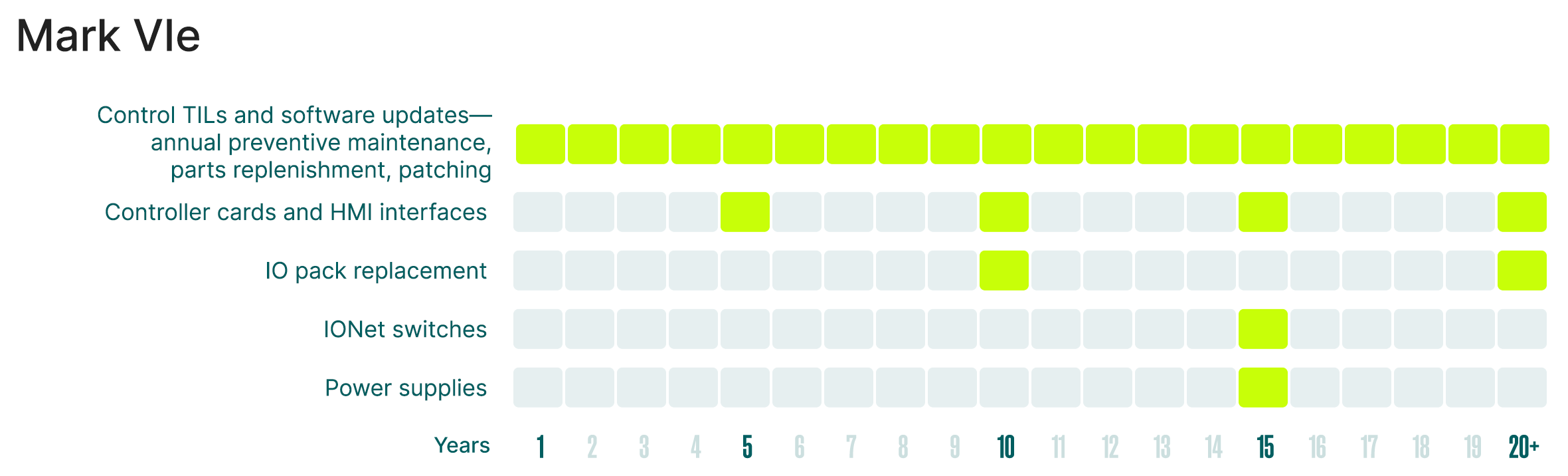
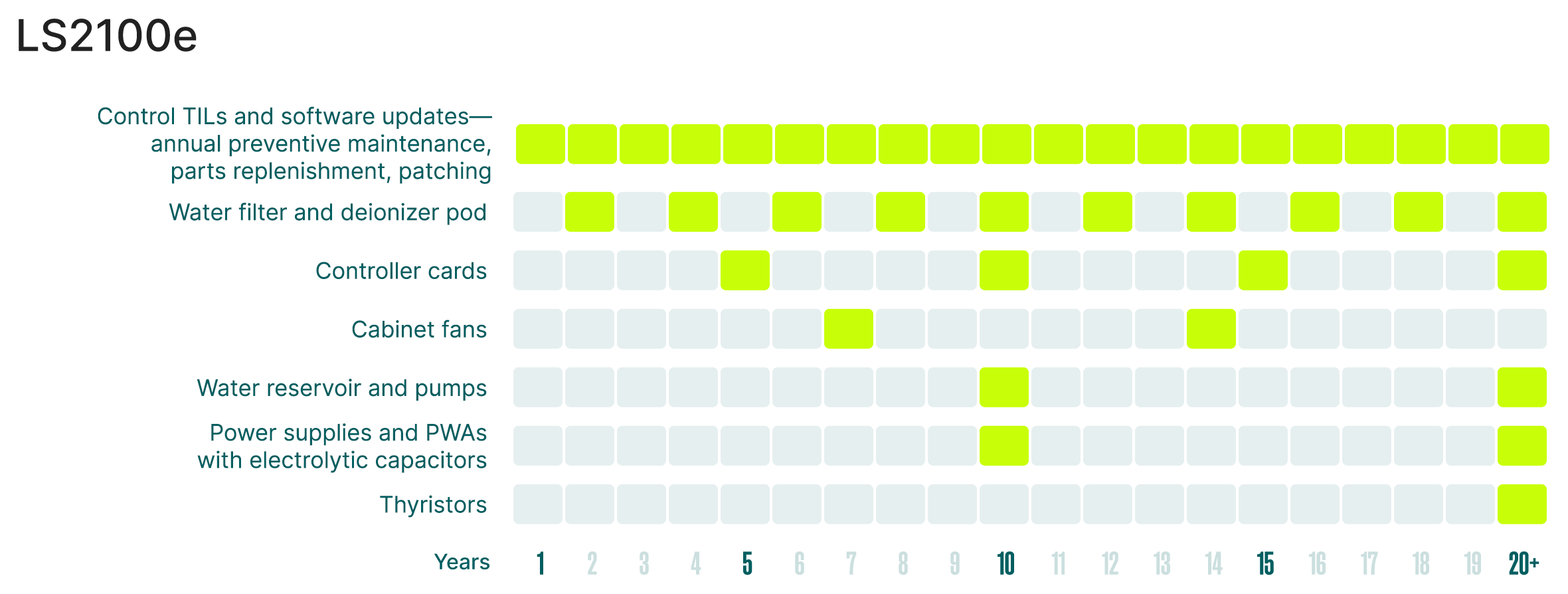
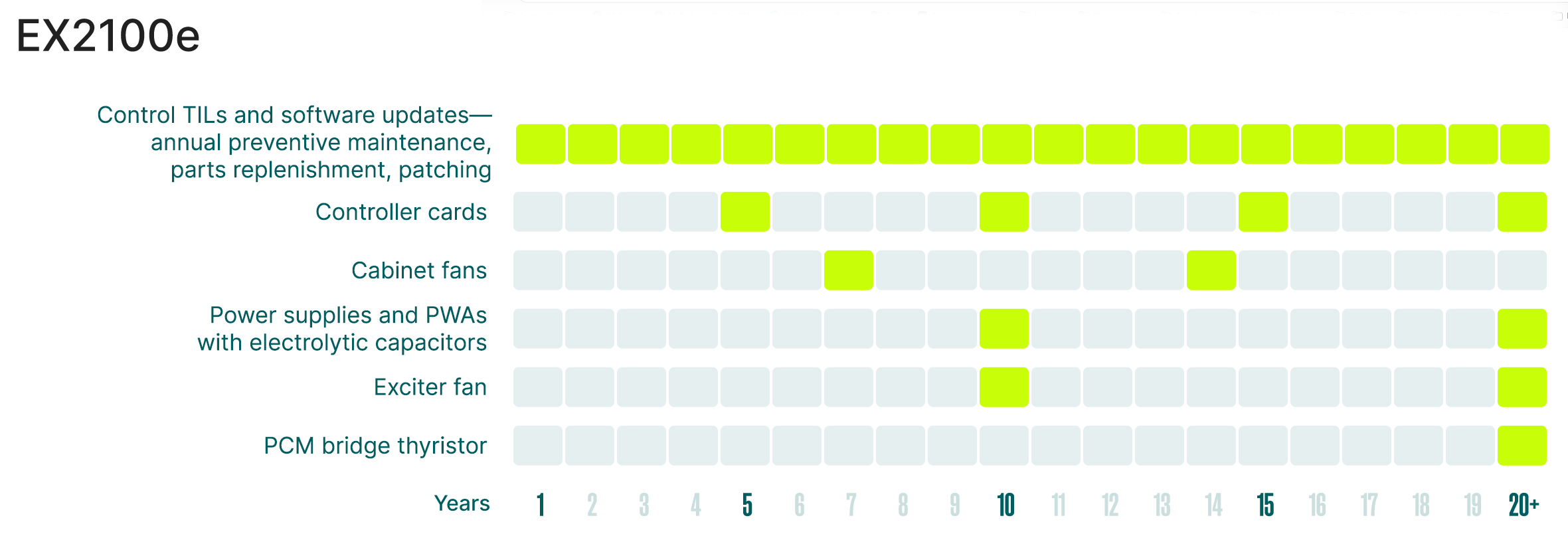
Every plant is different—but here’s an example timeline of controls maintenance events, including parts refresh, across a typical asset lifecycle.
Customer stories
| CLS MYA | Reactive maintenance | |
|---|---|---|
| Higher availability | ✓ | X |
| Assured spare parts | ✓ | X |
| Proactive compliance | ✓ | X |
| Predictable costs | ✓ | X |
| Reduced overhead | ✓ | X |
"We've developed a very efficient relationship when it comes to project planning, replacements for excitation systems and controls. GE Vernova understands our needs and requirements… resolving problems and preventing forced outages."
Engineering manager, major US electric utility
Frequently asked questions

The controls coverage in a standard LTSA is typically equivalent to the Bronze package in CLS MYA. CLS MYA expand the controls coverage beyond unit controls to Distributed Controls Systems (DCS) and plant network—including 24/7 support, preventive maintenance, patch validation program, annual software updates, planned HMI and cybersecurity system upgrades, and forward-looking lifecycle management strategy.
Standard LTSA controls coverage is generally corrective and notification-driven—typically covering controls hardware components (i.e., controllers and I/O packs) and software updates for fixes or improvements required by TILs.
Yes. ToolboxST and software updates are included when software maintenance scope is part of the CLS agreement. CLS software maintenance programs help keep software current, supported, and compliant through structured deployment processes.
The CLS MYA can be tailored to each operator’s priorities, risk profile, and budget. Operators can begin with a focused scope and expand over time. A lifecycle assessment helps distinguish immediate needs from longer-term improvements. Initial priorities may include securing critical on-site spares, addressing technology gaps, adding Remote Diagnostic Services support, or implementing OEM software updates. Services can then be expanded toward broader Silver or Gold packages as requirements evolve.
Start with lifecycle and cybersecurity assessments. These assessments establish the current hardware and software lifecycle status, identify cybersecurity risks, and help prioritize the most critical gaps. If technical resources are limited, GE Vernova can also support operators through remote diagnostic services and system health checks. Based on the findings, we can provide a comprehensive, and prioritized lifecycle management plan to address identified gaps.
Key risks include declining spare parts availability, reduced access to subject matter experts, lack of cybersecurity protection and limited support for aging systems resulting in increased reliability risks and O&M costs. Operators should prioritize the gaps that present the greatest operational and availability risks. GE Vernova offers a structured, modular modernization approach that can be aligned with outage schedules, critical milestones, and site-specific requirements.
Use a risk-based approach. First, confirm that the ControlST version supports the required hardware. Next, conduct a lifecycle review to identify components approaching end of life and assess their operational impact. Finally, complete a spare parts assessment and gap analysis to confirm that critical spares are available. These steps help distinguish gaps that require immediate action from those that can be managed temporarily.

The typical lifetimes for components are as follows: Thick HMIs: 3-5 years, control servers: 5-7 years, network devices: 10 years. This can vary based on environment, operating system and usage conditions. Regulatory and compliance standards require that hardware and software remain supported and maintained with current patches.
OEM lifecycle policies and support programs help ensure that customers maintain supported configurations and meet compliance expectations. CLS MYA help customers plan refresh and upgrade timing rather than reacting to end-of-support events with a sudden surge in CAPEX.
Effective obsolescence management starts with establishing a clear baseline of the control system’s hardware and software lifecycle status. GE Vernova’s lifecycle data collection system and associated dashboards provide lifecycle status visibility for both Mark VIe hardware and software and help operators monitor changes over time. This information supports proactive inventory planning, software update planning, and system upgrade planning.
Begin by reviewing the lifecycle status of the control system hardware and software. Use these findings to define a software maintenance strategy across the entire control system network, including the required ControlST version updates. Operators should also assess maintenance needs across three levels: health checks, short-term maintenance, and long-term maintenance, which may include the planned refresh of Mark VIe controller cards and I/O packs. Depending on the system’s condition and lifecycle status, HMI and Cyber upgrades such as Thick clients, OTVision and OTArmor and may also be appropriate.
The Controls Lifecycle Services Multi-Year Agreement (CLS MYA) provides a structured approach to lifecycle management. It helps keep Mark VIe hardware, network devices, including HMIs and switches, current; provides software updates and cybersecurity patches; and supports planned hardware updates and upgrades. These upgrades and updates can be performed in phases starting with HMI upgrades and helps to keep the control system configuration current and supported.
Lifecycle status information allows customers to plan inventory levels, anticipitate end-of-life components and schedule hardware and software upgrades proactively, aligned with planned outage windows. It supports long-term budgeting and also reduces the risk of unplanned outages due to unsupported components.
On-site software upgrades are covered as part of the CLS MYA Gold package. While remote software upgrades are not currently provided as a standard offering, remote updates service for installing patches can be offered along with the patch validation program.
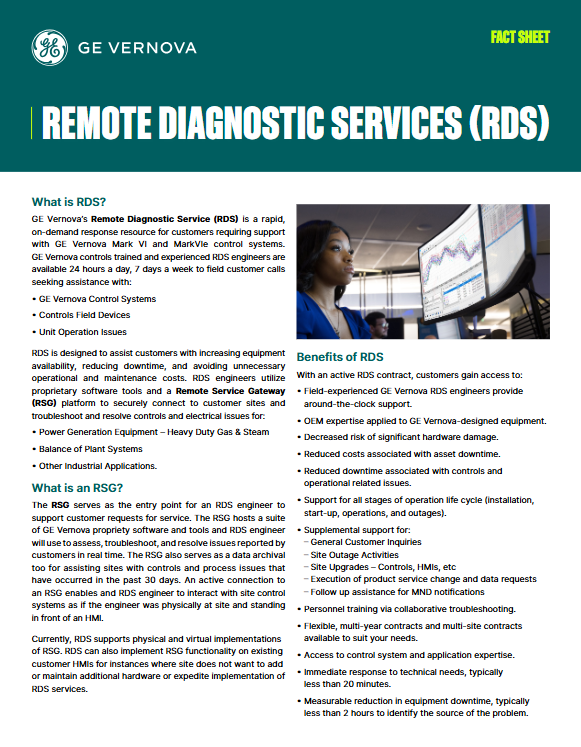
The core Remote Diagnostic Services (RDS) offering does not depend on continuously transferring plant data to a GE Vernova center. A Remote Services Gateway (RSG) resides on the plant controls network, similar to an existing human-machine interface (HMI). When support is required, authorized GE Vernova experts use a secure connection to view live control system software, data, and trends. This enables remote troubleshooting while minimizing the need to transfer large files.
AI can accelerate the analysis of large volumes of control system data and support the development of predictive analytics. This can help identify subtle early-warning trends before they develop into more significant issues. For troubleshooting, GE Vernova teams use internal AI tools to search technical manuals and historical service cases quickly, helping engineers to identify potential solutions more efficiently.
CLS MYA can include cybersecurity services assembled according to your risk profile and compliance requirements at the start date of the contract.
Scope can vary from targeted controls hardening to broader layered security programs around the control system, ranging from vulnerability monitoring to OTArmor solutions. This approach can adapt to different regulatory obligations, corporate risk tolerance and internal governance models.
If you haven’t defined your cybersecurity risk level yet, we can help guide that process using best practices and industry frameworks—starting with a cybersecurity assessment—and build a custom CLS cybersecurity scope aligned to your needs.
GE Vernova’s standard controls security design is based on secure network segmentation. The control system is separated from other plant and enterprise networks to reduce exposure and control access. The architecture is designed to support applicable cybersecurity requirements, including NERC standards, IEC 62443, and relevant country-specific regulations. For connections to GE Vernova monitoring or remote services, a demilitarized zone (DMZ) provides a controlled interface for external communications without direct access to the core control system.
Contact us
*Trademark of GE Vernova and/or its affiliates