

Energizing Japan's steel sector: JFE Steel's strategic modernization with GE Vernova
Giancarlo Ruggieri, Li Chenyin
December 17, 2025
8-minute read

Search Gas Power
Upgrades
Your outcomes—delivered
These days, we're all trying to do more with less, but GE Vernova can help. Our upgrades and modernizations can help you get more from your existing assets. Discover the possibilities with our interactive upgrades selector.
Controls
Control Lifecare Services
Whether you need 24/7 technical support, live remote diagnostics, onsite field engineering, or parts management, we have you covered with GE Vernova's Controls Lifecare Services (CLS).
Podcast
Cutting Carbon - Season 9
Join Dr. Jeff Goldmeer, Brian Gutknecht, and special guests for the final season of our 3-part series as they discuss the roles digital and electrification will play in the energy transition.
Decarbonization in action
Explore the future of energy
See how GE Vernova's Gas Power business is helping to build a world that works.
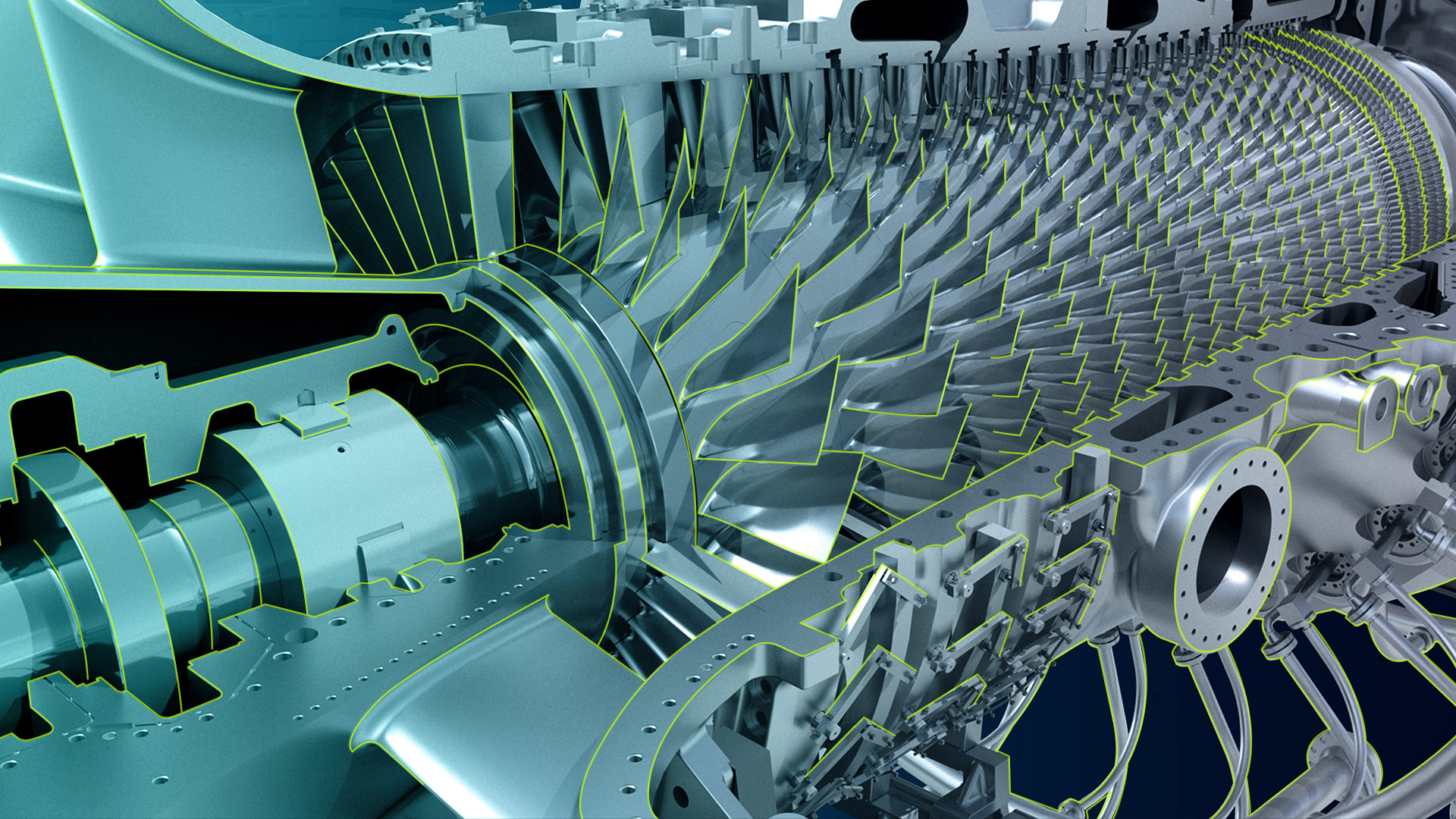
At the Chiba plant, the GT26HE upgrade—supported by a close collaboration with GE Vernova—extends the longevity of JFE’s fleet while unlocking higher performance and meaningful CO₂ reductions. The successful completion of the complex C-Inspection reinforces the strength of this collaboration as JFE advances decarbonization goals that align with the broader transition under way across Japan’s steel industry
Introduction
Li: Thank you, Giancarlo. My name is Li Chenyin, and I work in the Energy Department at JFE Steel. I’ve been with the company for 5 years, focusing on power plant operation planning and equipment improvement. JFE Steel is one of Japan's largest steel producers, with a history dating back to the late 1800s. We currently produce around 23 million tons of crude steel annually. We operate multiple integrated steelworks and facilities across Japan, including our Chiba plant in East Japan, where our GT26 is located.
Li: Steelmaking has always been about scale and efficiency, but in recent years, the focus has clearly shifted to decarbonization.
The need for 'green steel' is rising, prompting us to invest in advanced technologies like carbon recycling blast furnaces and hydrogen-based direct reduction ironmaking.
The GT26 is a critical component of our broader strategy.
Transition to upgrade journey
Li: The HE upgrade offered increased performance, higher output, and improved efficiency compared to the MXL2. Each percentage point of observed operational efficiency is crucial for both aims on cost savings and CO₂ emission reductions. Additionally, the upgrade’s reliability and extended operational lifespan were significant factors. This upgrade allows us to plan for an additional 4–5 operational tours, helping to ensure GT26 functionality well into the 2040s.
Li: Within the context of our goals, the upgrade has met expectations, enhancing both power output and efficiency. We’ve achieved a 4% reduction in CO₂ emissions per kWh produced, directly supporting our decarbonization strategy. Moreover, given the confidence the upgrade instills, we expect to operate this unit for another 20+ years, which is in alignment with our long-term objectives.
We’ve achieved a 4% reduction in CO₂ emissions per kWh produced, directly supporting our decarbonization strategy.
Li Chenyin
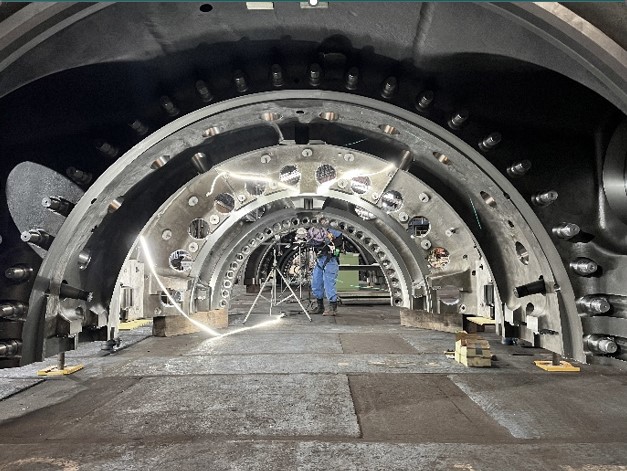
First c-inspection post HE upgrade
Li: Our main concern was reduced unit unavailability. For us, and I think this applies to most customers, every day of generation matters. The scope of the outage was substantial, involving the replacement of the main casing, FDS, HP OTC, and ST casings. Despite the challenges, the project was completed on schedule in 96 days. From a technical standpoint, it’s akin to having a modernized plant.
Li: Safety was our top priority, given the large number of personnel on-site. The movement of heavy components, laydown area management, and crane operations were critical. Thankfully, the close collaboration between GE Vernova and the JFE team contributed to a operationally safe outage execution.
Regarding quality, we encountered a few minor issues that were promptly resolved. Delivery posed the biggest challenge, with some parts arriving late. However, we collaborated with GE Vernova to develop a creative on-site assembly solution, which ultimately allowed us to stay on schedule.
of reliable operation and service from the GT26 (since 2001).
in CO₂ emissions per kWh produced after HE upgrade, directly supporting JFE Steel’s decarbonization strategy.
planned for as a result of the HE upgrade, helping to ensure the GT26 remains functional well into the 2040s.
on schedule outage completion achieved during the first C-Inspection post-HE upgrade, involving the replacement of critical components like the turbine housing, FDS, HP OTC, and ST casings.
Future plans
Li: We will continue to explore enhancement opportunities across the plant to help it remain competitive and future-ready.
The HE upgrade aims to support GT26 for several more operational tours, so our current focus is on the rest of the plant to achieve our 2040 targets.
We greatly value the ongoing support from GE Vernova and look forward to continued collaboration—and of course, we won't say no if another upgrade opportunity shows up!
Giancarlo: Thank you, Li, for sharing your valuable insights and experiences with us today. JFE Steel’s commitment to longevity, efficiency, and reducing CO₂ emissions is evident in your journey with the GT26 and the HE upgrade. The collaboration underscores the critical role of more reliable, future-proof technology in the energy transition and GE Vernova is honored to be your collaborator in this important endeavor. Here’s to more successful collaboration and innovation!
Senior GT26 Product Manager, GE Vernova
Giancarlo Ruggieri is the Senior GT26 Product Manager at GE Vernova, bringing 17 years of power-industry experience across field engineering, gas turbine assessment, combustor systems, LEAN outage execution, project management, and product management. His deep technical expertise positions him as a key leader in advancing the GT26 portfolio.
Energy department, JFE Steel
Li Chenyin works in the Energy Department at JFE Steel and has spent the past five years focused on power plant operation planning and equipment improvement. JFE Steel is one of Japan’s largest and most established steel producers and currently manufactures approximately 23 million tons of crude steel annually.
You might be interested in
Contact us